Mbulelo Mpofu
BULAWAYO’S creative economy could be poised for a new phase of growth, with the British Embassy in Harare exploring ways to mobilise investment in cultural infrastructure, develop creative enterprises and open international markets for local artistes.
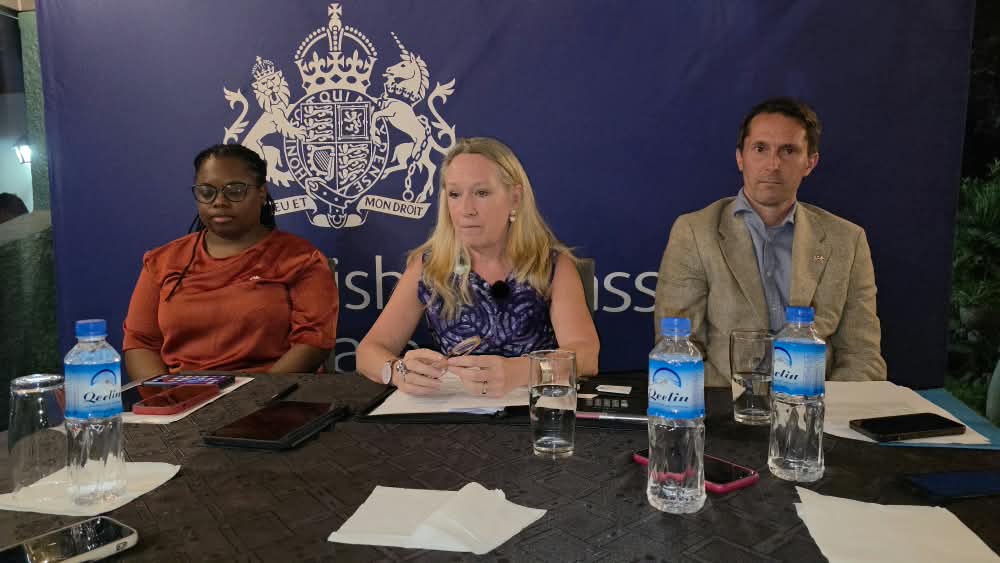
Britain’s new Ambassador to Zimbabwe, Gill Lever OBE, outlined the plans during her first official visit outside Harare, to Bulawayo, on Monday, where she met members of the Fourth Estate and discussed the Embassy’s priorities following her accreditation by President Mnangagwa on October 15, 2026.
Lever, who replaced Pete Vowles following his appointment as the United Kingdom’s High Commissioner to Nigeria, acknowledged Zimbabwe’s abundance of artistic talent, particularly in
Bulawayo, and said the UK was keen to help creative practitioners transform their skills into sustainable and profitable businesses.
Her remarks signal an approach that goes beyond supporting individual artistes and performances to address the wider infrastructure and business ecosystem needed to grow the creative industries.
“I went to the Jacaranda Music Festival in Harare, which was fantastic. One thing that came across to me very early on is just how much creativity there is in Bulawayo,” she said.
“In my first couple of weeks I did two things, and all the artists that the British Council were working with, because the British Council’s working very much in this space, were all from Bulawayo. So, very talented singers and fantastic guitarists. I was blown away by how much talent there is here.”
She also cited a fashion show she attended in Harare as evidence of the country’s creative potential, adding that the Embassy wanted to work with practitioners in music and fashion to strengthen their professional capacity and international competitiveness.
“And so what we’ve been trying to do is to work with creative people in the creative industry, you know, in music and in fashion in particular, to try and help them develop their skills to make them sort of ready for an international audience, and so they can exhibit overseas and get the profile and then start to have a business that is productive and profitable,” she said.
Through the British Council, the UK has already supported several initiatives aimed at strengthening Zimbabwe’s creative industries.
These include Music Connects, Creative Economy Week, Creative DNA for fashion, the Socreative free eLearning platform and the Festival Connect Fund, which supports festivals in Zimbabwe and across the region to develop and scale up their activities.
The UK has also partnered Old Mutual through the Value Creation Challenge, which helps emerging business ideas develop into viable enterprises.
Thandi Muringa, a Trade and Investment Adviser at the British Embassy in Harare, said the department responsible for business engagement had been renamed, reflecting a broader approach that places the creative economy among its priority areas.
“It used to be called the Department of Business and Trade. It’s now known as the Business Innovation, Science and Trade Department. One of their key priority areas is the creative economy,” she said.
Muringa said the approach extended beyond supporting artistes to developing the infrastructure required to sustain their work, including performance venues, studios and production facilities.
“So, it’s looking way beyond just the artistes. It’s looking at how we invest in infrastructure for creativity. So, when you look at a place like Bulawayo, you can’t have massive concerts because we just don’t have that infrastructure,” she said.
She said the Embassy was exploring ways of encouraging institutional investors, including pension funds, to channel some of their capital towards infrastructure development in the creative sector.
“We know that pension funds have been building a lot of cluster homes. I don’t know about Bulawayo, but in Harare we’re seeing a lot of cluster homes owned by pension funds. But how can we redirect some of that capital? Let’s build the infrastructure that then creates the creative economy,” she said.
For Bulawayo, one opportunity could lie in repurposing underutilised industrial properties to accommodate creative enterprises.
Muringa suggested that dormant warehouses across the city could be converted into film production studios and other creative facilities, unlocking the potential of properties that have remained underused.
“A place like Bulawayo has warehouses that haven’t been working for a while. Why don’t we look at converting those into maybe studios to shoot movies and that sort of thing?” she said.
She added that the Embassy was engaging the relevant department and the British Council to identify investment opportunities, with the latter helping establish areas of demand within the creative sector.
“British Council is informing us where are the areas where there’s investment opportunity, and how can we bring in UK companies to partner as well with local capital to then unlock this investment and the infrastructure that then creates an ecosystem for artistes to thrive and operate in,” she said.