Online Reporter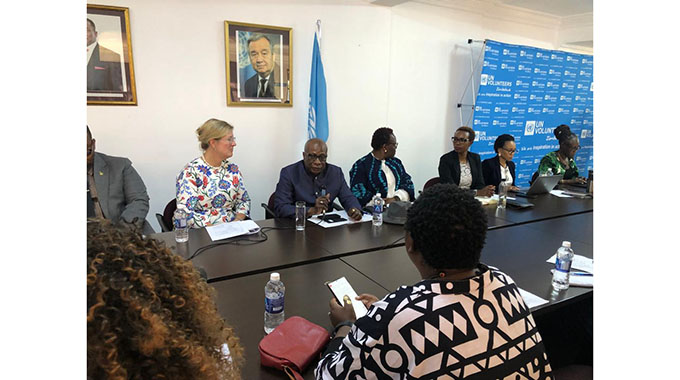
Diana Nherera
UN Resident and Humanitarian Coordinator, Mr Edward Kallon, says the United Nations is moving towards a future where inclusion forms the core of its endeavours and not merely an afterthought.
Speaking at the United for Youth inclusion programme launch recently, Mr Kallon said the initiative is a collaborative effort uniting UN agencies, the Government, civil society and youths in a commitment to make youth inclusion a moral and development priority.
“It represents our dedication under the UN Disability Inclusion Strategy to lead by example in providing accessible spaces, inclusive employment and decision-making platforms open to everyone,” he said.
“Additionally, it exemplifies Youth 2023, the UN’s global promise to prioritise youth in sustainable development, amplifying their voices, safeguarding their rights and creating pathways for meaningful participation.”
Mr Kallon said Zimbabwe is a youthful nation with nearly two-thirds of its population under 25 years.
“Despite their potential, young Zimbabweans face numerous challenges, particularly those with disabilities who often encounter systemic barriers to education, training and employment opportunities,” he said.
Mr Kallon commended the Government for its forward-thinking strides in development frameworks, emphasising youth empowerment and disability inclusion through initiatives such as the National Youth Empowerment Strategy for 2026 to 2030 and the National Disability Policy of 2021.
“Zimbabwe’s commitment is evident in its ratification of the UN Convention of the Rights of Persons with Disabilities and the African Disability Protocol,” he said.
Mr Kallon said UN’s role is to turn these commitments into tangible action.
“The World Bank indicates that excluding persons with disabilities from economic participation could cost a country up to 7 percent of its GDP,” said Mr Kallon.
“Hence, investing in youth inclusion is not charity; it is an economically sound policy.”
He urged the Government to continue aligning efforts with the shared vision of NDS1 and Agenda 2030.
Mr Kallon urged young people to start small businesses or community-based projects that address local needs, such as agricultural ventures, tech startups or artisanal crafts.
“Providing training on business skills and financial management can enhance their success,” he said.
“I encourage the youth to establish community service groups to address social issues such as education, health or poverty alleviation.
“Activities can include tutoring programmes, health awareness campaigns or food distribution drives,” he said.
Mr Kallon urged young people to scale up ongoing substance and drug abuse awareness, organize workshops and support groups on the dangers of drug and substance abuse.