admin
admin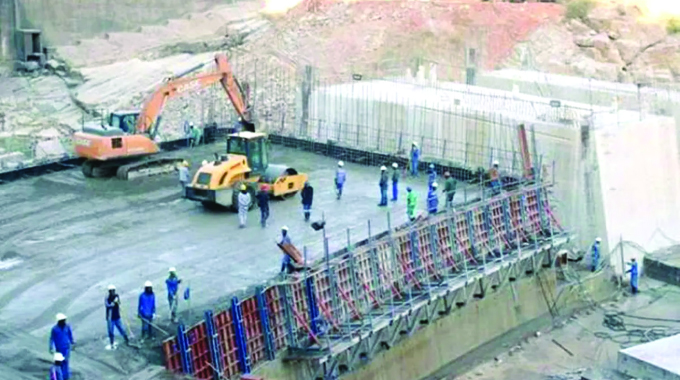
Gibson Nyikadzino Correspondent
Zimbabwe’s peace in the whole of the state’s sovereign life since 1980 is a reputable example to other African states that a shared political ideology in such diversity is key to unity.
It is a country that has become a model of unity, peace and development to others, citizens and states, who are bewildered under egregious experiences of terror, war and warlordism today in other regions.
On many occasions, there has been a trend that Africa’s post-independence conflicts have been strongly linked to various ideological differences that have been sponsored by foreign powers.
In the early years of its independence, Zimbabwe’s regional proximity to Mozambique and Angola nearly took an unpleasant turn as interstate wars that ensued in the two former Portuguese colonies had a potential spillover to Zimbabwe. Zimbabwe held its fort.
Regional stability in southern Africa is in one way or another credited to the stability in Zimbabwe because of its centrality, stability and security.
Zimbabwe’s influence in the region has kept the likelihood of peace alive and hopes for unity strong. It is a result of Zimbabwe’s commitment to unity on December 22, 1987 when ZANU-PF and PF-ZAPU leaders set aside ideological differences to sign the Unity Accord.
Though the peace was signed by political leaders, the core was the people, peace and development.
At no instance has the thought of the people been divorced from the Unity Accord.
Leaders have not been selfish, and have not taken the Unity Accord as “our peace” but for the people.
In Cameroon, there have been calls for secession.
A major conflict between the French-speaking majority state and the smaller English-speaking parts have exposed underlying ideological divisions for over five years now.
The Central African Republic (CAR) recently also had a degenerative war between the Seleka rebels and Anti-Balaka militia. In Mali, Nigeria and the Sahel region, peace and unity are becoming elusive by the day.
In these countries, the absence of unity has not shown any sight of development and enjoyable peace.
But Zimbabwe is a beautiful contrast!
The most prolonged wars are ideologically based, hence for Zimbabwe, leaders have sought a common ideology that led to the accord, espousing a people driven development thrust.
The African Union (AU) had set 2020 as the year the continent would silence guns, stop war and breathe life into the nostrils of peace.
Had that commitment been upheld, today Africa would have made strides towards economic development, growth and stability.
But peace today is becoming an expensive commodity in some African countries because of conflicts that are taking various forms.
This world is a dangerous place.
It has individuals, corporations and countries that have a strong dislike for peace and feel comfortable with conflict.
They derive pleasure generating profits when blood of the innocents is lost and their properties are destroyed.
The 34th anniversary of Zimbabwe’s Unity Accord celebrated today reflects how the country, in its post-independence phase, has gradually shifted towards common agenda of development opposed to animosity.
Without a strong sense of unity, there is also an absence of a strong peace and development drive.
From 1987 to present day, Zimbabwe has had major development trajectories enjoyed under the Unity Accord.
It managed to sustain the agenda of togetherness and the inclusion of diversity as one of its founding ethos to national healing. In both the First and Second Republics, the sanctity of the Unity Accord has been maintained without any existential threat to the common agreements that have been made.
In its wisdom, the New Dispensation under the “no one must be left behind” mantra has, as a government should do, sought to identify groups that have been previously marginalised.
In it important to identify that the Unity Accord was borne out of the Gukurahundi in the Matabeleland and Midlands provinces.
While more has been done, the Second Republic is also determined to do more as initiated by desire to work with the Matabeleland Collective to promote socio-political cohesion.
This has enabled citizens affected by the Gukurahundi to access birth and death registration while others are set to acquire national documents.
For long, the Matabeleland Zambezi Water Project had become a docile embarkment under the previous administration, but its resuscitation by President Mnangagwa’s administration has a form of hope and inclusion.
In Matabeleland South, government has managed to allocate projects for building more primary and secondary schools to build and develop the human capital index. Elsewhere, the San and Doma communities that in the past may have been by-passed from development programs, are today seeing their regions and areas among others that are benefiting through Special Economic Zones (SEZ) and the devolution policy.
Without unity, there is no way a nation can develop. Sadly, there is no way a nation develops without peace.
After challenging years between 1983-1987, many other challenges were countenanced in Zimbabwe which strangled its development.
This united nation has also not been influenced by the issue of looking at unity from a partisan point of view. It is a collective.
Under difficult scenarios, the national unity characteristic of Zimbabwe has been tested and been strong even for regional emulation.
The first major scenario that tested Zimbabwe’s unity was the plan by the USA and British administrations of George Bush and Tony Blair in 2002.
The test, at the invitation of other political leaders, was rejected clearly by the people through the electoral referendum of 2002.
Had national unity been whitewashed in 2002, it would have been difficult to translate it to regional solidarity after the serious threats to Zimbabwe’s military invasion by the USA and Britain.
That intervention, had it occurred, it was not based on principle, but driven by politics.
The day some compatriots advocate a change in the course of our national history by exploiting our diversity at the behest of foreigners will be the day situations of war scattered across Africa will be replicated at home.
Unity is the key ingredient that formulates development. Zimbabweans should not seek to score cheap political points by sacrificing the principle of the Unity Accord.
The development gains experienced so far should, and those of the past, should be protected from all forms of aggression.
The Unity Accord is a sanctified trinity of a contract among the people, the leaders and our posterity. It is a precious commodity that is priceless.
Zimbabweans, remember we are one!


 Online Reporter