admin
admin
Lovemore Mataire Senior Writer—
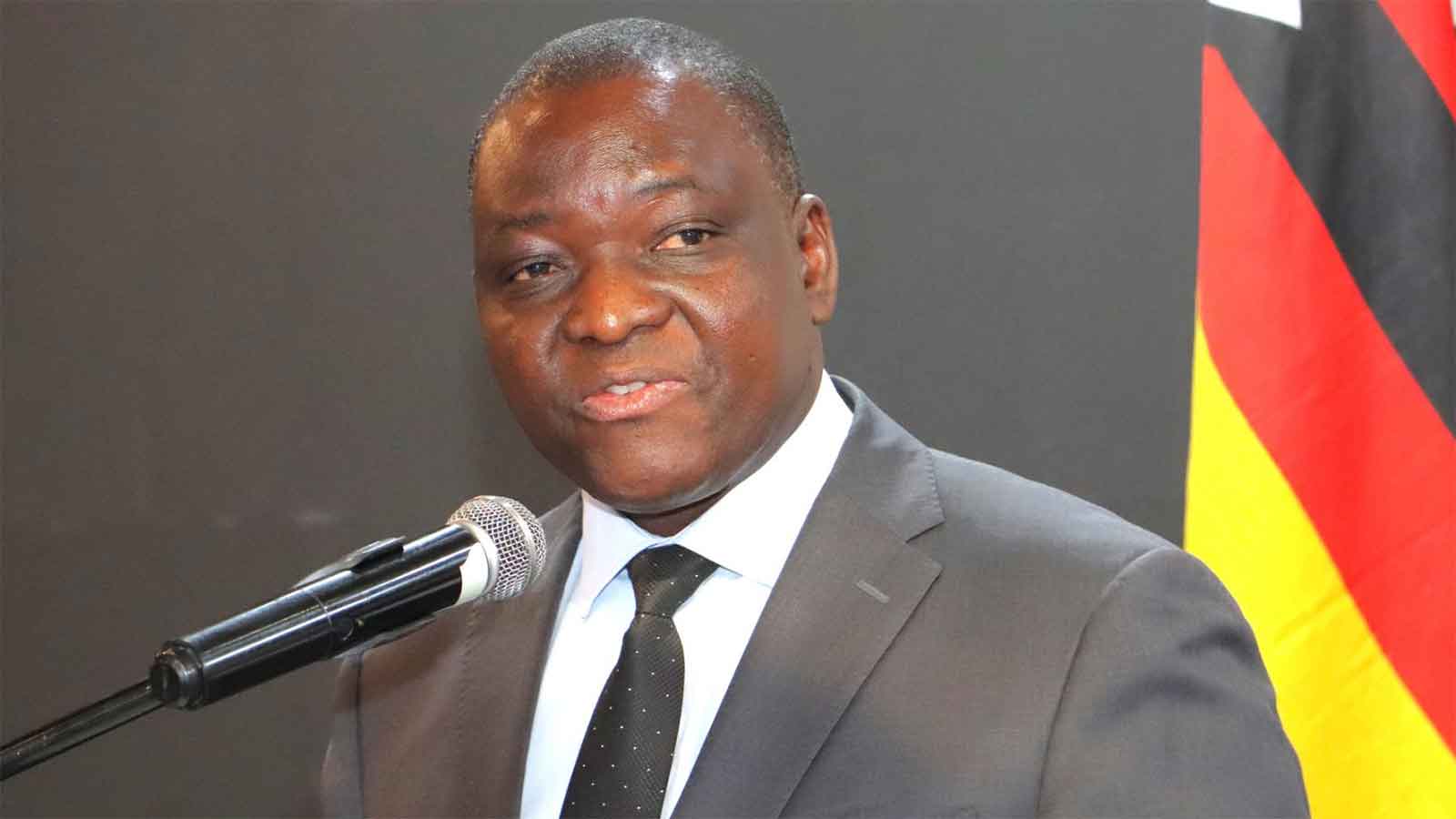
The Unity Accord is not a compromise document, but has its roots embedded in the liberation struggle where the two revolutionary parties — Zanu and PF Zapu — entered into several pacts to confront the colonial regime, Vice President Phelekezela Mphoko has said.VP Mphoko also castigated some “fundamentalists” who claim that no women or Ndebele could rule Zimbabwe, saying they did not understand the human fabric. In an interview with our sister publication, The Sunday Mail ahead of Unity Day celebrations today, VP Mphoko rubbished perceptions in some quarters that the accord was entered into under duress.
Related…………………..
- EDITORIAL COMMENT: Let’s walk together in unity, emulate heroes
- Clean-up to mark Unity Day
- Msipa makes significant revelations on road to unity
- Mnangagwa unpacks Unity Accord
- The Interview: VP Mnangagwa speaks on unity
“People always say that this was a compromise something. No it was not, if you follow what is there from the Joint Military Command, ZIPA stages and then the Patriotic Front, the main target was to fuse the two parties.
“That was the main thing, that’s why we looked into the Constitution together, we looked into the army, of local government, all structures of Government because the main aim was to fuse the two parties. That was the ultimate objective of this unity, bringing people of Zimbabwe together as they were before the split.
“Conspiracies as I have always said, people can disagree with me, I don’t mind, I have my own researches, I am a military man, I know what was happening, the conspiracy against us continues even up to today, that the Government must not succeed, it must fail, it’s part of the conspiracy,” said Vice President Mphoko.
Giving a historical background to unity, VP Mphoko said efforts to unite PF-Zapu and zanu-pf started well before independence during the liberation struggle in Mbeya, Tanzania. “The background history is that in 1963 there was a split where we get the formation of zanu-pf so we had two political parties, Zapu and zanu-pf.
“In 1972 in Mbeya, Tanzania, there was the first unity effort, which was done between PF Zapu and zanu-pf, the first one; it was chaired by Herbert Chitepo and Jason Moyo. This is very critical because it laid the foundation for the unity which you are talking about tomorrow (today),” said Cde Mphoko.
He said the two political parties had their own constitutions and mandates and they agreed to share positions in order not to deviate from own policies.
“We agreed that if the chairman comes from zanu-pf or PF Zapu, the commander of the joint army will come from the other party. Then after that if a commander of any department or leader is from Zanu-PF, the deputy will come from PF Zapu and this is how we were balancing up things. Now when Chitepo became chairman, JZ became the deputy chairman and secretary of the Joint Military Command of Zanu-PF and PF Zapu. The first unity. Now as agreed Nikita Mangena became the chief of staff of both armies.”
VP Mphoko became chief of logistics, Josiah Tongogara became chief of operations, John Mataure- commissar, Godwin Munyanyi became military intelligence with all the leaders deputised by a member from the other party.
VP Mphoko said another initiative at uniting Zanu-PF and PF Zapu took place in 1973 when the Organisation of African Unity insisted on setting up an ad hoc committee to make sure that the unity between the two parties prevailed.
“We have just come out of crisis; ourselves as PF Zapu and some people saw us as a sick organisation and demanded certain things that were beyond the acceptance of the leadership. After that, down the lane in 1975, Zanu-PF was in a crisis after the death of Chitepo. The leadership was arrested and thrown into prison and that was at the time when Mozambique was attaining its independence. Now the inflow of people from Zimbabwe into Mozambique was so massive because that long story where you have to go to Botswana and wait for a aircraft to Lusaka and all those things was not there,”
He said there was no structure to receive the massive inflows of people into Mozambique since the leadership had been arrested. People like Abel Muzorewa and James Chikerema wanted to take advantage of the desperation of the people by converting them into their army but this did not succeed.
After failing to achieve their plan, VP Mphoko said Mr Muzorewa and Mr Chikerema pleaded with the OAU not to supply food and other necessities to the people in Mozambique.
“Now that is what led to the formation of Zipa, the second military command which was formed after the first one, this was now 1975. Zipa was also formed along the same principles of the Joint Military Command in terms of positions.
“JZ, myself and Lookout Masuku were directed by the Revolutionary Council that we could not allow a situation in Mozambique where people were dying because of lack of food and lack of medicines to continue. So we had to resolve that problem in Mozambique, so those are things you see, the embryo of unity… Other people could have said leave Zanu-PF as it is but because of the commitment of unity in people of Zimbabwe, the Revolutionary Council resolved that there was to be discussions with the (Zanu-PF) leaders who were in prison. The three of us talked to the leadership of Zanu-PF .”
Some of those who were incarcerated in Zambia included Henry Hamadziripi, Willian Ndangana, Josiah Tongogara, Rugare Gumbo, Cletus Chigove, Kumbirai Kangai and Robson Manyika.
VP Mphoko said Zanla commander Cde Tongogara instructed them to contact Rex Nhongo in Mozambique about the plan.
“So we all went to Mozambique and I became chief of logistics and my deputy was a young fellow called Kaguri, he died at Nyadzonia, Mangena became commissar and this young fellow Dzino Machingura became deputy and Rex Nhongo became commander and JD was deputy, Ambrose Mutinhiri became chief of training.”
He said it was after he had brought weapons from Tanzania that the war resumed and the ban on the supply of foodstuffs and other necessities was lifted.
VP Mphoko said the mission of PF Zapu was a limited mission to rescue the situation in Mozambique and that was achieved. He said he remained in Mozambique as a representative of PF Zapu.
“Now on the 30th of October 1976, we formed the Patriotic Front and this is the third, the first (being) the Joint Military Command chaired by JZ Moyo and Chitepo and second military command involving Zipra and Zanla commanders and then now third, the leadership of the Patriotic Front co-chaired by President Mugabe and Dr Nkomo,”
He said that basis of unity was laid by JZ Moyo and Chitepo in 1972 and was to be replicated in 1976 during the Lancaster House negotiations.
“So that is why today if you go into our constitution, the party constitution, it will tell you that this country was liberated by PF Zapu and Zanu-PF, nobody else, what it means is that all our people from PF Zapu, all our people from Zanu-PF, all Zimbabweans liberated this country. So that’s what it means.”
He said international conspiracy was behind the divisions that led to contesting of general elections as separate entities.
But when the signing of the agreement was made in 1987, it is the same thing which we had been agreed before in 1972, 1975 and the Patriotic Front.
“You see, we were fighting an armed struggle supported by our friends- former Soviet Union, Cuba, the Chinese and other progressive states. The British never contributed anything to our armed struggle except giving us British passports purely for intelligence purposes to monitor our movements, that’s all. But in terms of fighting nothing, they refused to bring the Rhodesians down…they said they could not fight their kith and kin in Rhodesia.”
He said the British never wanted the revolutionary parties to have ultimate victory for they didn’t want a repeat of the Mozambican situation and would occasionally call for negotiations each time when tide was tilting against the Ian Smith regime.
Just two weeks before the agreement was signed at Lancaster, the British sent Lord Soames as governor and instead of bringing to book the criminals, he but brought back people like Peter Walls in the main fold not as rebels, VP Mphoko said.
He said the British were concerned about what was to happen to South Africa in the event of Zimbabwe attaining majority rule. “In Mozambique they knew that they had done their job there when they created Renamo, so that it the conspiracy, you can’t ignore the fact that even now whites are not sure whether they would be pushed into the sea.”
He said it was not a coincidence that the majority of the people who were in the Rhodesian army went to join the South African army with the sole aim of further destabilizing Zimbabwe.
VP Mphoko said efforts to undermine the country’s unity were continuing through sponsoring proxy parties that wanted to perpetuate the idea that the unity accord was exclusionary.
“The unity was not under duress, the unity accord is more than the one of 1987 because it started in 1972. The unity of the people of Zimbabwe is very important. People have perceptions that are wrong. Unfortunately we have some fundamentalists in this country, some people who believe like Smith who says not in a thousand years and then turns and say later that not in my life time who believe that no woman can rule this country, no Ndebele can rule this country. And these are crazy people who live on perceptions; maybe they don’t understand the fabrics of human nature. You see, this country is a country composed of people who came from all over the world; we have people who came from Cameroon, Uganda, Sudan, Burundi, Rwanda, DRC, Tanzania, Ethiopia, Mozambique, South Africa and Europe.”
He said a genuine leader would administer the people at his disposal without attempting to segregate them through the creation of a super tribe. “The moment you start looking at a person from a tribal point of view then you are not a leader forget it, sorry for you u r not a leader, look at person from a point of view of a creation by God.”
VP Mphoko said the country needed a genuine authentic opposition to hold ZANU PF accountable and not the current crop of opposition that was tribal and foreign funded. He urged Zimbabwean to jealously guard the peace and tranquillity in the country as forces to undermine the sanctity of unity accord were still active.
VP said it was a myth that Matabeleland was being economically marginalized. He said his tour of all the country’s province had actually revealed that other provinces like Manicaland and Mashonaland East were in worse situation than some parts of Matabeleland.


 Online Reporter