Online Reporter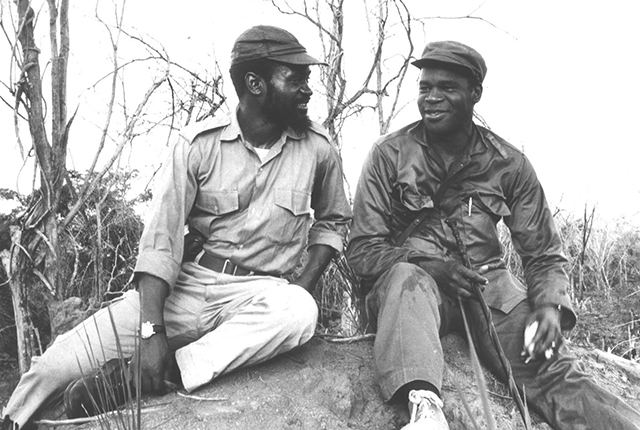
Richard Runyararo Mahomva
Herald Correspondent
Modern political science recognises that social systems are founded on definite historical origins. If the saying ‘out of nothing, nothing comes’ is true, then it must follow that the future is formed and derives its first impulse in the womb of the present. All societies therefore necessarily bear the imprint, the birthmarks of their own past. – Thabo Mbeki (1978)
In the above statement, the former President of independent South-Africa and the father of the idea of African renaissance reminds us that beyond the superstructural construct of its being, the nation is a commodity of history.
Likewise, unity or lack of it in any nation is a consequence of history as a force for national mobilisation or retribution. Further to this, Mondlane (1969: 101), writes:
The source of national unity is the common suffering during the last fifty years spent under effective Portuguese (colonial) rule. The nationalist assertion did not rise out of a stable community, in history a linguistic, territorial, economic and cultural unity.
In Mozambique, it was colonial domination which produced the territorial community and created the basis for a psychological coherence, founded on the experience of discrimination, exploitation, forced labour, and other such aspects of colonial rule.
The presented anti-colonial character of Mozambique is not so different from that of Zimbabwe and the rest of post-colonial Africa.
I draw notes from Mondlane (1968) of Mozambique and Mbeki (1978) of South-Africa to illustrate the discursive universality of the African liberation/national questions.
In so doing, I hypothesise that Zimbabwe is not immune from trends experienced in other Southern-African countries or Africa at large. Given Mbeki (1978)’s view, history must remind us of the value of colonialism in necessitating unity among the oppressed in Africa to reclaim their power.
Even in post-independence, African states’ desire for unity was based on the continued historical commitment to dismantle remnants of colonialism in Africa.
Post-Colonial Turmoil and the Path to Peace
Foreign induced unconstitutional appetites to overthrow seating heads of state caused widespread conflict across the entire continent. Zimbabwe was not spared from this experience, hence the instability experienced throughout the country in the early 80s.
This moment of crisis was neutralised by the Unity Accord signed between the late founding luminaries of our independence the late Dr Joshua Nkomo and Cde Robert Gabriel Mugabe. The accord signed 38 years ago today encouraged the unity of Zimbabwe’s two main national liberation movements, namely PF ZAPU and ZANU PF.
This agreement declared war on tribalism and advanced harmony among the people of Zimbabwe. This cemented a lasting patriotic consciousness which binds all of us -one unto the other.
A Blossoming Legacy of Unity
Comparatively speaking, Zimbabwe has achieved broad-based aspects of national unity as envisaged by the terms of the 1987 peace pact. Since then, Zimbabwe has not experience major conflict. Interval disturbances have occurred, but not to the extent of public security collapses witnessed elsewhere in Africa.
The proliferation of devolution, state financed support to national peace and reconciliation, regional balancing in terms of public office representation is a sample of the organic implementation of unity as a bedrock of nation-building. Nationhood as a product of history and unity reminds all of us to contribute to inclusive development which is hinged on clear principles of a shared and common destiny. This is why 22 December is important in our national calendar.
While remarkable milestones in terms of achieving long lasting unity have been realised, ZANU PF’s unity as an institutional agent of nation-building is very key in guaranteeing national peace and prosperity.
The recently held ZANU PF National People’s Conference demonstrated that continued sense of unity and underscored sustained stability of our state affairs.
Therefore, this year’s Unity Day celebrations are a crucial point of reflection for those of us who are loyally desirous to the longevity of ZANU PF -not as a political party, but as an ideological and institutional force of nurturing Zimbabwe’s permanent national interests against colonial predations.
With this in mind, all progressive Zimbabweans must be messengers of unity. This pragmatic position is influenced by challenges encountered by other liberation movements throughout the region in their fight for survival under very violent neo-colonial conditions.
These challenges range from electoral self-assaults, electoral credibility, violence, superficial ideological contradictions, lack of self-rebranding for sustained relevance among a wide assortment of issues. These matters are discussed here in light of recommending how Zimbabwe’s liberation movement, ZANU PF should avoid entrapments of disunity experienced elsewhere in the region.
Electoral Self-Assaults
2024 was a year of significant democratic festivities in the region with Botswana, South Africa and Mozambique having held elections respectively.
These elections had a lasting impact in terms of re-ordering of power in Southern-Africa, hence the importance of this observation a year later. Elections as a door into or out of power underscore the value of unity within liberation movements.
The round local and central government election rejection of the Botswana Democratic Party (BDP) shows how much political parties must remain true to ideas which brought them into power. When they fail to do so, the same door they entered into power with is the same door they eventually use to exit power.
In the case of South-Africa, vitriolic discourses of corruption linked to cadres in the African National Congress (ANC) continue to dominate the public discourse. Not that corruption should be condoned.
In fact, progressive societies must fight corruption by all means necessary. However, there is everything wrong when public platforms are used by certain cadres in any party to weaponise corruption against their opponents. How do members of the same party become opponents in the first place? Thereafter, why must they be trusted to mobilise the nation, and yet they fail to make charity (unity) to begin at home? It doesn’t make sense for parties which must be securing their power to be investing time in speculating corruption within their own structures. What then becomes the work of opposition political commissars?
Electoral Credibility
The example of South-Africa’s internal contradictions within the ANC leads to another key point. The electorate doesn’t have confidence in political parties which are not confident of observing their own integrity standards. This explains the popularity decline of the ANC in the last election.
Liberation movements must remember that they share a unique history -one which distinguishes their existential character from that of opposition political parties whose rise has been mostly Western determined and controlled with the exception of a few endogenous opposition formations.
Identity Crisis
With a bleached ideological complexion, nationalist movements risk wanting to adopt the identity of the enemy. By giving postures affirming Western validation standards, liberation movements are not only losing the identity which connects them with their electorate, but they are losing the very same image which attracted masses to their cause.
When these identity contrasts take centre-stage, parties become divided, the vote is divided and this paves way for the smuggling and embracement of Western sponsored opposition narratives into nationalist parties.
Why Unity?
While the case of South-Africa and Botswana almost presented a gloomy scenario, there still is hope in the unity of the ANC. That way it will be easy to regain the lost political control which resulted in a coalition government in 2024.
However, Mozambique’s ruling FRELIMO presents us with a refreshing perspective of what unity within nationalist movements can do to promote their increased stay in power. Likewise, the election victory of the CCM of Tanzania further substantiates this point.
However, the legacy of violence attached to the electoral pattern witnessed in Tanzania and Mozambique also show the need for increased social cohesion to eradicate post-election violence.
Why the Regional Case-Studies Matter?
As Zimbabwe celebrates her milestone of unity, it must be noted that the country’s national liberation movement (ZANU PF) has been stable in terms of consolidating power as united force.
The resolutions of the 22nd ZANU PF Annual National People’s Conference underscore this view. However, the valuable lessons of the failures of other nationalist movements in terms of consolidating unity and sometimes their lack of ideological clarity should signpost ZANU PF not to repeat the ‘mistake of disunity’ and ideological ambiguity noted within the SADC neighbourhood.
ZANU PF must be a trusted lead facilitator of national unity and break all barriers to unity, peace and development. As we celebrate this important day in our national memory, we must all remember that national prosperity is catalysed by unity.
We must learn from other African countries’ mistakes to be continuously reform towards the continued unity of our people.