Online Reporter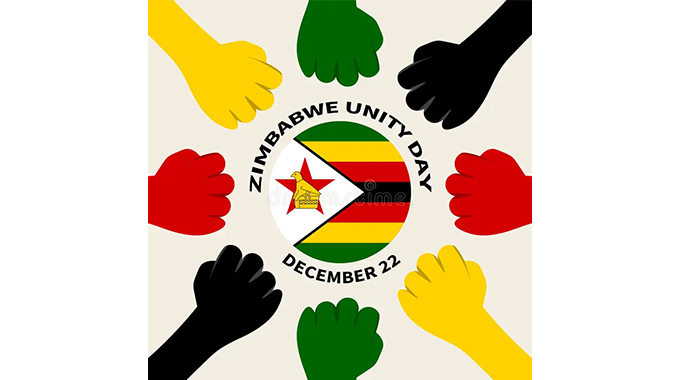
Lovemore Kadzura
Post Reporter
THE National Unity Day, celebrated annually on December 22, holds profound significance in Zimbabwe’s history.
It commemorates the signing of the Unity Accord in 1987 between ZANU and ZAPU, the two major political parties that had fought side by side in the liberation struggle, but later found themselves locked in tension and conflict during the early years of independence.
This day is more than a political milestone; it is a reminder of the enduring importance of peace, dialogue, and tolerance in nation-building.
The Unity Accord brought an end to suspicion, mistrust, and instability, laying the foundation for reconciliation, cohesion, and lasting peace.
In a country as diverse as Zimbabwe, unity is indispensable for development. The nation has demonstrated that ethnic, cultural, and political differences should never be allowed to divide its people. Instead, diversity in tribe, region, race, and creed has become a source of strength and pride, enriching the national identity.
ZANU PF Central Committee member and legal practitioner, Advocate Kelvin Manyengavana, underscored the significance of this unity, noting that it has provided a solid foundation for economic growth, national development, and prosperity for the majority of citizens. He added that unity has cemented political stability, enabling Zimbabweans to freely enjoy and exercise their rights and freedoms and rights.
“Unity Day is an important event in Zimbabwe, particularly in 2025, because it is closely connected to the overall objectives of Vision 2030. This vision seeks to make Zimbabwe an upper-middle-income economy by the Year 2030 with inclusivity, growth, and national development being the main focus. Unity Day is a very important reminder of the need to maintain national solidarity, cutting ethnic and political rifts and increasing citizen participation in governance and economic life; a united people have a better chance to engage actively in the governance and economic process, and a feeling of ownership and responsibility towards the national development arises.
“In addition, the day fosters political stability which is essential in economic growth. By providing a sense of assurance to local and foreign investors that Zimbabwe is determined to have a stable political environment, unity establishes a good business and investment climate.
“It also assists in reducing the possible conflicts due to the political divisions, creating peace that is necessary in economic activities. By focusing on collaboration, Unity Day opens the path to integrated economic policies, which cater to the demands of different communities ensuring that marginalised groups are included in economic growth and that the marginalised communities are given a say in the formulation of policies,” he said.
He added that unity and peace prevailing in the country has allowed the flourishing of good governance hinged on independent and strong national institutions which give citizens confidence in the leadership, and this is attracting both foreign direct investments, local investment and diaspora remittances which are anchoring the economic recovery and stable growth being registered in key sectors such as agriculture, mining, tourism and construction.
“Unity Day is an opportune time to re-commit to the national vision of Vision 2030, which can mobilise resources required to achieve the grand objectives of the said vision.
“:Through improved cultural integration and taking advantage of diversity in the country, the country can get more tourists and investors which will boost the economic growth. Entrepreneurship can also be boosted by a cohesive society, which results in innovation and creation of employment that is of high priority in diversifying the economy and lessening reliance on conventional sectors.
“Unity Day highlights the importance of good governance and well-established institutions, which create a good investment climate and help ensure that policies regarding the economy are properly implemented. The skills and capabilities of the workforce can also be enhanced through the encouragement of the Government and the civil society to work together in capacity-building activities and this is a necessity in economic development.
“Unity Day is not necessarily a historical reconciliation, but a strategic necessity to reach the economic stability and development.
“By strengthening the values of unity and collaboration, it becomes a driver of the development on the path of the Vision 2030 and changes the economic environment of the Zimbabwe, making the country promote the prosperous future of all its inhabitants,” Advocate Manyengavana.
Youthful entrepreneur, Mr Peter Muchirahondo said unity and peace has allowed people to invest in various economic activities, and the absence of disturbances, acts of violence and acts of violence will continue to attract more development.
He added that the country’s leadership must be applauded for its commendable and successful efforts of keep the citizens united.
“Before the signing of the Unity Accord there was an attempt to divide Zimbabweans along regional and tribal lines. As young entrepreneurs, this day heralds a new amazing chapter in our democratic dispensation as it is replete with enormous business opportunities in mining, agriculture and land development.
“Peace and unity is the hallmark of economic development. Absence of peace and unity breeds chaos and scare away investment.
“Every citizen is working hard to uplift their lives without worrying about their race, colour or regional background. Through peace and unity, there are equal opportunities for every Zimbabwean,” said Mr Muchirahondo.