Chronicle Editor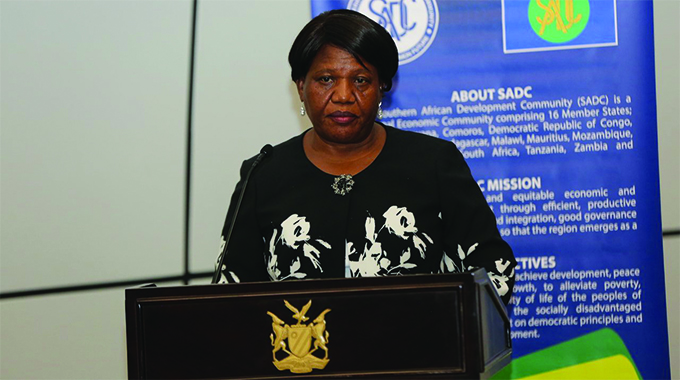
Nqobile Tshili, [email protected]
THE establishment of new universities in Matabeleland provinces and the unlocking of agriculture sector potential, among others, have amplified the transformation of the region and increased its contribution to national development, a senior Government official has said.
The Government has been at the forefront of constructing universities in the region, beginning with the National University of Science and Technology (Nust) in the early 1990s in Bulawayo, followed by Lupane State University in Matabeleland North and now the Gwanda State University in Matabeleland South.
The Zimbabwe Open University also caters for a huge market in the region.
While Solusi University has been in existence for many years in Bulilima District, other private players such as the Women’s University in Africa, Catholic University of Zimbabwe and Africa University, have increased their footprint in the region through the opening of university campuses to expand access to higher and tertiary education.
These institutions are working closely with communities and support the productive sectors through research and development, which is critical in fostering sustainable development models.
The on-going construction works at public universities are impacting positively on the downstream supply chain, with other players such as the Infrastructure Development Bank of Zimbabwe (IDBZ) coming in to invest resources in the construction of students’ hostels, creating a vibrant economic network that benefits the region, Acting Permanent Secretary of Foreign Affairs and International Trade, Ambassador Rofina Chikava, said in an interview yesterday.
She was speaking in Bulawayo on the sidelines of the ministry workshop where she stressed the need for potential investors to tap into the growing economic opportunities in Matabeleland region.
While the Government was funding major infrastructure projects to advance economic transformation, she said private sector players must also come on board and complement such efforts.
“During the Zimbabwe International Trade Fair, we held a diaspora conference where we were looking at investment opportunities in the region, and there are a lot of investments we are looking at,” said Amb Chikava.
“Universities are also sprouting up in this region and these are all investments and we feel we can do more. You can see what is happening in our country, there is so much development even here in Bulawayo you can see what is happening.
“In agriculture, we have one of the biggest growers of wheat here in Matabeleland. We are also talking about a dry port in Bulawayo, which is again another bigger project.
“But this is up to Bulawayo and Matabeleland to come up with projects where we can share with those who want to invest in the region,” she added.
Amb Chikava said the Ministry of Foreign Affairs and International Trade was ready to assist provinces to create successful investment portfolios including making breakthrough in trade.
She said provinces should ride on devolution policy to ensure that development is spread across the country without leaving any area behind.
“What we are doing, you know the issue of devolution, the President has made devolution a priority in under his Government so that we all grow together,” said Amb Chikava.
“We don’t want to leave any province behind and as Foreign Affairs Ministry when investors come, we call in the regional resident ministers to come and talk to the investors so that they present the projects.
“It’s up to the leaders here to identify the projects, which can drive their region into a successful investment hub.”
She said her ministry is also working on bringing Zimbabwean based in the diasporans to invest back into the country.
A database has already been created to facilitate the engagement with the diaspora community and this has made it easy for President Mnangagwa to meet them when he travels abroad, she added.
“Every time when His Excellency travels, he makes sure he meets our diaspora. It’s part of his engagement policy. We are now working on the diaspora policy, which we are hoping by mid next year will be out where we are inviting our diaspora to look at the issue of investment in the country and that is how we are driving investment,” said Amb Chikava.
“Our ministry is in touch with Zimbabweans in the diaspora. We have a link that connects us with them,” she said.


 Online Reporter