Online Reporter
Remember Deketeke-Herald Correspondent
Universities and colleges should accelerate the commercialisation of innovations, with the Government expecting them to play a leading role in driving industrialisation, export growth and inclusive economic development under National Development Strategy 2 (NDS2).
Higher and Tertiary Education, Innovation, Science and Technology Development Minister Ambassador Frederick Shava said institutions of learning should move faster in converting research outputs into market-ready products and services.
“The Ministry expects universities to accelerate the commercialisation of patents and prototypes from our innovation hubs. Many of you are already doing this, but we need to increase the pace,” said Ambassador Shava. He said strong collaboration between academia and industry was critical to ensuring graduates acquire skills that respond to the needs of the marketplace. “I strongly encourage institutions to pursue industry collaboration to ensure our graduates develop skills directly relevant to the demands of the marketplace,” he said. “On its part, the Ministry has established a directorate on business development which will work with universities and colleges to ensure our commercialisation and entrepreneurship development efforts begin to bear fruit.”
Dr Shava said institutions must also adapt their academic programmes to emerging global trends by mainstreaming critical skills such as artificial intelligence, cyber security and data analytics.
“These are the engines of modern economies and will drive Zimbabwe’s industrialisation and competitiveness.” Laboratories for STEM subjects needed to strengthen advanced research and innovation ecosystems, while institutions had to support staff and student research through the provision of patent capital.
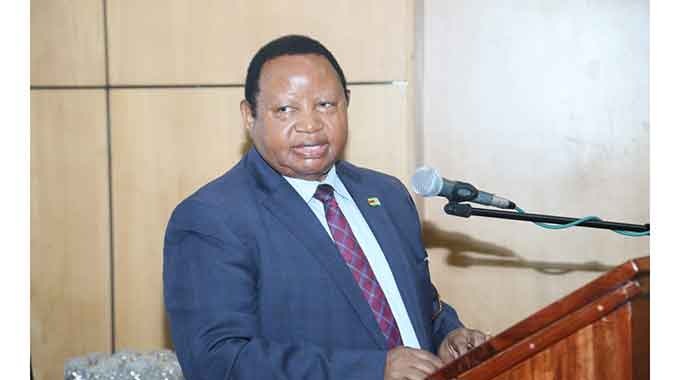
Dr Shava said institutions must also adapt their academic programmes to emerging global trends by mainstreaming critical skills such as artificial intelligence, cyber security and data analytics.
On rural industrialisation, Dr Shava said innovation hubs and agro-industrial parks should be transformed into export-oriented clusters capable of generating sustainable revenue.
Dr Shava said embracing science, technology and innovation, while strengthening links with industry and international partners, would position higher and tertiary education as a key driver of national development.
University of Zimbabwe Vice-Chancellor Professor Paul Mapfumo said institutions were now deliberately developing innovations with a clear focus on commercialisation along specific value chains.
“In terms of human capital development, when we develop innovations towards commercialisation, we are working on specific value chains,” said Prof Mapfumo. “This involves skills at the production level, skills in the commercialisation space and skills in installation.”
University programmes were increasingly being shaped by the need to deliver practical outputs that responded to national development priorities.
“Our programmes are now driven by the desire to produce outputs that benefit ordinary people and respond to national development demands,” he said. “This is already changing the kind of graduates we produce, making them more practical, interactive and relevant.”
Gwanda State University Vice-Chancellor Professor Doreen Moyo said adopting communities was key to effective skills development for students.

Dr Shava said embracing science, technology and innovation, while strengthening links with industry and international partners, would position higher and tertiary education as a key driver of national development.
“The Honourable Minister spoke about adopting communities to ensure that universities have a tangible impact on society and on the common people on the ground,” said Prof Moyo. “That process connects our students to communities, equips them with relevant skills and enables them to provide technical know-how through science, technology and innovation.”
She said human capital development must be supported by relevant and modern infrastructure.
“As universities, we are investing in state-of-the-art infrastructure. At Gwanda State University, for example, we now have a modern mining laboratory.”
Prof Moyo said institutions were ready to align training with national development goals.
“As we move into 2026, universities are ready not just to churn out graduates, but to ensure training is relevant to the communities we serve, in line with the President’s vision,” she said.