Online Reporter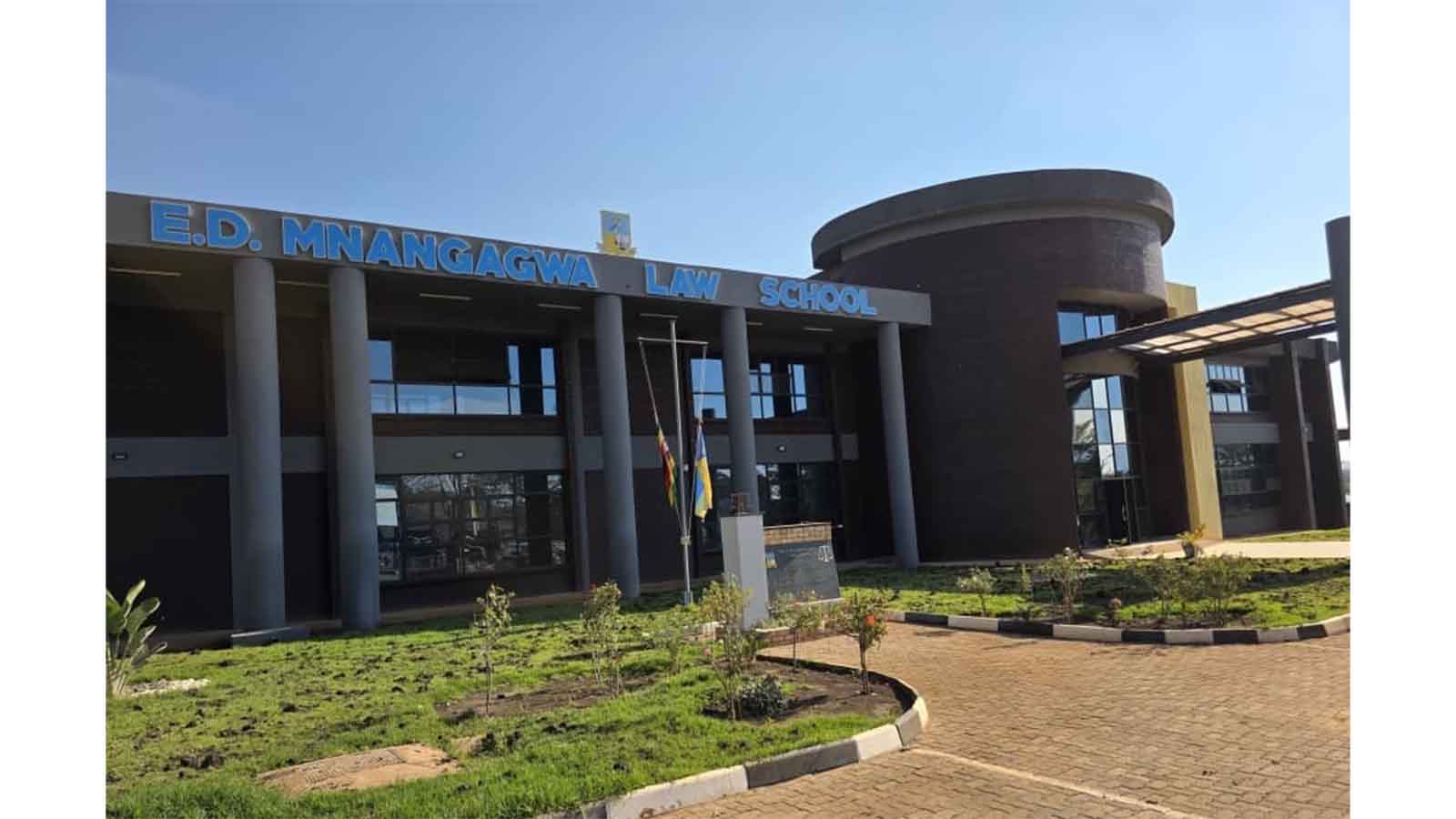
Freedom Mupanedemo
Midlands Bureau
THE Emmerson Dambudzo Mnangagwa Law School is emerging as a centre for academic collaboration and legal education, as Zimbabwe’s rollout of modern education infrastructure under the Heritage-Based Education 5.0 Model draws regional attention.
A delegation from the University of Zambia Law School Class of 1975 toured the state-of-the-art facility in Kwekwe on Wednesday, describing it as a milestone in strengthening legal education and promoting regional academic integration.
The visiting delegation included members of the University of Zambia School of Law Class of 1975, where President Mnangagwa studied law.
The delegation also presented a publication titled, “Conversations With The Law School Class of 1975”, which chronicles the experiences of classmates who studied alongside President Mnangagwa.
In a significant boost for legal education in the country, the Midlands State University Faculty of Law will relocate to the new Emmerson Dambudzo Mnangagwa Law School in Kwekwe this August.
All law lectures, tutorials and administrative operations will move to the new facility when the 2026 academic semester resumes.
The campus, named after President Mnangagwa, was constructed to expand capacity and provide modern teaching infrastructure for law students.
Construction began in 2023. The self-contained, double-storey campus will feature lecture rooms, moot courts, a library, hostels, a kitchen, a hospital and staff quarters, among other essential facilities.
MSU Acting Vice Chancellor Dr Gift Manyatera said the institution represents a long-term investment in the country’s legal education system.
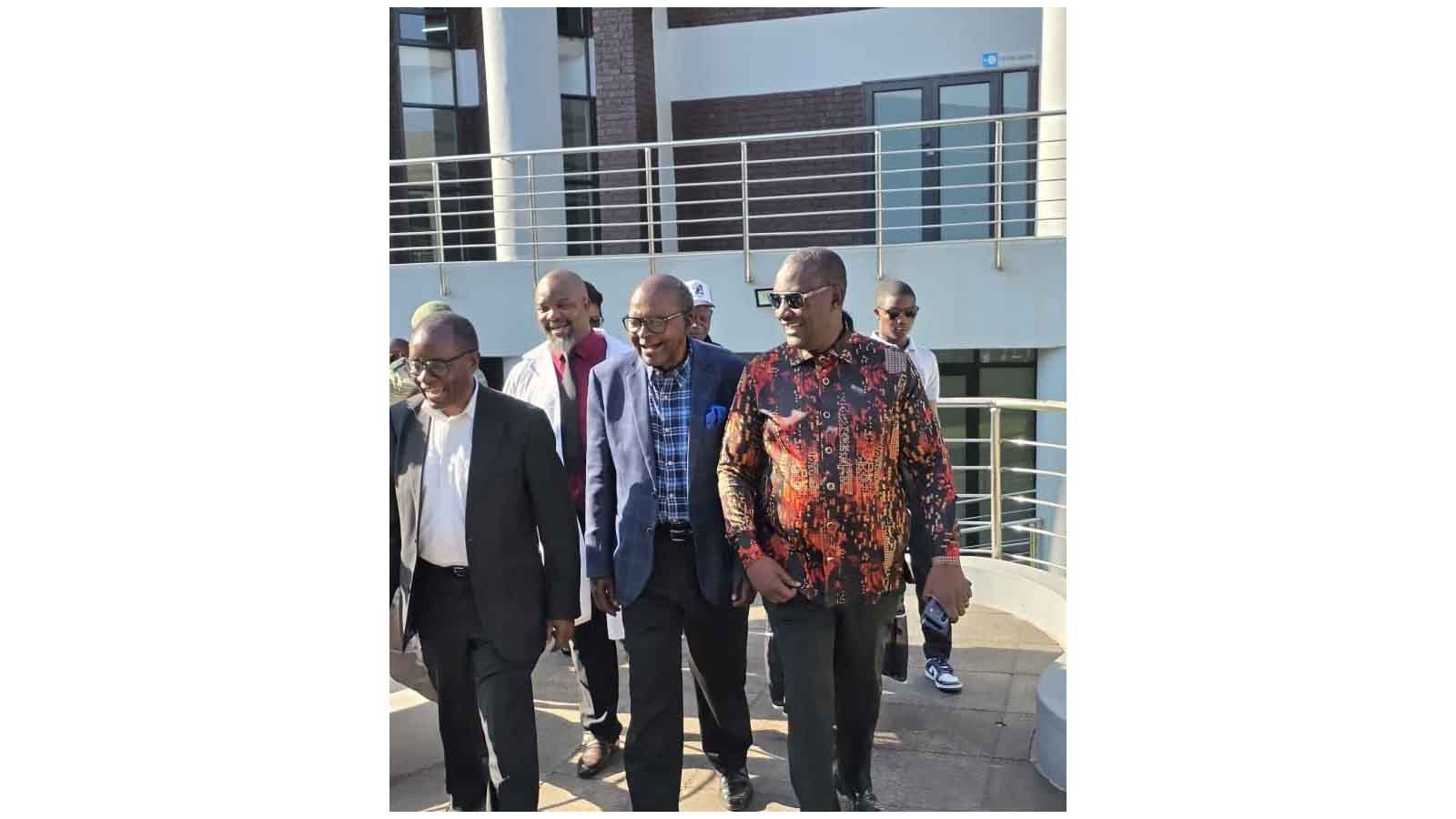
“This is more than a building; it is an investment in the future of legal education. The faculty opens this August and will provide students with a world-class learning environment that supports research, innovation and industrialisation,” he said when addressing the delegation.
Dr Manyatera said the new law school is expected to strengthen Zimbabwe’s position as a regional destination for legal education, research and academic cooperation.
Class member Professor Mpanzi Sinjela said the facility highlights the importance of investing in quality educational infrastructure.
“I think this is a remarkable exercise that shows us where we are and where we have to be. Infrastructure is critical,” he said.
Midlands Provincial Affairs and Devolution Minister Owen Ncube said education remains central to Zimbabwe’s development agenda.
“The Second Republic continues to prioritise education because it is the foundation of national development. Facilities such as this will strengthen research, innovation and partnerships that benefit both Zimbabwe and the region,” he said.
“This facility is befitting President Emmerson Mnangagwa’s name as he champions education and development.”
The relocation marks a new chapter for the faculty, which has grown rapidly since it was established.
The new law school features moot courts, lecture theatres, a law library, clinical legal education units and digital research facilities.
The Kwekwe Campus was commissioned by President Mnangagwa last year. The ceremony was historic as it marked the first time the University has held a graduation ceremony outside its Main Campus in Gweru.
Situated on a 220-hectare site along the old Gokwe Road in Kwekwe, the new Law School will serve as a hub for legal excellence, with capacity to accommodate 600 students.
The campus will also house the Faculties of Agriculture and Natural Resources, and the Built Environment.
Currently, MSU enrols 120 undergraduate law students per year and offers two master’s programmes with 30 students annually.
The Emmerson Dambudzo Mnangagwa Law School forms part of Government’s drive to modernise higher education through the Heritage-Based Education 5.0 Model, which prioritises research, innovation and industrialisation.
The institution is expected to play a vital role in achieving Vision 2030 by equipping students with cutting-edge knowledge and skills to drive national development.
President Mnangagwa’s legal expertise and reforms have left an indelible mark on the justice system, with the law school standing as a fitting tribute to his legacy.
The President also advocated for the abolition of the death penalty, having survived a death sentence during the liberation struggle on a technicality.