admin
admin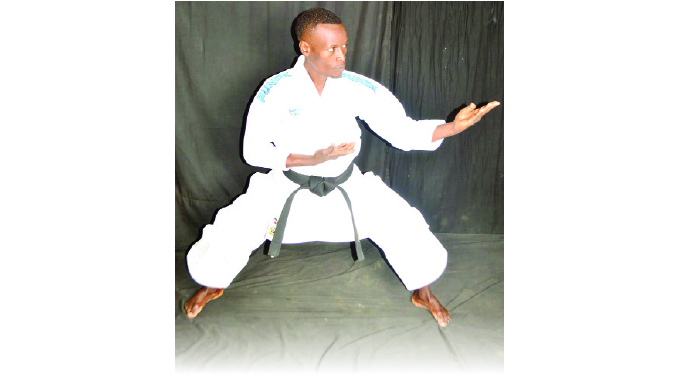
Innocent Kurira,[email protected]
In the vibrant streets of Bulawayo’s Nkulumane suburb, amid the bustling Bullet Shops, a familiar name echoes through the air — Branco. As the name reverberates, a group of children can be seen mimicking karate stances, playfully parodying a kata or two. Branco Manyathela has become a household name in this neighbourhood, and indeed, across the entire country, owing to his exceptional skill and proficiency in martial arts.
Karate, a Japanese martial art renowned for its focus on defensive and counter-attacking body movements, is often misconstrued as a violent and malevolent practice by some. However, behind the perceived aggression lies a deeper purpose. The true essence of karate, in its modern practice, lies in the cultivation of spiritual awareness through the harmonious integration of mind, body, and spirit.
Branco, the esteemed chief instructor of the Shukokai Karate Academy, recently achieved a significant milestone in his journey. He passed a coaching examination and is now recognised as an accredited Kata coach in the Southern region, which encompasses countries such as South Africa, Botswana, Mozambique, Angola, Zambia, and Namibia.
Though he may not possess the gravity-defying acrobatics of Jet Li, this soft-spoken and humble sportsman’s physique is akin to a weapon of mass destruction. With quiet confidence, Branco shares his love affair with karate, which began at a tender age.
“It is truly an honour to have come this far in the sport. I first ventured into karate through the influence of my brother and his friend, who were renowned karatekas. This was back in 1998 when I was in Grade Six. From that moment, I fell deeply in love with karate,” Branco fondly reminisces.
Society holds a certain respect for those who embrace karate, viewing them as disciplined individuals. The understanding that “umuntu wekarate ulomthetho” (a person who practices karate has principles) creates a sense of admiration and self-respect within the practitioner.
Branco’s success in karate spans over 17 years.
“My journey of achievements began in 2006 when I participated in my first karate tournament held at Moxis Beauty Parlour in Bulawayo. Subsequently, I won numerous medals in the Men’s Kata category while competing internationally in South Africa. Last year, I was honoured with the appointment of lead chief instructor for Shukokai Karate Academy Zimbabwe, affiliated with Shukokai Karate Academy England,” Branco proudly shares.
As a devoted father of two and a boiler maker at the National Railways of Zimbabwe, Branco has learned to master the art of juggling his demanding schedule.
“Nothing worthwhile comes easy. I have always believed in working tirelessly to achieve success. That’s why I push myself to the limits, training before and after work, and also dedicating my time to teaching karate classes. It’s not easy, but I have managed to find a balance,” he asserts.
Branco firmly believes that karate is a sport on the rise.
“Karate in Zimbabwe is gaining recognition, thanks to our successful athletes who have represented the country and triumphed in prestigious events. Additionally, more schools are incorporating karate into their sports programmes,” he explains.
One of Branco’s current projects involves introducing karate to schools such as Ladybird Junior School, Once Upon a Child School, Faith Christian College, Quntwasi Junior School, and Love and Kindness School. His aim is to identify talented children and provide them with training opportunities at the Karate Academy. Perhaps, they will compete within the sport and have the chance to be selected for the national team.
“Recently, five of my students were selected to represent Zimbabwe at the AUSC Region Five championships,” he said.
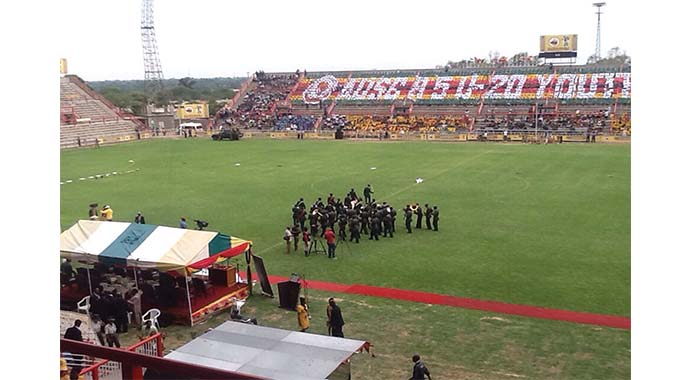
The AUSC Region Five Karate Championships, which took place in Harare, marked a significant milestone for Zimbabwe. The four-day competition brought together seven countries, including South Africa, Botswana, Namibia, Angola, Zambia, Mozambique, and the host nation, Zimbabwe. The spirited display of talent and dedication resulted in Zimbabwe securing a commendable third-place finish.
South Africa emerged as the champions, showcasing their dominance with an impressive haul of 55 gold medals, 37 silver medals, and 53 bronze medals. Botswana claimed the second spot, earning 21 gold medals, 13 silver medals, and 11 bronze medals. Zimbabwe proudly secured the third position, clinching a total of 40 medals — five gold, ten silver, and 25 bronze. Namibia and Zambia followed in fourth and fifth place, respectively, while Angola and Mozambique completed the rankings in sixth and seventh place.
This high-profile competition marked a significant milestone for the Zimbabwe National Karate Federation (ZNKF), established just two years ago.
The federation, formed in response to the breach of WKF rules by the previous administering body, ZKU, has been actively working on strengthening the sport in the country. Following their formal admission into the World Karate Federation (WKF), ZNKF has been diligently building structures and organising domestic competitions to further elevate the practice of karate in Zimbabwe. —@innocentskizoe


 Online Reporter