Online Reporter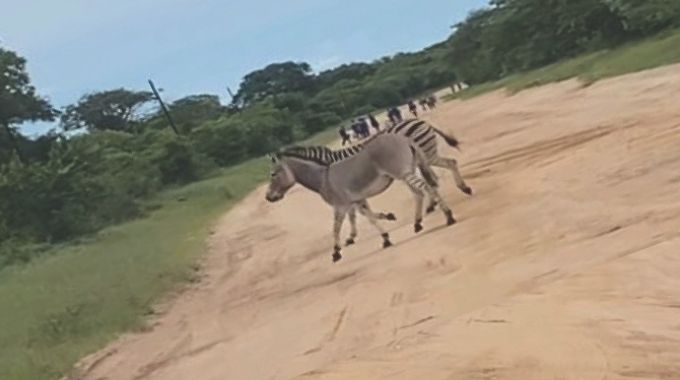
Mthabisi Tshuma, [email protected]
FOR more than three years, the quiet village of Thekwane in Bulilima District lived with a story that many people would find hard to believe. In a place where life usually follows a simple, familiar pattern, an unexpected visitor arrived and slowly became part of everyday life. A stray zebra wandered into the community, turning an ordinary village into a place of curiosity, wonder and, in time, an unlikely bond between animals that few had ever seen before.
It all began one morning when villagers woke up to an unusual sight. Moving slowly through the settlement was a lone zebra, looking tired and disoriented. It had clearly strayed far from its natural habitat, away from its herd and the open plains where it belonged. There were no other zebras in sight, and no clear path back home. With nowhere else to go, the animal settled into life among homesteads, dusty paths and open grazing lands in Thekwane.
At first, the villagers were surprised. Seeing a zebra up close in a rural setting like this is something most people only experience from a distance, often in parks or wildlife areas. For young boys and girls in the village, it was something new and exciting, something they would normally never see so closely.
As days passed, the initial shock turned into something else. The community began to accept the zebra’s presence, and in time, it became part of daily life. People grew used to seeing it move alongside livestock, grazing peacefully. What followed, however, was something no one could have predicted.
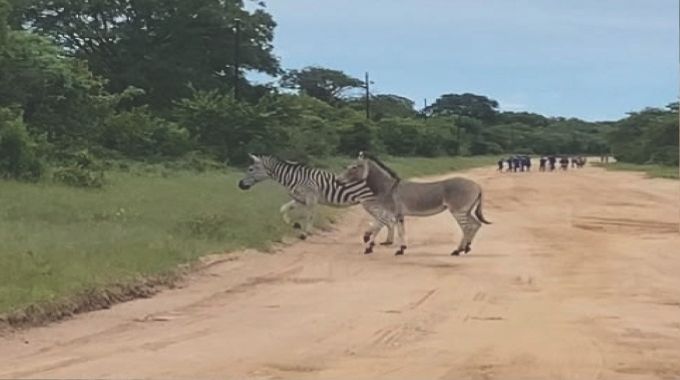
The female zebra formed a bond with a male donkey from the village. The two animals became inseparable, moving together as though they had always belonged to each other. For the villagers, it was both strange and fascinating — an unusual friendship that defied what they thought they knew about animals.
The story took an even more surprising turn when the zebra gave birth. The offspring was unlike anything the community had seen before. It had features from both animals — striped legs like a zebra, but the build and ears of a donkey. The villagers quickly gave it a name that captured its mixed identity: a “Zonkey”, a combination of zebra and donkey.
For three years, both the zebra and its unusual offspring lived among the villagers. The Zonkey became a centre of attention, drawing interest from young and old alike. People would stop to admire it, talk about it and reflect on how something so unusual could happen in their own community. It became a symbol of how life can sometimes surprise people in unexpected ways.
Even as the villagers grew attached to the zebra, there was always an understanding that it did not belong there permanently. It was a wild animal that had simply lost its way. Over the years, authorities were informed about its presence, but nothing happened for a long time. Eventually, park rangers and officials arrived and took steps to return the zebra to its natural habitat, bringing an end to a chapter that the community had grown used to.
A zonkey, as explained by experts, is a hybrid animal produced when a zebra mates with a donkey. Both animals belong to the same family, which makes such crossbreeding possible. The result is an animal that usually takes on the body shape and behaviour of a donkey but carries the distinctive stripes of a zebra on parts of its body.
These animals are very rare in the wild because zebras and donkeys do not normally share the same environment. Most zonkeys are found in controlled settings such as farms or wildlife reserves. They are also almost always sterile, meaning they cannot reproduce. This is due to differences in the number of chromosomes between zebras and donkeys, which prevents normal reproduction.
Despite their rarity, zonkeys often inherit strong qualities from both parents. They are known to be hardy, adaptable and capable of surviving in tough conditions. The one born in Thekwane fits that description — a rare and natural occurrence that became a living example of how unpredictable nature can be.
Chief Mphini of Bulilima district remembered well the early days when the zebra first arrived. He said the situation was not easy at the beginning, especially for villagers who depended on their livestock.
“We stayed for quite a while with this zebra and l remember when it came, the villagers came to me as their traditional leader to inform me that their donkeys now live in fear. As time went on, there was some connection that started to develop and the young boys now wanted to hunt it but l stated that l will not allow that at all as the zebra did not harm anyone,” said Chief Mphini.
He said that over time, both people and animals adjusted to the new reality. What once seemed unusual slowly became normal.
“The zebra later joined the donkey herds and l remember Sobhuku Gonde had a lot of male donkeys that were big which were able to mate with that zebra. This was something that we had never seen in our lives, something so bizarre.
“We ended up getting used to it and later on people would even come to look for it as the area had now become a tourist attraction site. I believe also this thing is happening in too many communities due to the expansion of the communal areas into the parks,” said Chief Mphini.
Other villagers shared similar experiences. One local resident, identified only as Ndlovu, said the arrival of the zebra brought both fear and confusion, especially among the donkeys.
“We lost a lot of donkeys who strayed when this zebra first came to the area. I believe the donkeys were shocked to see something alike to them but different in colour. We were even shocked to see the zebra showing signs that it was pregnant. Seeing the little off cut was even a shock as it’s something we will stay with for the rest of our lives,” said Ndlovu.
For Thekwane village, the story of the stray zebra and its Zonkey will not easily be forgotten. It was a rare experience that brought people closer to nature in a way they had never imagined. Even after the zebra’s departure, the memory remains—a story passed on from one person to another, reminding everyone that sometimes the most extraordinary things can happen in the most ordinary places.