Online Reporter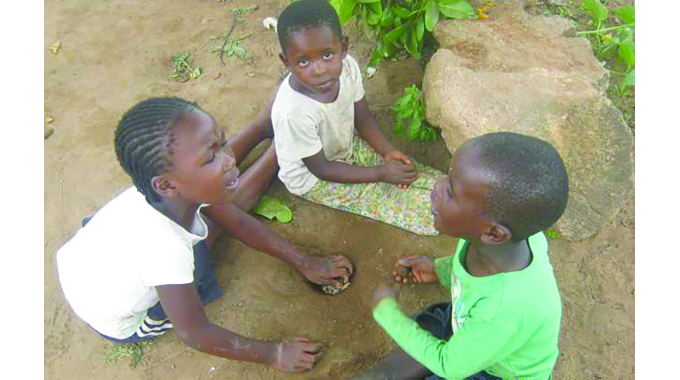
Charles Mavhunga
Tourism Branding
Zimbabwe’s rich cultural heritage, particularly its traditional games, are a vital part of the country’s identity.
These games, passed down through generations, promote social interaction, physical activity and cognitive development.
Through showcasing them at tourism sites, Zimbabwe can create a unique tourism brand that highlights its cultural heritage, attracting global visitors.
The incorporation of innovations and immersive experiences enables tourists to engage with local communities, learning about traditional games interactively.
This fusion of culture, technology and innovation can establish Zimbabwe as a leader in cultural tourism, driving economic growth, fostering cultural exchange and building a lasting legacy.
Through promoting traditional games and cultural heritage via technology and innovation, Zimbabwe can create a strong brand image, appealing to visitors seeking authentic cultural experiences.
Traditional games of Zimbabwe at our tourism sites
Tsoro:
This is a traditional strategy board game played by the Shona people, which offers more than just entertainment; it provides a platform for developing critical thinking and problem-solving skills.
Mathematical formulas derived from tsoro gameplay include combinatorial strategies and probability analysis.
Players develop innovative skills such as forward thinking, pattern recognition, and analytical reasoning.
Lessons gained from tsoro include strategic planning, adaptability and decision-making.
The game also promotes the protection of cultural heritage and scientific knowledge, showcasing the ingenuity of traditional games.
Internationally, similar games like mancala have been studied for their mathematical and cognitive benefits, with examples including the development of AI algorithms and computational models inspired by these games.
Nhodo:
Nhodo, a traditional game where players toss a stone or mubhoga into the air, skilfully remove stones from a circle and catch the mubhoga with the same hand, is more than just a playful activity.
This game, often played by children, involves strategy and critical thinking, offering valuable lessons that can be applied in real-life situations.
Players develop essential mathematics skills, such as spatial reasoning, geometry and calculation of trajectories, as they anticipate the movement of the stones and the mubhoga.
Strategic thinking skills are also honed, including problem-solving, decision-making and hand-eye coordination.
The game’s requirement for players to think ahead and adjust their movements fosters adaptability and analytical thinking.
In real-life situations, the skills developed through playing nhodo can be applied to problem-solving in fields like physics, engineering and mathematics, where understanding spatial relationships and trajectories is crucial.
In addition, the game’s emphasis on strategy and critical thinking can benefit individuals in various professions, from business to science, where analytical decision-making is essential.
Through playing nhodo, children can develop a strong foundation in Science, Technology, Engineering and Mathematics (STEM) subjects and cultivate valuable skills that will serve them well throughout their lives.
Pada:
Pada is a traditional Zimbabwean game similar to hopscotch, where players draw a court on the ground, toss a stone into numbered boxes, and hop through the pattern, skipping the box with the stone, thereby promoting physical activity, mathematical skills and strategic thinking.
As players navigate the court, they develop essential life skills like critical thinking, problem-solving, adaptability and decision-making, such as calculating the trajectory of the stone, adjusting their hopping strategy and making quick decisions to complete the game.
For example, players must think critically to adjust their throw to land the stone in the target box and they must problem-solve to hop through the pattern without stepping on the wrong box.
Additionally, pada fosters social skills like communication, teamwork and good sportsmanship, as players take turns, cheer each other on and learn to win or lose graciously.
Through playing pada, children can develop cognitive abilities, physical coordination and social skills in a fun and interactive way, making it an excellent game for promoting holistic development in children.
Integrating traditional games into tourism branding
Integrating traditional games like tsoro, nhodo and pada into tourism branding can be a game-changer for Zimbabwe’s tourism industry.
Through showcasing these games at tourism sites, visitors can engage with local communities, learn about cultural heritage and participate in activities that promote cultural exchange, such as watching a demonstration of tsoro’s strategic board game or trying their hand at playing nhodo’s stone-tossing game.
This unique experience can be a major draw for tourists, setting Zimbabwe apart from other destinations.
For example, tourists can participate in a pada tournament, learning the rules and strategies while interacting with local children, or watch a game of tsoro and learn about its mathematical and problem-solving aspects.
Through incorporating traditional games into tourism experiences, Zimbabwe can create a memorable and immersive experience for visitors, fostering cultural understanding and exchange.
This integration can also support local economic development, as tourists pay to participate in game-playing activities or purchase traditional game-related souvenirs, ultimately contributing to the preservation of Zimbabwe’s cultural heritage.
Conclusion
In conclusion, Zimbabwe’s traditional games are a vital part of its cultural heritage, promoting social interaction, physical activity and cognitive development. Through showcasing these games through innovative and immersive experiences at tourism sites, Zimbabwe can establish a unique tourism brand, driving economic growth, fostering cultural exchange and building a lasting legacy.
This fusion of culture, technology and innovation can position Zimbabwe as a leader in cultural tourism, attracting visitors seeking authentic cultural experiences and creating a strong brand image that showcases the country’s rich heritage.
Charles Mavhunga co-authored textbooks in Business Enterprising Skills and is currently studying for a Ph.D. in Management at Bindura University. He can be contacted at [email protected] Cell:0772989816