Online Reporter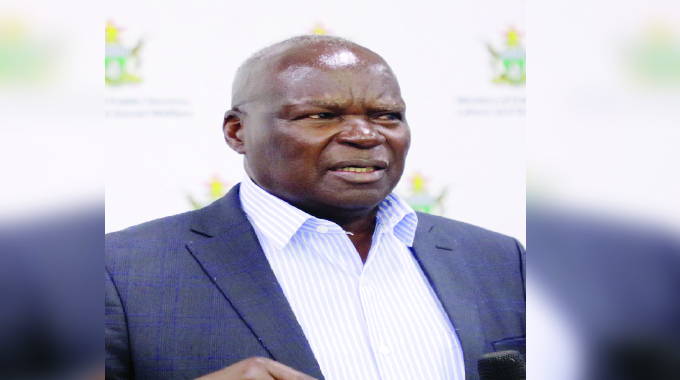
Gibson Mhaka, [email protected]
AS delegates descend on the majestic resort city of Victoria Falls for the 2026 SADC Sustainable Energy Week (SEW), the regional energy landscape stands at a critical crossroads.
Running from February 23 to 27, this high-level indaba, to be officially opened by President Mnangagwa, arrives at a symbolic moment where the quest for industrialisation meets the urgent reality of power shortages.
Southern Africa is grappling with a stark paradox: the region is richly endowed with vast energy resources, yet it simultaneously faces persistent supply deficits that threaten to derail economic integration.
Running under the theme, “Driving Regional Economic Growth Through Clean Energy and Energy Efficiency,” the event is far more than a mere talk shop; it represents a strategic effort to dismantle the structural barriers stifling the region’s industrialisation agenda.
By convening key decision-makers, investors and technical experts, the summit aims to transform these energy challenges into a blueprint for a sustainable, powered-up future.
The Context: Why Energy, Why Now?
Energy is the lifeblood of any modern economy. For the Southern African Development Community (SADC), the transition from a resource-dependent economy to a diversified, industrialised powerhouse hinges entirely on the availability of reliable and affordable power.
At present, the region faces a stark paradox: it is “energy-rich” but “power-poor”.
Despite possessing vast natural gas deposits in Mozambique, oil in Angola, and world-class solar potential across the subcontinent, millions of citizens remain off the grid.
This deficit acts as a significant “handbrake” on productivity, making the 2026 SADC Sustainable Energy Week in Victoria Falls a vital intervention to bridge the gap between resource abundance and energy poverty.
The hosting of this high-level indaba comes at a critical juncture where the regional industrialisation agenda is increasingly threatened by energy insecurity.
Energy is the silent engine behind the infrastructure projects, manufacturing hubs, and social development initiatives that drive economic integration.
However, the region’s current energy mix is under immense pressure. Approximately 74 percent of SADC’s power is generated from ageing coal-fired plants, while its hydroelectric facilities remain highly vulnerable to climate-induced droughts.

Minister of Energy and Power Development, July Moyo, underscored the urgency of the situation during recent high-level engagements, noting that the status quo is no longer sustainable if the region is to compete globally.
“The SADC region faces a persistent and significant energy supply challenge . . . marked by widespread electricity shortages, particularly in rural areas.
“There is low access to electricity; only about 32 percent of rural areas in the region have access to electricity, with SADC falling behind other African regions in this regard,” Minister Moyo stated.
By addressing these systemic vulnerabilities, the Victoria Falls summit aims to transform these challenges into opportunities for investment, ensuring that energy becomes a catalyst for — rather than a barrier to — southern Africa’s growth.
Creating an Enabling Environment for Investment
For SADC to transition from a “power-hungry” region to an “energy-secure” one, the primary hurdle is not a lack of resources, but a lack of investment.
Investors — whether they are private equity firms, development partners, or independent power producers — are looking for three non-negotiable pillars: stability, sustainability and predictable returns.
At present, the region faces barriers such as low, non-cost-reflective tariffs, poor project preparation, and limited off-takers capable of signing robust power purchasing agreements (PPAs) under rigid single-buyer models.
To attract the multi-billion-dollar capital required to tap into the Zambezi Basin’s hydro potential or the vast natural gas deposits in Mozambique, SADC member states must harmonise their legal and institutional frameworks.
An enabling environment requires “policy certainty,” where an investor in a solar park in Matabeleland or a wind farm in Namibia is protected by laws that transcend political cycles.
The 2026 SEW serves as the platform to refine these frameworks, moving toward a regional grid that allows for seamless energy trading.
Zimbabwe’s strategic advantage as host
Hosting this event carries significant diplomatic and economic weight for Zimbabwe.
Beyond the immediate optics of regional leadership, the Second Republic views the week as a cornerstone of its re-engagement and engagement policy.
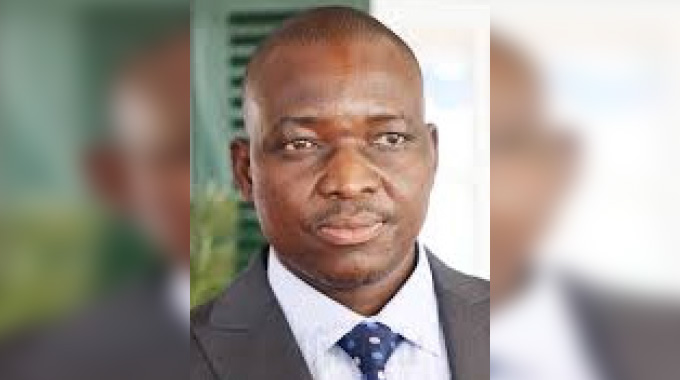
Minister of Information, Publicity and Broadcasting Services, Dr Zhemu Soda, recently highlighted that the advantages for Zimbabwe extend far beyond the energy sector itself.
“These benefits encompass stimulating economic growth through heightened tourism and hospitality activities, attracting new investments and business prospects, strengthening regional leadership and visibility, facilitating knowledge exchange and capacity development, and fostering strategic diplomatic partnerships and re-engagement initiatives,” Dr Soda said.
Victoria Falls, a premier destination for business tourism, is already feeling the impact of the influx of over 500 delegates.
For the hospitality sector, including hotels and tour operators, the event provides a massive financial injection.
However, the Government’s gaze is fixed on the long-term prize: Foreign Direct Investment (FDI).
By showcasing Zimbabwe’s commitment to clean energy and its readiness for business, the forum allows the country to pitch bankable projects directly to international financiers.
The shift toward clean energy and efficiency
The theme of the week, “Driving Regional Economic Growth Through Clean Energy and Energy Efficiency,” reflects a global shift that SADC must embrace to unlock “green financing”.
Southern Africa is a treasure trove of critical minerals like lithium and cobalt, which are essential for the manufacture of battery storage components.
Minister Moyo has emphasised that the region must move away from exporting raw materials and instead focus on value addition to secure its place in the global renewable energy value chain.
The Minister highlighted that the region’s diverse resource base is its greatest strength.
“The region can benefit from the hydro potential of the Zambezi basin, the hydro potential of the Inga River Basin, vast deposits of natural gas in Mozambique and rich oil deposits in Angola.
“It can also benefit from Uranium in Namibia, vast deposits of coal in Zimbabwe, South Africa and Botswana, and renewables such as solar, biomass, wind and geothermal distributed throughout the region,” Minister Moyo added.
The 2026 SEW aims to create the “National Energy Compacts” necessary to turn this potential into a legal and commercial reality.
Diplomacy behind the scenes
While the official opening is the highlight, the real work of the 2026 SADC Sustainable Energy Week happens in the “closed-door” technical sessions.
On the sidelines of the arrival of delegates, Minister Moyo confirmed that bilateral and multilateral diplomacy is already in motion to solve immediate transmission bottlenecks.
“Today, as you might know, we have a meeting that has been arranged, and we are meeting some of the ministers and delegates that have come, but we are dealing with specific issues such as the transmission system between us and Zambia, between us and South Africa,” he said.
These discussions are crucial because energy projects often require transboundary co-operation.
Whether it is the integration of clean cooking solutions or the expansion of regional transmission lines, the success of one nation is inextricably linked to the stability of its neighbours.
By hosting Eswatini’s Minister of Natural Resources and Energy, Prince Lonkhokhela, and other regional peers, Zimbabwe is facilitating the technical dialogue required to ensure that power generated in one corner of SADC can effectively reach a factory in another.
A vision for 2030 and beyond
The 2026 SADC Sustainable Energy Week represents a collective realisation that no country can achieve energy security in isolation.
By creating a stable environment where clean energy is seen as a viable asset class, Southern Africa is finally positioning itself to power its own industrial revolution.
As Minister Moyo succinctly put it: “Value addition as opposed to exporting raw materials is the key… the region can benefit from the hydro potential of the Zambezi, natural gas in Mozambique, and renewables such as solar and wind distributed throughout the region.”
As the 2026 SADC Sustainable Energy Week kicks off, the expectations are high.
The event is expected to produce a roadmap that not only addresses current load-shedding challenges but also sets the stage for a decarbonised industrial future.
For Zimbabwe, it is a chance to prove that it is a safe and lucrative destination for energy capital.
For SADC, it is a moment to prove that it can act as a unified economic bloc.
Access to affordable and reliable energy is not just a technical goal; it is a human right and developmental necessity.
As the region seeks to “leave no one and no place behind,” the outcomes of this Victoria Falls indaba will be measured by the number of homes electrified and the number of industries powered across the Southern African frontier.