Online Reporter
Zvamaida Murwira, [email protected]
THE Constitution of Zimbabwe Amendment Bill (Number Three) will restore political rights to traditional leaders to allow them to exercise civic rights like any other citizen.
Their conduct will, however, be regulated through an enabling law, which will stipulate how their political rights should be exercised.
The Bill was gazetted last week and has a 90-day period for public consultation and brainstorming before it is tabled before Parliament for debate.
Clause 21 of the Bill repeals Section 281 of the current Constitution to allow traditional leaders to exercise political rights.
“This clause repeals section 281(2). It violates the political rights of traditional leaders. Their code of conduct shall be provided in an Act of Parliament,” reads the Clause.
Section 281 (2) that is being repealed read as follows:
“Traditional leaders must not — (a) be members of any political party or in any way participate in partisan politics; (b) act in a partisan manner, (c) further the interests of any political party or cause; or
(d) violate the fundamental rights and freedoms of any person.”
Commenting on the Clause, Council of Chiefs President, Chief Mtshane Khumalo said they were going to meet soon as traditional leaders to study the Bill, particularly the Clause that relates to them.
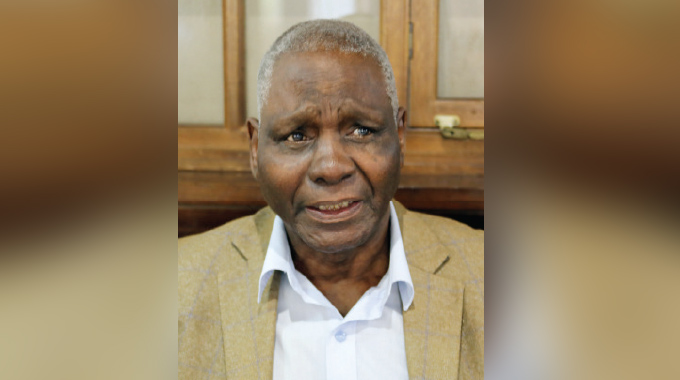
“We got copies of the Bill last week. We shall be meeting as traditional leaders next week to brainstorm about the Clause. Am equally keen to hear from my colleagues on their views. So, we will meet, discuss it, get an insight on the good side or negative side and we will then take a position,” said Chief Khumalo.
He said if the Bill sailed through, it will result in consequential amendments to the Traditional Leaders Act so that it is synchronised with the new legal framework.
“What we foresee is that passage of the Bill will result in consequential amendments to some sections of the Traditional Leaders Act to capture the spirit of the Constitutional Amendment Bill. One section that will be amended is Section 45 of the Traditional Leaders Act,” said Chief Khumalo.
Section 45 of the Traditional Leaders Act reads as follows: “Election of chief, headman or village head to political office. No chief, headman or village head shall be eligible for election as —
(a) President; or
(b) a member of Parliament in terms of section 281(1) of the Constitution; or
(c) a councillor in any local Government elections; whilst still holding office as chief, headman or village head.”
The Bill will, among other issues, extend the election cycle from five to seven years. It will also provide that the President be elected by Parliament.
After 90 days of public debate, the Bill will be tabled before Parliament, where the relevant Parliamentary Portfolio Committee will hold public hearings to gather people’s views.
The Bill will not be referred to a Parliamentary Legal Committee, an arm of Parliament that scrutinises whether a Bill or a Statutory Instrument is compliant with the Constitution.
After its first reading stage, it will go to the Second Reading Stage, which outlines the objectives and import of the Bill.
Thereafter, the Bill will go for the Committee stage, where the House constitute itself into a committee to scrutinise the Bill Clause by Clause.
It is at that stage where additional amendments are made, should the need arise.
Before going through a Third Reading, it will be subjected to a vote where, for it to pass, it would require two-thirds of the total membership, and not those present on the day before it passes.
Once that happens, it will be transferred to the Senate, where the same process will ensue, including voting.