Online Reporter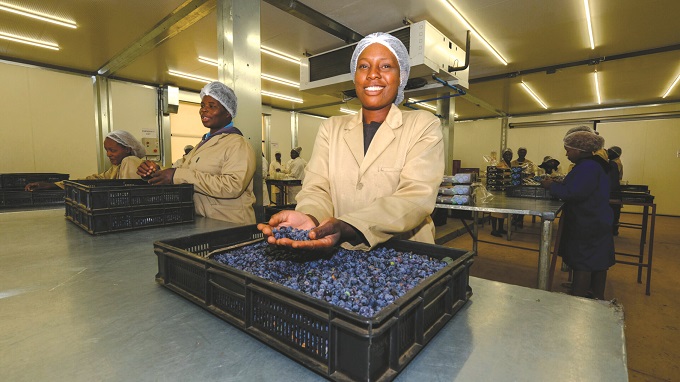
Word From The Market
Tina Nleya
AS Zimbabwe continues to expand its footprint in global agricultural trade, the European Union (EU) remains one of the most promising and lucrative destinations for horticultural exports.
From berries and citrus to peas and macadamia nuts, the EU market is not only large and well-established, but also actively investing in enhancing trade with Zimbabwe.
However, entering this market successfully requires careful planning, compliance with export regula-tions and awareness of what products are in demand.
Why target the EU market?
The EU is a premium agricultural market with over 450 million consumers who place strong emphasis on food safety, sustainability and product traceability.
Zimbabwe already benefits from duty-free and quota-free access to the EU under the Interim Eco-nomic Partnership Agreement (iEPA), which means our farmers can export their produce without pay-ing tariffs, provided they meet the necessary certification and compliance standards.
This preferential access gives Zimbabwean horticultural exporters a competitive edge, but only if they are ready to meet the EU’s high standards.
Export requirements
To tap into the EU market, farmers and exporters must meet specific legal and certification standards.
Here are some of the key requirements:
- AMA registration
All agro-producers and dealers must be registered with the Agricultural Marketing Authority (AMA).
This registration is a prerequisite for obtaining export permits and other necessary documents.
- Phytosanitary certificate
The Plant Quarantine Services Institute issues this certificate to confirm that produce is free from pests and diseases. It is a mandatory requirement for all plant-based exports to the EU.
- Export permit
Exporters must acquire a permit from the Ministry of Lands, Agriculture, Fisheries, Water and Rural Development. This outlines the product, quantity and destination.
- Self-certification under the REX system
As of July 2021, Zimbabwean exporters must self-certify the origin of goods through the EU’s Registered Exporter (REX) system. This replaces the previous requirement for EUR.1 movement certificates and is essential for accessing duty-free privileges.
- Food safety and traceability standards
The EU requires strict compliance with food safety regulations. This includes:
GLOBALG.A.P. certification, which covers good agricultural practices, food safety and worker welfare.
Hazard Analysis and Critical Control Points (HACCP) systems for hygiene and food handling.
Residue and contaminant testing to ensure products meet EU limits on pesticides and heavy metals.
For many smallholder farmers, these certifications can be a barrier due to cost and access to auditors.
However, grouping into cooperatives and clusters might help reduce the costs.
What’s in demand
The EU’s horticultural imports are driven by seasonal demand, health trends and sustainability goals.
Zimbabwe is well-positioned to supply many of the products currently in high demand, including:
Blueberries and other berries: These continue to fetch premium prices in the EU, especially from October to March when local European supply is low.
Citrus fruits: Lemons, oranges and mandarins are popular due to their vitamin C content and long shelf life.
Sugar snap and mangetout peas: A favourite in European kitchens for their crisp texture and ease of preparation.
Macadamia nuts: These are in demand across Europe for both retail and industrial use in confec-tionery and health snacks.
Zimbabwe’s favourable climate and counter-seasonal production make it an attractive supplier during Europe’s off-season, offering farmers better prices and market access.
How EU is supporting Zimbabwean horticulture
The EU is not just a trading partner; it is also a development ally.
Through various trade and investment initiatives, it is helping Zimbabwean farmers improve productiv-ity, meet export standards and build resilience.
- EU-Zimbabwe Economic Partnership Agreement (EPA)
Under the iEPA, Zimbabwean products enter the EU market duty-free, provided they meet origin and certification requirements. This arrangement provides a major incentive for Zimbabwean producers to go global.
- Team Europe and Global Gateway Initiatives
The EU has committed nearly US$600 million to development programmes in Zimbabwe, with a strong focus on agriculture, trade and climate-smart production. These funds are used to support training, infrastructure, certification and market access for farmers.
- EU-Zimbabwe Business Forum
In May 2025, Harare hosted the first EU-Zimbabwe Business Forum, bringing together over 60 Europe-an companies to explore trade and investment opportunities. Horticulture and agro-processing were among the main focus areas, with the EU reaffirming its commitment to helping Zimbabwean farmers meet EU standards and find buyers.
Practical steps for farmers
To become export-ready for the EU market, farmers and agribusinesses should consider the following steps:
Register with AMA — Ensure all paperwork is in order, including agro-producer certificates and export licences.
Understand market requirements — Familiarise with EU standards, including GLOBALG.A.P., HACCP and phytosanitary rules.
Join a cooperative — Collective action can reduce certification costs and improve bargaining power.
Apply for REX registration — This will enable you to self-certify origin and benefit from duty-free access under EPA.
The EU market is open and ready.
Let us seize this opportunity to grow our exports, increase farmer incomes and solidify Zimbabwe’s place in the global agricultural marketplace.
Tina Nleya is AMA’s marketing and public relations manager. She can be contacted on email: [email protected]. Word From The Market is a column produced by AMA to promote market-driven production.



 Online Reporter