Rodgers Irimayi
Cultural Perspectives
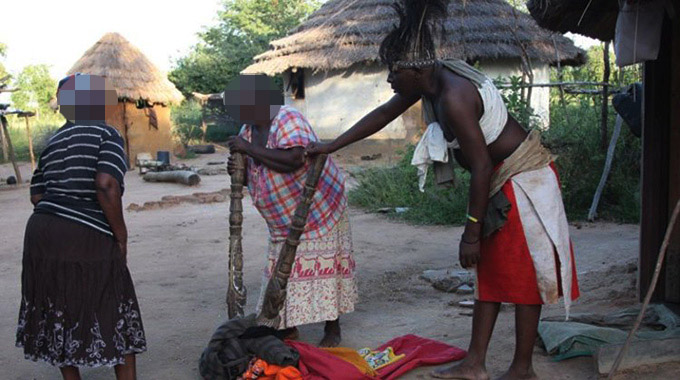
IN the quiet villages and bustling towns of Zimbabwe, the figure of the tsikamutanda, traditional witch-hunter, remains a potent symbol of cultural belief and social control.
Despite the march of modernisation and the spread of formal legal systems, the influence of these traditional practitioners persists, raising complex questions about their effects on individuals and communities in contemporary society.
They continue to exploit the innocent and unsuspecting individual, resulting in many losing their hard-won finances and properties.
The legacy of tsikamutandas
Historically, tsikamutandas have been viewed as custodians of spiritual justice, believed to detect and punish those accused of witchcraft or malevolent magic.
Their operations often involve rituals, investigations, and sometimes, accusations that lead to social ostracisation, violence, or even death. While their roles have evolved over centuries, many communities still turn to them for protection, guidance, and conflict resolution, especially in areas where state institutions are weak or mistrusted.
Modern-day operations and practices
Today, the operations of tsikamutandas are shrouded in secrecy, but reports and testimonies reveal that they continue to conduct investigations that can be invasive and destructive.
Typically, they identify supposed witches through rituals, divination, or spiritual insights, often without any scientific basis. Victims are sometimes subjected to exorcisms or public shaming, and in extreme cases, accused individuals face violence or exile.
In some communities, the belief in the power of tsikamutandas remains strong, reinforced by cultural narratives and social pressures.
This has led to a troubling persistence of witch-hunt practices, which often target vulnerable populations such as women, the elderly, or those accused of misfortune or illness.
The social and psychological toll
The effects of these practices are profound. Innocent individuals often bear the brunt of accusations, leading to social exclusion, loss of livelihoods, and psychological trauma.
There are documented cases of families disowning members accused of witchcraft, with some victims fleeing their homes to escape violence.
Tsikamutandas instill negative ideas among people about those who live better and have higher standards than others in a particular community such as those owning viable businesses, or having children that are well-off.
Moreover, the fear of being labelled a witch can perpetuate cycles of suspicion and mistrust within communities.
People who do not believe in their practices or those who have totally turned to Christ become targets and are easily labelled as witches or practicing sorcery. Young women, in particular, are frequently targeted, accused of using witchcraft to explain misfortunes or personal failures. This not only undermines gender equality but also hampers social cohesion.

Legal and ethical dilemmas
While traditional practices are deeply rooted in cultural beliefs, their operation raises significant ethical and human rights concerns. Many argue that the actions of tsikamutandas contravene constitutional rights to safety, dignity, and fair treatment.
Yet, efforts to regulate or outlaw their activities often face resistance from communities that see them as cultural custodians or spiritual guides.
In recent years, some NGOs and government agencies have attempted to curb the excesses of witch-hunting by promoting education and awareness campaigns. However, the entrenched nature of these beliefs makes eradication challenging.
The role of modern society
In an era of rapid modernisation, the continued operation of tsikamutandas underscores the tension between traditional beliefs and contemporary legal frameworks. It raises questions about how societies can balance respect for cultural practices with the protection of individual rights.
Some scholars advocate for integrating traditional leaders and spiritual practitioners into community development programs, ensuring that cultural practices do not infringe on human rights.
Others call for stronger legal measures to prevent violence and protect victims, emphasizing the importance of education to dispel myths associated with witchcraft.
Moving forward
Addressing the effects of tsikamutandas requires a multi-faceted approach. Community engagement and education are crucial in challenging misconceptions about witchcraft and promoting human rights.
Law enforcement agencies must be empowered to intervene in cases of abuse, while traditional leaders should be encouraged to condemn harmful practices.
It is also essential to foster dialogue that respects cultural beliefs while safeguarding individual dignity.
As Zimbabwe and other societies grapple with these issues, the goal should be to replace fear and suspicion with understanding, justice, and social cohesion.
Conclusion
The operations of tsikamutandas in modern society exemplify the complex interplay between tradition and progress. While they remain a part of cultural heritage for many, their potential to cause harm cannot be ignored. Striking a balance between respecting cultural diversity and upholding human rights will be key to ensuring that society moves toward a future where justice and tradition coexist peacefully.
Rodgers Irimayi writes in his personal capacity and can be contacted on +263778246098 or [email protected]. He can also be followed on his YouTube channel, Culture Views with Judah Kalispokaz