Online Reporter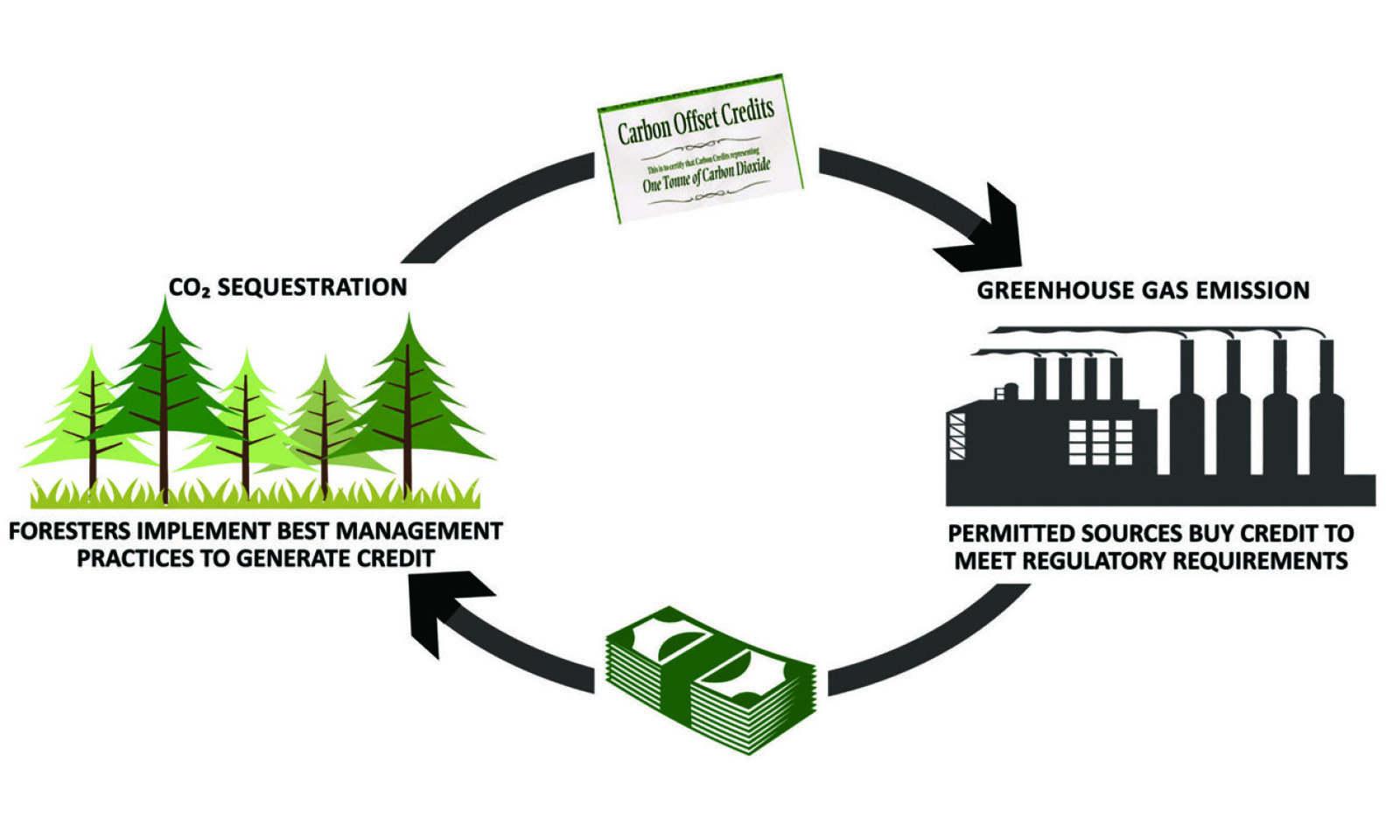
Jabulani Garwi
Correspondent
As the world prepares for COP30, scheduled for November 10–21, 2025, in Belém, Brazil, a deep unease shadows the optimism surrounding the global carbon market.
Once hailed as a breakthrough mechanism that would finance sustainable development while reducing global emissions, carbon credits have instead evolved into a complex, and often unjust, system of environmental exchange.
Across Africa, communities that live closest to the forests, wetlands and savannahs underpinning these carbon projects are beginning to question whether this new form of “green finance” is simply a repackaged version of the old extractive order; one that rewards the rich for polluting while leaving the poor to shoulder the burden of environmental protection.
The promise and the paradox
Carbon credits operate on a seemingly elegant principle: One tonne of carbon dioxide reduced or removed from the atmosphere in one place can offset a tonne emitted elsewhere. Wealthy nations and corporations, under pressure to meet net-zero pledges, purchase these credits to compensate for their continued emissions.
In theory, this creates a win–win scenario: the buyer meets its environmental target, and the seller, often a developing country, earns revenue for conserving nature.
To understand this mechanism, it is important to grasp how the carbon market functions.
Under this system, a carbon credit represents the right to emit one tonne of carbon dioxide or its equivalent. Credits are generated when a project, such as reforestation, soil conservation, or renewable energy, reduces or avoids emissions compared to what would have occurred under normal conditions.
These credits are then verified, certified, and sold to entities, typically corporations or governments, that wish to “offset” their own emissions elsewhere. The transaction takes place either in voluntary markets, where participation is optional, or in compliance markets, where regulations require emission reductions.
In essence, carbon markets turn the atmosphere into a tradable commodity, creating a global exchange where pollution rights can be bought and sold across borders.
In practice, however, this ideal has proven deeply flawed. The carbon market’s architecture rests on three fragile pillars: environmental integrity, transparency and fairness. When any of these collapses, the system begins to replicate the very inequalities it claims to solve.
Too often, credits have been generated from projects whose climate benefits are exaggerated or unverifiable. In many cases, forests designated for protection were never at genuine risk of destruction, meaning that the emissions “avoided” exist only on paper.
The result is a proliferation of what analysts call “phantom credits”, financial instruments that do little for the atmosphere but allow polluters to claim environmental virtue at minimal cost.
A vivid example of these systemic flaws emerged in Kenya, where the Northern Kenya Rangelands Carbon Project, once celebrated as the world’s largest soil carbon initiative, was suspended in May 2025 by Verra, the principal global body that certifies carbon projects.
The scheme had generated millions of dollars’ worth of credits sold to multinational corporations such as Meta and Netflix, yet it did so by imposing severe restrictions on the traditional grazing practices of the Maasai, Borana and Samburu peoples whose ancestral lands were used to produce the credits.
In January 2025, a Kenyan court ruled that several conservancies underpinning the project, including Biliqo Bulesa, were established unconstitutionally and without a legal basis, confirming long-standing claims that indigenous communities were excluded from decision-making and dispossessed of their livelihoods.
The scandal not only undermined confidence in Verra’s certification processes but also exposed how, in the absence of rigorous oversight and genuine community consent, carbon projects can deepen Africa’s historical inequalities, a dynamic explored across the continent.
Unequal benefits and new dependencies
For Africa, the controversy is not limited to technical verification. It strikes at the heart of economic justice. Carbon credits were supposed to channel billions of dollars into conservation and community development.
Yet, across the continent, evidence shows that the distribution of benefits remains profoundly unequal. While international project developers, brokers, and certification firms secure large profits, local communities, the custodians of the carbon sinks, receive marginal returns or none at all.
The imbalance is structural
The carbon market is dominated by buyers from industrialised economies and intermediaries with financial sophistication and access to global networks. In contrast, African countries, with limited regulatory frameworks and bargaining power, often enter agreements that undervalue their ecological assets.
Credits from African forests have frequently been sold at prices far below those fetched in regulated markets elsewhere. The result is a new form of resource extraction, what many observers describe as “carbon colonialism”, where the continent’s natural capital is monetised without genuine empowerment of the people who live on it.
This inequity extends to decision-making. Communities whose lands are earmarked for carbon projects are seldom consulted meaningfully. Complex contracts, drafted in technical and legal language, are often signed without full comprehension of their implications.
In some instances, communities lose customary access to grazing lands, firewood, or agricultural space in the name of conservation. Promised social benefits, such as schools, clinics, or revenue-sharing schemes, may be delayed, diluted, or never materialise. In effect, the poor are subsidising the environmental conscience of the rich.
Human face of carbon finance
Behind every carbon credit lies a landscape, and lives shaped by it. When carbon projects impose restrictions on land use without providing sustainable alternatives, the social cost becomes acute.
Farmers may be prohibited from clearing new plots, pastoralists may lose mobility, and local economies can stagnate.
Moreover, the anticipated revenue from carbon sales is often unstable. Market volatility and fluctuating demand have caused sharp drops in credit prices, leaving communities dependent on income streams that can disappear overnight.
This volatility exposes the weakness of relying on the carbon market as a tool for poverty reduction. A project that looks profitable under favourable market conditions can quickly become unsustainable when prices fall.
When funds dry up, conservation commitments lapse, and community trust erodes. In some cases, social tensions flare as local people begin to view conservation as an external imposition rather than a shared responsibility. The promise of a new green economy then turns into another chapter of disillusionment.
Structural, not technical problem
The failures of the carbon market cannot be understood solely as issues of poor management or weak verification. They are symptoms of a deeper structural imbalance reminiscent of the dependency dynamics that have long defined global economic relations.
Africa provides ecological services, its forests absorb carbon, its wetlands regulate water flows, its soils store organic matter, but the financial rewards and decision-making authority are largely externalised. This reproduces a pattern where the periphery supplies resources to the core while receiving a fraction of the value created.
If the international system continues to treat carbon as a tradable commodity divorced from justice, the carbon market will entrench rather than correct global inequalities. The rhetoric of “net zero” will mask a reality of “net injustice,” where the right to pollute is preserved by those who can afford it, and the obligation to absorb that pollution falls on those least responsible for it.
Towards a fair carbon regime
As delegates gather at COP30, the urgency for reform is undeniable. For Africa, the priority should not merely be participation in the carbon market, but transformation of its governance. Five imperatives stand out.
First, integrity must be restored. Carbon credits should represent verifiable, permanent and additional emission reductions. Independent auditing, transparent data, and public disclosure of methodologies must be mandatory, not optional.
Without credibility, the market is meaningless.
Second, communities must be at the centre of benefit-sharing. Projects should only proceed with the free, prior and informed consent of local people. Benefit agreements must be enforceable under national law, ensuring that those who protect ecosystems receive tangible rewards.
Third, fair pricing is essential. African countries should establish regional mechanisms to set minimum price thresholds for carbon credits, preventing distress sales and capturing a greater share of value. Collective bargaining, perhaps through continental or regional carbon funds, would strengthen Africa’s negotiating position.
Fourth, strong national frameworks are needed. Governments must legislate ownership rights over carbon assets, regulate intermediaries, and create national registries that track credits, revenues, and social outcomes. Transparency is the antidote to exploitation.
Finally, carbon finance must serve adaptation as well as mitigation. A fixed portion of carbon revenue should be reinvested into local infrastructure, water management, and livelihood diversification. Linking carbon income to resilience-building ensures that communities are not hostage to market fluctuations.
Africa’s voice at COP30
The negotiations in Belém offer Africa an opportunity to redefine the moral and economic terms of engagement. The continent should insist that any new global framework for carbon markets incorporates principles of justice, sovereignty and equitable benefit-sharing.
Africa’s forests, grasslands, and peatlands are global public goods, but their protection cannot be premised on poverty. To continue commodifying them under inequitable terms is to replicate the very historical injustices that environmental diplomacy claims to correct.
Jabulani Garwi (PhD) is a sustainability scholar specialising in climate change, sustainable agriculture and environmental governance. He is a research fellow affiliated with the University of the Free State, South Africa. email: [email protected]