malvernmugadzikwa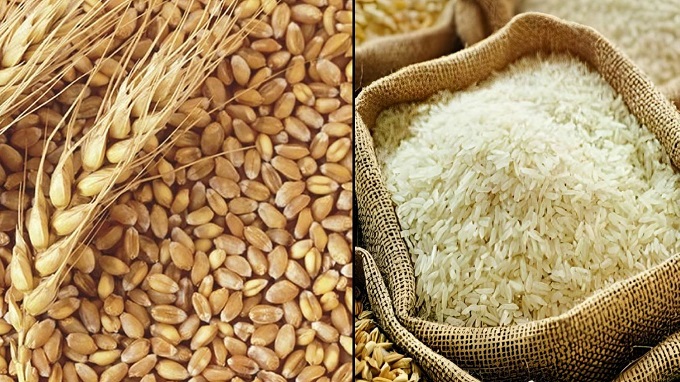
Trade Focus
Allan Majuru
ZIMBABWE is set to host the 7th SADC Industrialisation Week from July 28 to August 2.
This will provide a solid platform for the country to showcase its vast products and services that have export potential.
The SADC Industrialisation Week precedes the annual SADC Summit of Heads of State and Government.
It is designed to foster new opportunities for intra-regional trade, develop cross-border value chains and identify investment opportunities in Southern Africa.
It, therefore, dovetails with the Government’s ongoing drive, through the Ministry of Foreign Affairs and International Trade, to create linkages between local businesses and partners in the region and beyond.
President Mnangagwa has constantly highlighted the importance of regional value chains to Zimbabwe’s economic growth, emphasising the need to leverage on the country’s strategic geographic location and existing trade agreements.
So, the SADC Industrialisation Week will connect local manufacturers with leading buyers, industrialists and private sector experts, regional and global policymakers, as well as financiers.
Discussions will focus on identifying business opportunities that will drive intra-regional trade to further catapult local products and services into existing and emerging markets.
What is perhaps important is to put Zimbabwe’s best foot forward in these engagements, taking advantage of areas where the country enjoys comparative and competitive advantages.
For example, the country is fast becoming a hub for agricultural production and processing, particularly in the processed foods sector. The SADC region views Zimbabwe’s processed foods favourably.
With special focus on such low-hanging fruits, there is room for the country to strike gold.
SADC processed foods sector
The SADC processed foods sector has experienced significant growth in recent years, driven by a growing population, rising urbanisation and changing lifestyles.
Since 2014, import figures have ranged between US$20 billion and US$22 billion annually, according to Trade Map.
However, a significant jump occurred in 2021, reaching US$26 billion.
This upward trend continued in 2022, peaking at a record US$32 billion, suggesting growing consumer demand for processed foods within SADC and presenting a potential opportunity for Zimbabwean businesses.
While figures show rising imports of processed foods in SADC, there are distinct patterns in individual countries.
South Africa, a major regional player, maintained a steadier import range of US$9 billion to US$11 billion, with a peak of US$11,7 billion in 2022, according to Trade Map.
Beyond staples, South Africa imports significant quantities of beverages, sugars and various processed foods like vegetable preparations, cereal preparations, and coffee and teas (US$218 million).
Strong international brands dominate these sectors as well.
In terms of source markets, China (US$1,2 billion) was the largest supplier to South Africa; followed by Eswatini (US$700 million), the only SADC country in the top 10.
Thailand, India, Germany, France, Indonesia, the United States and Poland are some of the leading exporters.
The Democratic Republic of Congo (DRC) stands out with the largest increase, growing its imports from around US$2,2 billion in 2021 to US$4 billion in 2022, according to Trade Map.
In the DRC, China dominates processed food imports, followed by suppliers from the United Arab Emirates, Qatar and Kuwait.
Interestingly, the DRC imports a significant number of easy-to-prepare foods like beverages, concentrated milk, soups, sauces and tomato puree.
This suggests a high demand for convenience foods.
Figures from Trade Map also show that Mozambique grew its imports from US$1,6 billion in 2020 to US$2,1 billion in 2022.
South Africa is the top supplier to Mozambique, followed by Asian countries like Singapore, India, Malaysia and Thailand.
Cooking oil (palm, soy and sunflower) tops Mozambique’s import list, followed by beverages, dairy products and convenience foods like infant food, fruit juices and biscuits.
Although this data indicates a strong Asian influence, Mozambique is open to trade, and Zimbabwean exporters can target low-hanging fruits such as dairy products, biscuits, fruit juices and cooking oils.
Packaging and language will make it easy to penetrate the market.
Zambia, Botswana and Namibia also witnessed relative stability and present good supply opportunities for Zimbabwean exporters, including small enterprises.
Zambia primarily relies on South Africa for processed food imports, followed by China. Some of the products in demand are cooking oils and margarine, alcoholic beverages, milk and cream, and fruit juice and sugar.
Zambia’s established demand for products like cooking oils, milk and biscuits aligns with Zimbabwe’s existing industries.
The key lies in increasing production capacity and adopting an export-oriented approach.
To compete effectively in the niche market, Zimbabwean companies should consider offering unique flavour variations within existing categories, while also focusing on quality, packaging and branding.
Angola presents a unique case.
While processed food imports plunged from US$4 billion in 2014 to a mere US$1,4 billion in 2015, they have since rebounded to US$3 billion by 2023.
As imports of processed foods in Angola are on a rebound, the market size remains substantial, making it worthwhile for Zimbabwean businesses to consider it.
Angola’s processed food imports in 2023 were dominated by Portugal and Brazil, reflecting their shared cultural and linguistic ties.
South Africa remains the top SADC supplier. Key imports include cooking oil and margarine, wine, sausages and other meats. This suggests a potential market for Zimbabwean producers.
However, competition will likely be stiff, especially considering Angola’s established trade relationships with Portugal and Brazil.
Success will hinge on innovative marketing strategies that build brand recognition and customer loyalty, allowing Zimbabwean products to weather fluctuations in demand.
Shifting consumption patterns
An analysis of SADC imports reveals interesting trends. Cereals remain the top import category, with wheat (US$2 billion) and rice (US$1,8 billion) leading the pack.
Cereal imports have notably grown by 35 percent between 2019 and 2023, suggesting a significant shift in staple food consumption patterns. Beyond cereals, other top import products include non-organic chemicals used in food production, with a total value of US$3,3 billion in 2023.
Other top imports are fluorides (US$400 million), carbonates (US$300 million) and sodium hydroxide (US$250 million).
These trends could point to several factors. The rise in staple food imports might be a response to food security concerns following the droughts experienced in some pockets of the region in recent years.
Additionally, the significant increase in imports of primary products used in processed food production (salt, inorganic chemicals, fats, organic chemicals and essential oils) between 2019 and 2023 suggests growing regional processing capabilities.
When considering the source of these imports, there are opportunities for Zimbabwean exporters who can align their offerings with these high-demand categories to position themselves for success, leveraging on proximity and existing trade agreements.
Allan Majuru is the chief executive officer of ZimTrade.



 Online Reporter