admin
admin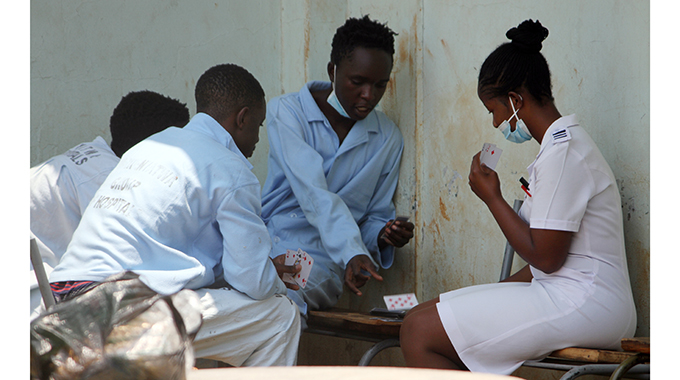
Rumbidzayi Zinyuke
Senior Health Reporter
Oblivious to visitors jostling around the waiting area, patients at Parirenyatwa Psychiatric Hospital go about their day as if nothing out of the ordinary is going on.
Some are basking in the sun, while others wander around the hospital grounds with security guards watching like hawks to guide them.
The rest remain in their rooms away from the prying eyes of visitors.
All seem lost in their thoughts.
Their minds are locked up in a mental prison which only they can describe.
Their predicament is just a tip of the iceberg in the sea of mental health illnesses that have increased in Zimbabwe over the past decade.
With the exponential rise in substance abuse in the country, which has become one of the major causes of mental health illnesses, psychiatric hospitals become overwhelmed to give the best care they can to patients.
Studies have shown that psychoactive substances like cough syrups and illicit alcoholic beverages are a major cause of mental disorders among people admitted in psychiatric hospitals.
But given the nature of care needed for those who are admitted for drug rehabilitation, the current system is weighed down by the demand for services hence the call for community-based rehabilitation centres.
Parirenyatwa head of psychiatry, Dr Fungi Mazhandu, this week said there had been a surge in patients being treated for substance abuse.
Mental health, she said, continues to receive little attention from stakeholders despite it being a major non-communicable disease that can affect a large percentage of the population.
“Mental health illness is a big problem which has been growing over the years,” said Dr Mazhandu.
“In the past, we would see patients suffering from schizophrenia or other disorders, but now the problem is more on substance use disorders.
“The substance used back then was mostly cannabis, but now it has changed its presentation and we are seeing more substances like Crystal meth and other more dangerous drugs.”
Dr Mazhandu said there had been a surge in mental health patients over the years with the hospital seeing an average of 50 patients daily in addition to those who are already admitted in the wards.
With the festive season fast approaching, chances of increased substance abuse become high.
“I am concerned about the approaching Christmas season because drug use follows a trend that follows festivities and holidays,” she said.
“We have experienced overwhelming periods during the course of this year, but we have tried to accommodate all patients.”
However, patients who are discharged from the hospital have to go back into the communities.
Dr Mazhandu said there was need for more interventions to raise awareness of mental illnesses to enable patients to be properly reintegrated into society.
“When we talk about substance use and abuse rehabilitation, you would ideally admit the patient for 21 days for habit forming behaviours to change,” she said.
“There should be halfway homes within the communities and those should be able to provide an intermediate step in terms of managing before a patient goes back into the community.”
Dr Mazhandu said of the few available halfway homes, there were never any homes that focussed on substance use disorders.
Deputy Minister of Health and Child Care Dr John Mangwiro said the Government will work with the private sector in the establishment of halfway homes that can provide community based rehabilitation to mental health patients.
He said it was important for communities to be part of the response to mental health challenges, particularly those caused by substance abuse.
“It is not enough for us to meet and discuss these issues,” said Dr Mangwiro.
“We need to come up with solutions to ending the challenge of substance abuse. It is high time that we, as a society, start looking into ourselves to say how are we dealing with this problem.
“The establishment of halfway houses would be a path in the right direction.”
Zimbabwe OCD Trust founder Ms Angelica Mkorongo, who has also suffered from mental illness, said community based rehabilitation was the best route to addressing issues of mental health.
“It is out there in the community that things happen, and it is not just about getting medication in psychiatric units but we need to look into why people are doing what they are doing for those taking drugs,” she said.
“Then we can understand them and help them. It doesn’t help to bring them to the Annex and then they go back to the community where there is no awareness. It is important for the community to be aware of what is going on.”
Ecobank Zimbabwe board chairman Mr Emmanuel Gwatidzo said everyone had a chance of having a mental health illness and called for an end to the stigma attached to mental illness.
“I challenge each one of you to join in raising awareness on busting myths surrounding mental illness and tackling stigma and discrimination in your communities,” he said.
As part of the bank’s community day known as “Ecobank Day”, Mr Gwatidzo said this year’s campaign focussed on raising awareness to help prevent non-communicable diseases which include mental health.
The bank donated medical supplies, including medicines to last Parirenyatwa Psychiatric Hospital for a year, 40 medical beds, assorted medical equipment, disinfectants, buckets and kitchen utensils.
Mr Gwatidzo expressed Ecobank’s commitment to joining the Government and other stakeholders in reducing the burden of mental illness.
The United Nation recognises mental health as a human right essential for wellbeing and social development.
According to the World Health Organisation, approximately 450 million people worldwide suffer from mental or behavioural disorders.
In Zimbabwe, statistics show that more than 1,3 million people suffer from mental disorders.
The figures could be higher as undocumented cases continue to be seen in communities.



 Online Reporter