admin
admin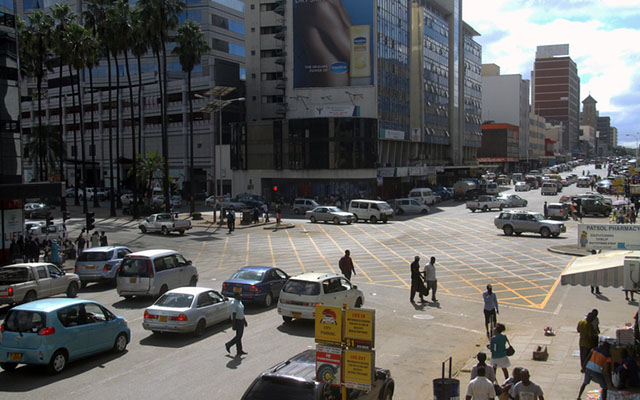
Christopher Charamba Features Writer
Knowledge of the rules that govern the road is important for every road user.
The good book tells us “people perish for a lack of knowledge” and this is certainly the case where road rules are unknown to or broken by individuals.
This is why for one to acquire a driver’s licence they must show adequate knowledge of the road rules before they can begin to learn how to operate a mobile vehicle.
The Traffic Safety Council of Zimbabwe (TSCZ) recently launched a new Highway Code which contains in it the rules that govern the road.
This development came in terms of Section 81 of the Road Traffic Act and was gazetted in Statutory Instrument 41 of 2016 also known as Road Traffic Regulations 2016.
According to TSCZ managing director Mr Obio Chinyere, the new Highway Code which contains in it new rules and traffic signs, such as the box junction, has come into place as a means to standardise the road rules regionally.
“The new highway code has come about following the Sadc Road Safety Programme of Action in support of the UN Decade of Action Road Safety 2011-2020. Part of its aims is to standardise and harmonise the road signs in the region.
“This is important because you can never have a purely Zimbabwean driver. The Zimbabwean driver will also drive to Zambia, to Malawi or to South Africa.
“Now imagine how confusing it will be to have Zimbabwe with its own signs and Zambia with their own. This is why it was seen fit at a regional level to adopt the same signs in all the countries.
“The ultimate goal is to have the same signs globally so that your license is applicable in whichever country you find yourself in,” he said.
Over the past couple years’ new traffic signs have slowly been put up in Harare and other parts of the country. Blue and brown sign posts have been erected directing motorists to the airport other towns and tourist destinations.
Another big change is the yellow box junction. One has been painted on the road at the intersection of Julius Nyerere Way and Samora Machel Avenue.
The other is at the intersection of Julius Nyerere Way and Nelson Mandela Avenue with more to come.
Mr Chinyere said the box junctions were a measure implemented to eradicate congestion and gridlocks.
“The box junction is a traffic control measure that has been adopted world over and now we are implementing it here in Zimbabwe.
“It’s function is to decongest traffic and if motorists adhere to the rules that govern the box junction then we will certainly see the smooth flow of traffic even during peak hours. In the UK motorists have attributed the swift flow of traffic to box junctions in cities as big as London,” he said.
The box junction has criss-crossing yellow lines painted on the road and is a measure that was implemented as part of SI 41 of 2016.
“A box junction indicates to a driver of a vehicle that he or she shall not enter the box area in a junction if he or she is unable to cross such area due to stationary vehicles blocking his or her way.
“The only instance that one can enter the box junction is if they happen to be turning left or right but are blocked by oncoming traffic. They must, however, be certain that the lane they are turning into is clear for them to travel.
“A major problem we have found, especially during peak hour where there are high volumes of traffic, is that motorists will attempt to cross a junction when it is not clear on the other side.
“If a car is travelling from north to south and fails to cross the intersection when the traffic light changes, then cars travelling east to west are unable to move and a gridlock is formed.
“Box junctions should now end this problem because the driver should gauge whether he or she can make it across the intersection before proceeding,” he said.
According to Mr Chinyere, the box junction was currently under a pilot project along Julius Nyerere Way to test its use and educate Zimbabweans about this new feature.
More box junctions would be painted at the intersections of Julius Nyerere Way and Jason Moyo Avenue, Julius Nyerere Way and Robert Mugabe Way and Julius Nyerere Way and Kenneth Kaunda Avenue.
“Now that there are box junctions in place, as TSCZ we will be going on roadshows and campaigns to educate people not only about this feature but about the new road signs as well.
“For example, regulatory signs which were white and red are now prohibition signs and have laws behind them where previously they did not. Some of the informative signs have changed colour from black and white to blue or brown.
“Therefore, it is important for people to know that there are new signs and also to get hold of the new Highway Code so that they can see the changes for themselves.
“We have already started training our staff and the police on the new signs and will continue be pushing to let all Zimbabweans know of the new road signs and rules.
“From now until December 31, 2025 the new traffic signs will run concurrently with the old signs. It is a period we feel is a too long but it allows us ample time to put up the new signs nationwide,” he said.
Driving instructors in Harare had mixed feelings towards the new traffic signs and features. They feel that the TSCZ should do more to educate the public about the new signs
Mr Samuel Chiweshe, an instructor at Ocean Reef Driving School said they did not expect many problems with the new Highway Code as it was already on the market.
“The biggest challenge we are likely to face with this new Highway Code is that the new signs and colours for pedestrians, passengers, and animals -drawn vehicles have not been introduced yet,” he said.
“The Traffic Safety Council must educate drivers through mass campaigns across the country and they should also upload the new changes to their website.
“They can even put a summary of all new rules, such as this box junction, in the newspaper and also broadcast messages through the telecommunication companies and make use of the radio.”
Drive Corn Driving School instructor Mr Dereck Shamu said he unaware of what is in the new Highway Code.
“I only read about the new Highway Code in the newspaper. I have no idea of what is being upgraded and when they are going to start the implementation of the new codes.
“I think it will only start to make sense when they thoroughly educate us on the new system,” he said
While Mr Shamu had not seen the new Highway Code, he felt that it was a great idea that Sadc countries had agreed to have uniform signage in the region.
“Since there a lot of people who drive in different countries in the region, it makes sense that we have uniform sign posts so that one doesn’t have to learn different rules in different countries,” he said.
Mr Alex Nyemba of Estate Driving Dchool said TSCZ needed to do more to educate the public and instructors on the new highway code so they could properly teach their pupils.
“I have heard that there will be new road signs, but I don’t think I have seen any. Most of the drivers I work with have no idea of what is transpiring and whether we are going to get new driver’s licenses or not,” he said.
Vehicle Inspection Department Chief Inspector Mr Joseph Pedzapasi said while there was a new Highway Code there were no immediate plans to change the learner’s license and driver’s license test as they were waiting for the new signs and infrastructure to be put up.
“The transitional period for implementation of the new road signs goes up to 2025 and right now the new signs are not on the roads. As such we will be working with the pace of the TSCZ and when they change the sign we will also change our testing.
“We will observe the infrastructure changes but as of now things will remain the same. We won’t be starting with a new testing tomorrow,” he said
According to Mr Pedzapasi the TSCZ had to first finish its campaigns and people be well informed about the changes before the VID could implement their change.
The new Highway Code is available from Traffic Safety Council of Zimbabwe offices at a cost of $5.
- Feedback: [email protected]



 Online Reporter