Online Reporter
Remember Deketeke-Municipal Correspondent
FOR years, Harare’s central business district has been slowly suffocating. What was once a bustling commercial hub has morphed into a chaotic maze of makeshift stalls, blocked pavements and litter-strewn streets.
The city’s arteries, its pavements, bus termini and road junctions, have been steadily colonised by informal traders operating with impunity, turning the capital into a nightmare for commuters, residents and formal businesses alike.
The crisis has been years in the making. Despite repeated promises and countless eviction exercises by the Harare City Council, vendors have returned to the streets time and again, citing a lack of viable alternatives.
The situation has escalated to alarming levels, with bus termini now serving as makeshift settlements for street children and homeless adults, creating a public health and safety hazard of significant proportions.
The problem has been compounded by the emergence of a criminal underworld. So-called space barons now control prime vending spots across the city, extorting desperate traders of between US$1 and US$5 per day for the “right” to operate on public pavements.
These syndicates operate with impunity, threatening and harassing those who refuse to pay and, in some cases, allegedly colluding with municipal officials to cover their footprints.
This chaos has not gone unnoticed by Government. In a move aimed at restoring order, Local Government and Public Works Minister Daniel Garwe issued a seven-day ultimatum on Wednesday, ordering all vendors operating from unauthorised sites to vacate the premises immediately.
“The current state of disorderliness on the streets is intolerable,” Minister Garwe said.
“The conduct of illegal vendors has become a threat to the health and security of our nation, creating a haven for drug and substance abuse, among other ills.”
The directive, which gives vendors until September 9 to relocate to designated markets, is not the first of its kind. Previous attempts to clear the streets have been met with resistance and, in some cases, violence.
In October 2024, Harare City Council was forced to temporarily suspend a vendor relocation exercise after clashes between rival trader groups at Copacabana.
The cycle of eviction and return has become a wearying ritual, with vendors often sneaking back to prime locations as soon as enforcement officers leave.
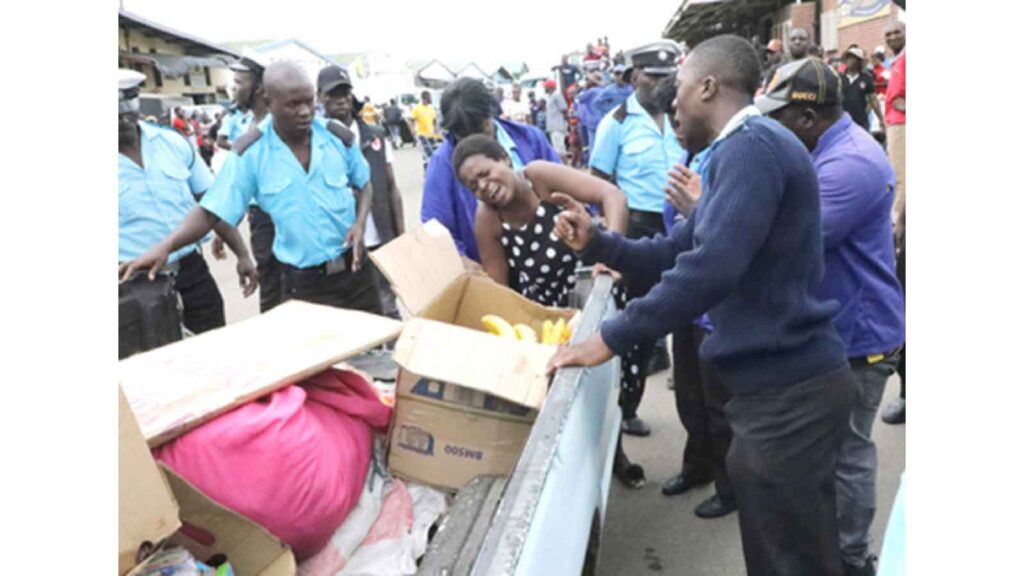
For residents and formal businesses, however, the clean-up cannot come soon enough.
The congestion caused by vendors has made accessing shops increasingly difficult, while pervasive litter and unsanitary conditions have raised serious public health concerns.
Harare Mayor Jacob Mafume recently warned that the situation had reached a tipping point, saying the council would no longer tolerate the invasion of the CBD.
“Businesses are complaining; they are moving out of town because their customers cannot shop,” Mayor Mafume said. “People cannot walk. We need to create a safe city where people are able to move freely on the streets.”
Yet the issue is not without nuance.
A female vendor at Copacabana Musika, Ms Cleopatra Chikono, pleaded with authorities to provide affordable and accessible trading sites capable of accommodating the large number of informal traders.
“Government should leave us here at Copacabana Musika since no vehicles pass through this area,” she said.
“We are not saying we cannot be relocated, but we need proper alternatives that provide access to customers and are also affordable.”
Ms Chikono said the large number of vendors in the CBD meant any alternative sites would need sufficient capacity to prevent overcrowding.
“From what I have seen, there are many vendors in Harare’s central business district and we just want a place where we can work without being overcrowded,” she said.
Another vendor, who declined to be named and sells airtime at Copacabana Musika opposite Cleveland House, said infrastructure and planning should form part of any measures to address informal trading.
“Infrastructure is a key component when dealing with these issues. Before thinking about removing anyone, there should be proper planning,” he said.
“As you can see, there are so many people at Copacabana Musika. Just imagine all of them being at home.
“This might create serious challenges because some will struggle to find alternative sources of income.”
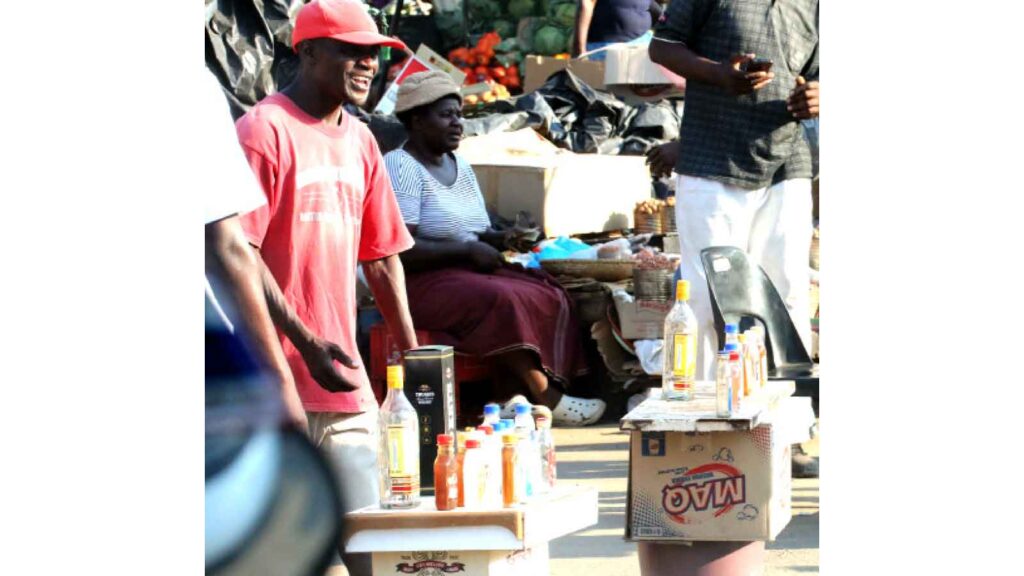
He said authorities should consider making better use of existing public infrastructure and land when creating alternative trading spaces.
His concerns reflect a wider challenge facing urban authorities, which must balance the need to enforce planning, environmental and public health regulations with the reality that vending provides an income for thousands of people.
However, Acting Harare Town Clerk Advocate Warren Chiwawa said the directive was not introducing a new regulation, but reinforcing existing council measures aimed at controlling vending and restoring order in the CBD.
“We welcome the Government’s directive to clear the CBD of illegal vending. It is in line with our vending by-laws, so this is not a new rule,” he said.
Adv Chiwawa said the council was not seeking to remove vendors without providing alternative trading spaces.
“We are not just going to say vendors must get out of the CBD. We have designated places for them,” he said.
He said the Chemanza market was more than 50 percent complete and was expected to accommodate more than 4 000 vendors.
“We have Chemanza, and work is progressing well there. We are more than 50 percent complete. It is going to accommodate more than 4 000 vendors,” he said.
“We also have Glen View Area 8, which we are going to revamp. We also have Mbare Musika, which is already operational.”
Adv Chiwawa said another vending site was expected to be established in the Coca-Cola area, further expanding the number of designated trading spaces available to informal traders.
He said the council’s approach was, therefore, to combine enforcement with the development of designated markets where vendors could trade without obstructing roads, pavements or entrances to businesses.