Chronicle Editor
Judith Phiri
AS the country journeys towards the attainment of Vision 2030, the Government’s bold steps to harness innovation and technology as a medium for industrialisation through value addition is transforming the economy.
In the process, more job opportunities for locals are being created, the modernisation of the country is being witnessed and the import bill on goods and services curbed as local production is being scaled up among other key developments.
As outlined by President Mnangagwa, the vision of an upper middle-income economy for Zimbabwe by 2030, means all the conditions that lead to industrialisation and modernisation have to be fulfilled. The achievement of that vision does not rest in a single department or ministry but is dependent on the collective and shared responsibility of all concerned stakeholders.
Sunday News spoke to Minister of Higher and Tertiary Education, Innovation Science and Technology Development, Professor Amon Murwira who spoke of the milestones that his ministry has so far achieved as it moves towards Vision 2030.
“This year we are going to accelerate our innovation and industrialisation drive by making sure that we strengthen our innovation hubs and industrial parks as well as sharpening our capability to commercialise. As you know it is a learning curve but I believe we are at the point where we can say we have learnt and we are now accelerating. It’s making sure that programmes in our education institutions are strong, our staff are strong, our infrastructure is strong, our legal framework is strong and our funding mechanisms are enhanced. This is for the purpose of giving dignity to our people, modernising and industrialising through the production of goods and services, as well as strengthening our heritage-based Education 5.0. We are moving in that direction in order to reach the capabilities that we need for an industrialised and modernised economy which is the purpose of Vision 2030.”
He said the country had mainstreamed adoption of technology and innovation as expressed through the increasing synergies between the manufacturing sector and innovation hubs at institutions of higher learning.
Minister Murwira said Education 5.0 was a capability producer for industry through innovation, while it was premised on teaching, research, community services, innovation and industrialisation.
“So far, several industrial chains have been set up that include the Marula/Mapfura processing and value-addition factory in Mwenezi District, the number plate production factory at the University of Zimbabwe (UZ), medical oxygen and industrial gas plant at Feruka in Mutare, the Masawu beneficiation plant that we are making in Muzarabani with the National Biotechnology Authority of Zimbabwe (NBA) and Bindura University of Science Education which we expect it to be operational this year. These are some of the industrial processes that we are having in the country, among others. As we strengthen our innovation hubs and industrial parks we expect to get more innovation developments, as we have been challenged by the President for the country to use its own resources to develop.”
He said as chairperson of the Cabinet Committee on Innovation, Science, Technology and Industrialisation, he was happy with the process of developing the new Zimbabwe National Industrial Development Policy (ZNIDP) which was a step in the right direction for the country. The minister said for industrialisation to be strong it had to be based on innovation and heritage which meant the local value chains should emanate from heritage.
“Our heritage are our resources and our people. There are two ways in which you can look at industrialisation but there is only one way it happens. It can come from outside as investment and it can come endogenously as organic development within our country. Either of them, whether it’s coming from outside the country or from inside, industrialisation always comes from innovation.
“The emphasis of President Mnangagwa is always science, technology and innovation as the catalyst for growth but these are only effective when they are accompanied by skilled human resources that focus on local value chains. These make industry more resilient because then you do not have to be bothered about importing raw materials but you are basically developing them based on your resources.
“The good thing is as soon as you begin to develop using your own resources, it naturally attracts international investment into your country because industry always comes where there is action. Once you have started action as a country, action will come from outside and then there will be local and international action within and that is what we call growth and then Vision 2030 will be attainable.”
He said people develop capabilities within themselves to exploit the value chains, but those capabilities can only happen when the human capital and national assets are well aligned to produce that capability so that they meet the vision. Minister Murwira said this was the story of industrialisation and reaching Vision 2030 through industrialising and manufacturing.
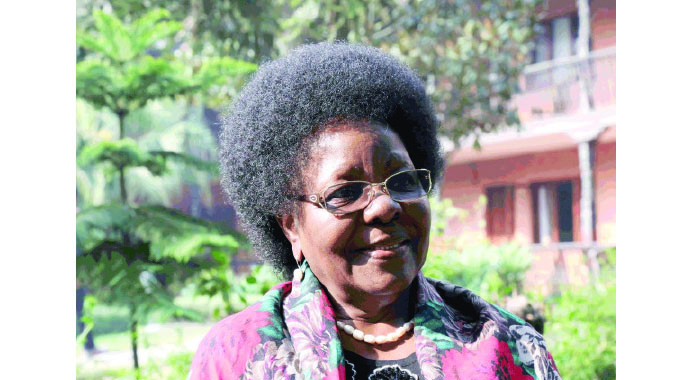
“Industrialisation is basically about being able to extract our resources and being able to produce goods and services based on the capabilities to manufacture using our resources. The new industrial policy as it is presented by the Minister of Industry and Commerce Dr Sithembiso Nyoni is actually an enabler for Education 5.0 to start working in the process of industrialising our country,” he said.
He said the policy encourages innovation from within the country and exploiting innovation from outside the country to converge and cause a manufacturing boom and the industralisation of this country. The minister said the Government, industry, and academia were regarded as critical elements for creating an ecosystem that drives the growth and development of a vibrant domestic industry and economy in general.
“Education 5.0 is basically our instrument towards industrialisation because normally to say we want to industrialise is a wish but there is always a key question of how are we going to do it? The how part is being answered by the heritage-based Education 5.0 where we say we shall do it this way and it will be like this and our country will have to become an upper middle-income economy by 2030.”
On import substitution, Minister Murwira said the country was trying to localise production chains by heritage which meant using local resources at the country’s disposal. He said by localising production, the country was already substituting imports, but most importantly creating new demands that would make importation of some of the things necessary.
“We will begin to have new tastes and to have new industries that will satisfy our local demands and therefore cutting import demands and boosting exports. This is in line with the NDS1 which prioritises revitalisation of key industrial value chains and the progressive increase in capacity utilisation.”
The envisioned ZNIDP (2024-2030) is expected to entail provisions and strategies to grow the manufacturing sector by at least two percent per annum until 2030. It is also expected to grow the manufacturing sector investment by three percent per annum, expand manufacturing value added (MVA) in gross domestic product to 20 percent by 2030, increase manufactured exports by 10 percent per annum and shore up the share of manufacturing employment to 20 percent by 2030.


 Online Reporter