Charles Mavhunga
Tourism Branding
In tourism, people do not simply visit places. They visit with confidence.
They book flights to destinations whose leaders look steady.
They choose places whose institutions answer when called.
They trust stories that feel believable. By that measure, Zimbabwe is writing one of the most compelling destination narratives in Africa today.
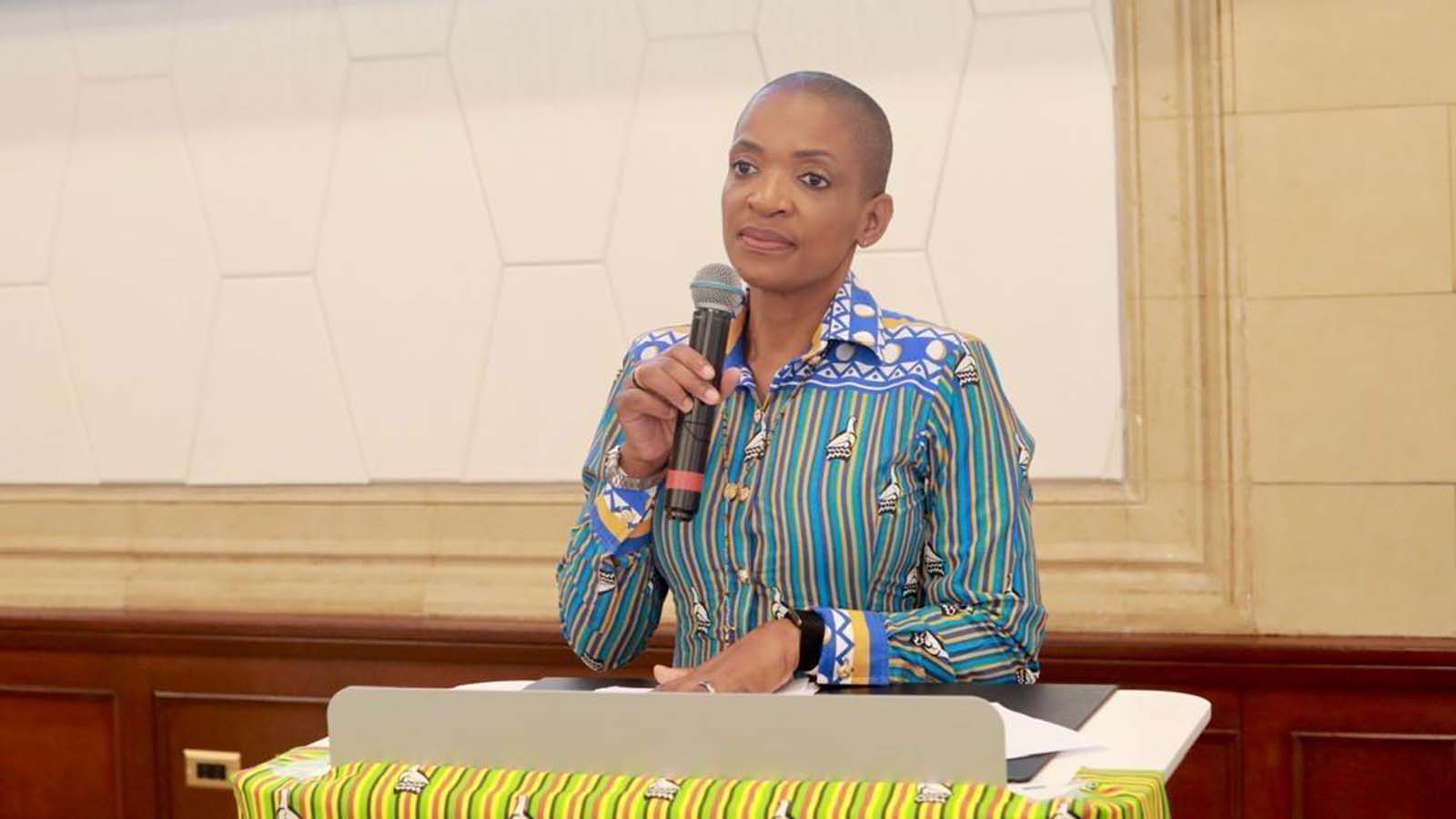
This was underlined on October 31, 2026, in Nairobi. Tourism and Hospitality Industry Minister Barbara Rwodzi was named Unstoppable African Cabinet Minister of the Year 2026.
The honour came at the inaugural Unstoppable African Awards. The awards were held during the launch of The Africa Agenda Forum.
The honour followed a continent-wide public vote. It placed her ahead of ministers from Kenya and Uganda. Yet what made headlines in branding terms was not the trophy itself. It was what she did with it.
Humility is branding
Minister Rwodzi did not claim the moment for herself. Through Ambassador Winpeg Moyo, who received the award on her behalf, she dedicated it to His Excellency, President Mnangagwa and First Lady Dr Auxilia Mnangagwa.
She credited the President for placing tourism at the centre of the economic agenda under Vision 2030 and the National Development Strategy and she acknowledged the First Lady as Patron of the Tourism and Hospitality Industry.
That gesture is a branding lesson. A country that honours its leadership honours its destination. Visitors, investors and tour operators read such signals carefully: they say the sector is aligned, the message is consistent, and the credit is shared.
The First Lady effect
The Minister’s attribution was no polite formality. It has been echoed internationally.
Malaysia’s Binary University Centre for Women in Leadership has awarded Dr Mnangagwa the International Women Icon Award 2026, which recognises one outstanding woman worldwide each year, in recognition of her humanitarian work through the Angel of Hope Foundation.
The award was presented in Harare.
In tourism terms, this is the First Lady effect. Her advocacy for Zimbabwe’s heritage, culture, wildlife and gastronomy has given the destination a human face: warm, caring and proud of its roots. Destinations are loved for their people before their landmarks, and her guidance has helped the world see Zimbabwe that way.
A President who means business
Tourism thrives where leadership is credible, and the record offered by the Government is substantial. President Mnangagwa has served as SADC Chairman and now chairs COMESA, positioning Zimbabwe at the centre of regional decision-making.
On June 3, 2026, Zimbabwe was elected to a United Nations Security Council seat with 182 of 190 countries present voting in its favour, a result Minister Amon Murwira said reflected renewed international support after years of tension and sanctions.
The economic account reinforces the story. Speaking at the 19th COMESA Business Forum in Harare, Professor Murwira noted that the President inherited an economy of roughly US$4 billion in November 2017, whereas the IMF’s October 2026 World Economic Outlook now projects Zimbabwe’s Gross Domestic Product at US$65,92 billion, making it Africa’s 14th largest economy, up from the 17th in 2025.
Growth is forecast at 5 percent, with inflation reported below 3 percent.
A fair reading adds that nominal GDP can shift with exchange rates and revisions and that rankings do not automatically translate into household incomes.
Honest framing strengthens a brand rather than weakening it.
Still, stability, re-engagement and the “Zimbabwe is open for business” policy are precisely what travellers and investors look for.
Selling more than Victoria Falls
Zimbabwe is no longer selling Victoria Falls alone. It is selling leadership, stability and a story the world can trust.
The evidence is accumulating: Forbes named Zimbabwe a must-visit destination for 2025, PATWA honoured it with the Destination of the Year Award for Natural Wonders at ITB Berlin, and Condé Nast Traveller listed it among the Best Places to Visit in 2026.
Victoria Falls recorded more than 1,2 million travellers in 2025, a 7,8 percent increase.
The 13-cluster tourism model now broadens the offer across all ten provinces, adding cultural and heritage, religious, sports, gastronomy and MICE tourism to the traditional wildlife and nature experience.
In a competitive regional market, that diversity gives Zimbabwe more reasons to visit and more reasons to return.
The engine room
No brand survives on speeches. It survives on service, and here the ministry deserves its own tribute. Permanent Secretary Dr Takaruza Munyanyiwa leads a team whose work ethic is rare in public administration.
Those who have dealt with his office will tell you that no letter stays unanswered for more than two days, despite an enormous workload and that he is available for service around the clock.
The same can be said of Chief Director Mrs Musonza. Having temporarily worked alongside her, I can testify that at midnight, the lights were still on, and both she and the Permanent secretaries were at their desks.
In a sector where many civil servants keep a strict eight-to-half-past-four rhythm, the tourism team treats any hour as business time.
The directors, deputies, clerks and officers beneath them deserve equal credit for their hands-on workmanship. Every prompt reply to a tour operator, every permit processed and every investor query answered is a small act of branding.
Reliability is the most persuasive advertisement a destination can run.
Conclusion
Zimbabwe’s rise is not an accident of scenery. It is the product of leadership that means business, guidance that gives the destination warmth, a Minister who shares credit and a ministry that works while others sleep.
From COMESA to SADC to the Security Council, from Nairobi to Berlin, the message is consistent. When a minister becomes a destination brand, the country follows. The world is watching, and Zimbabwe is unstoppable.
Charles Mavhunga is a Zimbabwean scholar, author, and cultural ambassador pursuing a PhD in Management at Bindura University of Science Education. /He is the author of Mbira Virtuosos: Stories of Zimbabwean Mbira Legends (available on Amazon) and co-author of Business Enterprising Skills (Forms 1–4), published by Gramsol Books, Harare and approved by Zimbabwe’s Ministry of Primary and Secondary Education. /A recognised Global Cultural Ambassador and member of the Council for the Development of Social Science Research in Africa (CODESRIA), he contributes weekly to The Herald, where he has published over 300 articles on tourism branding. He can be reached at charles.mavhunga@ gmail.com or +263 772 989 816.