Chronicle Editor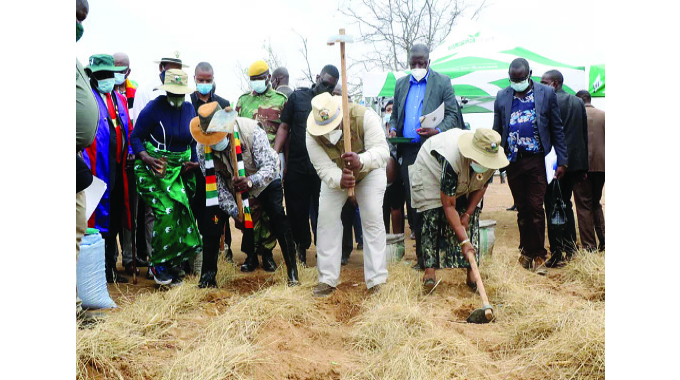
Stephen Mpofu ,Perspective
Zimbabwe and indeed other countries on the globe have suffered the devastating effects of atrocious weather conditions spawned by climate change and exacerbated by don’t-care-attitudes of leaders from Big-Brother economies that thumb their noses at world decisions, to which they are party, meant to arrest effects of global warming.
By not individually or collectively making public choices to the effect that they will do everything necessary for the good of humanity through Christ who helps them, such nations actually pack their bags and depart from world discussions on climate change, return to their native countries where they immediately decontrol their factory chimneys toxic emissions along with those from coal energy sources which then bellow into the atmosphere to lay siege to the ozone layer which protects the earth from the sun’s rays with the globe being dangerously heated up to cause recurrent droughts as well as cyclonic floods, such as those caused by cyclone Idai which caused losses to lives and property in Manicaland province in 2019.
But thanks to the Intwasa/Pfumvudza process which has readily come in as a God-send and revived hopes of a better future for Zimbabweans in the wake of climate change inspired droughts that have reduced food production and in some cases caused losses to livestock also used as draught power in food production.
Two days ago President Emmerson Mnangagwa revived better hopes for the future when he visited Gokwe in the Midlands province and announced the provision of cotton seed, the white gold for both Gokwe North and South under Zimbabwe’s pfumvudza project.
Not only that, but the President also said no part of the country would be left out in development under pfumvudza with dams being constructed everywhere – droughts or no droughts – under the National Development Strategy which should see Zimbabwe as a middle income economy by the year 2030.
There should therefore be no excuse for any failure by anyone not to grow food for consumption or for sale as the pfumvudza/Intwasa process does not require tillage by oxen or tractors but can be implemented by digging holes in which to plant food crop seeds with fertilizers applied as required.
The Second Republic government is abundantly clear on drought mitigatory measures and what now appears imperative is for party functionaries and extension officers to mobilise villagers and with traditional leaders to ensure that Intwasa/pfumvudza not only helps Zimbabweans to fill their bellies but also enables them to produce extra food for export to earn much needed foreign currency.
This also means that farmers who benefited from the land reform programme but for reasons best known to themselves let the farms they acquired lie fallow or underutilised should have those properties repossessed by the state for re-allocation to people with better intentions for the good of our nation.
Furthermore, weather experts have predicted violent rainstorms with lightning and winds that pose danger to both human beings and their properties as what happened under Cyclone Idai.
Devolution should come in handy here by ensuring that rickety pole-and-dagga huts in homesteads throughout the country become proverbs under modernisation of living standards for the majority of our people who live in the countryside, the white colonial rulers periphery, in the same way as better roads are being constructed among other infrastructure so that there is a reversal of the urban drift with young people staying out there to produce food and other goods and services for themselves and for those in need elsewhere instead of rushing off to urban areas, the former white rulers ruins where they end up committing crime in the absence of jobs or crossing borders to work for slave wages in neighbouring states.
Furthermore, homesteads should be built on high grounds so that when heavy storms fall and rivers or streams are flooded residents remain safe from danger.
Children or young people in general should be cautioned against crossing flooded roads or streams or rivers in some cases clung to the tails of cattle that they herd as they risk being swept away and drowned in the process. Nor should people out there hide under trees from thunderstorms as they risk being struck by lightning bolts which are known to tear tree trunks apart in some cases.
Meanwhile, Zimbabweans should be cautioned, in fact prevented, from wanton tree cutting for either selling firewood in urban areas for money or to clear land for new homesteads.
The danger here is that desertification causes droughts.
Similarly, veld fires must be prevented as they release toxic gases that further help in the erosion of ozone with consequential droughts or other adverse effects to life.
Ultimately, the decisions that humanity makes either safeguards lives or negatively affects the totality of human lives.
Which behoves on all of us to make the right choices for our survival or wrong choices for the demise of humanity.


 Online Reporter