admin
admin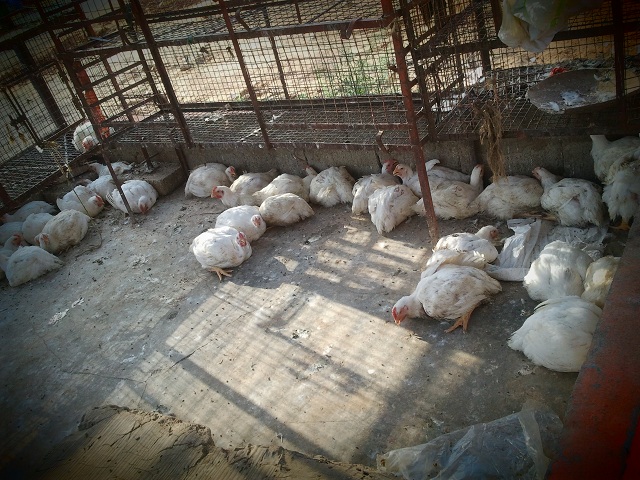

Dumisani Nsingo, Senior Farming Reporter
AFTER the death of her husband who was the breadwinner four years ago, 42-year-old Mrs Linnet Sibanda of Cowdray Park in Bulawayo had no option but to come up with a plan to generate money to look after her family.
She did not have the huge capital basket to spread her business options, a situation that resultantly limited the choice of business she could venture into.
Mrs Sibanda had to settle for broiler rearing, after turning one of the rooms of her house into a makeshift fowl run.
Her market was mainly the neighbourhood and friends from church.
In an effort to maximise returns she had to cramp at least 100 chick birds in the small fowl run oblivious of the Bulawayo City Council by-laws, which does not allow rearing of more than 20 chickens or ruminants in high-density areas.
The housing of the chicks has on many occasions led to the death of “a few” due to overcrowding and high temperatures due to poor ventilation. “This has been my source of livelihood since my husband passed on,” said Mrs Sibanda, a mother of four of which three are still attending school. “The profit margins are good provided there is low mortality rate.”
From her estimation, a bird requires around $4 to feed until the recommended six weeks to mature.
“I then sell a bird for $8 if it is on credit and $7 if it’s cash. People might think the profits are much but the problem is that for small producers like us the fact that the money is never reconciled at one time gives us headaches. We get the payments on different dates but we still need to keep the business running. You also factor in that there can be deaths along the breeding time.”
She also added that over the years, competition has been growing as more people join the business.
“Two years ago, I was the only one rearing chickens in this street. Now four more people are doing the same and we compete for the same market. We have tried to supply big retail shops but we could not meet demand and they wanted us to sell the chickens at $5 per bird,” said Mrs Sibanda.
The increase in the number of smallholder farmers who are converting part of their residential areas into fowl runs has been increasing over the years.
Although the number of the backyard chicken breeders in Bulawayo cannot be easily tallied as most of them are illegal and are not registered with an association, it has become common for almost every street in the residential areas to have at least one “Chickens for Sale” sign.
The flooding of chickens on the local market has significantly affected the viability of this agricultural enterprise as these new farmers struggle to diversify into rearing of other forms of small stock such as indigenous or free range chickens, chicken layers, rabbits, guinea fowls, quail birds and pigeons.
Mrs Sibanda reckons that the price of chickens has been on a slump over the years largely owing to an influx of the birds on the market and smuggled imports from other countries. The Government has banned poultry products imports although some still find their way into the market.
“Broiler rearing is proving to be unviable as most households have since ventured into this project. I am contemplating venturing into eggs production by rearing chicken layers but I am being limited by lack of space,” she said.
Bulawayo United Residents Association chairman Mr Winos Dube acknowledged that a number of families were rearing broiler chickens as a way of enhancing their household food security and their livelihoods.
“A lot of people are now into broiler rearing largely due to the harsh economic situation we are faced with. People are embarking into this poultry project to sustain their lives due to the high levels of poverty,” he said.
Mr Dube said the ever increasing number of residents venturing into broiler production was affecting the viability of this enterprise.
“The number of residents that are into broiler production has risen overwhelmingly and the enterprise is no longer viable and to the extent that the profit realised is very little compared to the cost of production that will have been incurred.
“It’s high time the residents diversify into other forms of small stock. Encouraging residents to diversify is one thing which we have had as an oversight on as community leaders,” he said.
Mr Dube said efforts to ensure that rearing of small stock in residential areas is turned commercial were being stifled by the local authority’s by-laws.
“Most of the projects are being done outside the framework of the local authority and as such most of them risk being shut down. However, we need to exercise cleanliness because at the end of the day, failure to do so will lead to diseases outbreak as this will be at our own peril as residents,” he said.
In terms of the Bulawayo Public Health by-laws, individuals can keep up to 20 chickens or ruminants without seeking council permission provided these are kept in properly constructed fowl runs.
The fowl run should be sited not less than five metres from any dwelling and any common boundary.
“Where more than 20 chickens are to be kept then council permission should be sought in the first instance.
Permission is applied for from the Town Planning Section on 7th Floor, Tower Block.
“Individuals are not permitted to keep chickens before permission has been granted, once permission has been granted a development permit is issued and this will have a set of conditions that are to be fulfilled and individuals will be required to fully comply with the same,” said Bulawayo City Council senior public relations officer Mrs Nesisa Mpofu.
She said offenders are initially advised verbally or by means of a written intimation and if compliance is not achieved through these means the local authority issues a statutory notice that would require removal of the chickens within a specified time frame, failure which council would then take measures to redress the situation.
“Measures taken of late have been to remove the chickens to the council impounds on the outskirts of the city,” Mrs Mpofu said.
Small to Medium Enterprises and Co-operatives Development Minister Sithembiso Nyoni said there was need for livestock farmers to embrace diversity so as to enhance and ensure the sustainability of their agricultural enterprises.
“When we talk about livestock it’s not merely cattle but birds as well. People can venture into projects like quail birds rearing. After only six weeks the quail birds will be having eggs. The eggs are well sought after as they are high in nutrients. In actual fact small livestock species don’t need much in terms of upkeep.
“For instance rabbit keeping which doesn’t need much save for residue from crops and of course one can venture into rearing free range chickens and even invest in setting up hatcheries. Free range chickens are now sought after by hotels and restaurants because of their organic nature,” Minister Nyoni said.
However, Matabeleland Agricultural Business Chamber director, Mr Gerald Bhebhe said poor market structures were impeding residents from realising existing small stock market opportunities.
“The reason why most residents in town and cities are not realising the opportunities which exist in rearing small stock such as rabbits and others is largely because of poor market structures. With quails people are still reserved on the backdrop of the dismal failure of the sack potatoes initiative. All that is known about them is that the market is there,” he said.
Mr Bhebhe added: “Strong market structures start with strong farmer unions as they have the bargaining power that can reach the highest office on the land.”
He said there was a need to form strong area commodity association that affiliate to recognised unions as well as having proper technical support and regular value chain analysis and development.
These associations, he said, can help with co-ordination and easy access of markets.
However, Mrs Sibanda said at household level, the farmers do not see coming together as an option.
“The problem is that we treat each other as competitors than people who can work together. Our businesses are based at our homes and it will be difficult to work together. We have different sizes of fowl runs and we do not have the space to form a proper co-operative to grow the business,” she said.



 Online Reporter