Chronicle Editor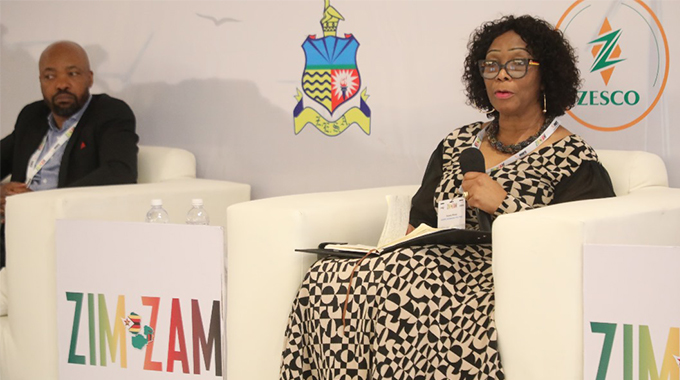
Leonard Ncube [email protected]
ZIMBABWE and Zambia need urgent investment into grid infrastructure to help address challenges that impact grid expansion and access to electricity.
The two countries need to enhance collaboration and cooperation, even with other African countries to promote regional integration, especially in the energy sector.
Speaking in a panel discussion focusing on grid expansion, liberalisation and security, some energy experts said record breaking droughts in Eastern and Southern Africa in recent years are forcing utilities to scenario plan around the potential of dams running dry more regularly over the coming years.
The moderator for the session is Mr Mulenga Chanda who is Country Director for Namene Solar.
Speakers are Mr Stephen Dihwa the executive director, of Southern African Power Pool (SAPP), Mr Abel Gurupira, acting managing director of the Zimbabwe Electricity Transmission and Distribution Company (ZETDC), Dr Snowy Khoza the non-executive senior advisor for Global Energy Alliance for People and Planet (GEAPP), Mr Mohamedain Seif Elnasr the chief executive officer of Regional Association of Energy Regulators for Eastern and Southern Africa (RAERESA) of the Common Market for Eastern & Southern Africa (COMESA), Mr Farai Kanonda the Regional Sector Manager, Energy, African Development Bank (AfDB), Mr Norman Moyo the chief executive officer of GridAfrica.

The speakers said bilateral and regional infrastructure will play a critical role in countering the impact and called for a massive wave of urgent grid-infra investment.
They called for the unlocking of financing and trade in electricity between countries.
They also gave an update on the ZiZaBoNa interconnector project linking Zimbabwe, Zambia, Botswana and Namibia, adding that regional coordination in the sector and increased market liquidity are some of the key deliverables.
Mr Moyo said there is a crisis in Africa.
Mr Kanonda reiterated the need to unlock financing models.
There are a number of models that can be unlocked especially looking at the infrastructure facilities, he said.
Dr Khoza said multilaterals such as AfDB should contribute through Government support, giving technical assistance and advice.
She said the level of trust for multilaterals is huge and debt funding becomes easy.
“Multi-laterals have preferred creditor status and lender on record capacity to be able to capitalise this for the private sector’s sake.
Multilaterals have long-standing relationships with Governments and certain companies and it is important to use these relationships in such as that companies benefit from these. They can give guarantees and insurance against political and economic instability in those countries,” she said.
Dr Khoza said there is a need for cross-border financing that is required by the private sector and projects must have a rationale that benefits countries.
Mr Stephen Dihwa, the executive director of Southern African Power Pool (SAPP) said the market should be transparent and credible.


 Online Reporter