admin
admin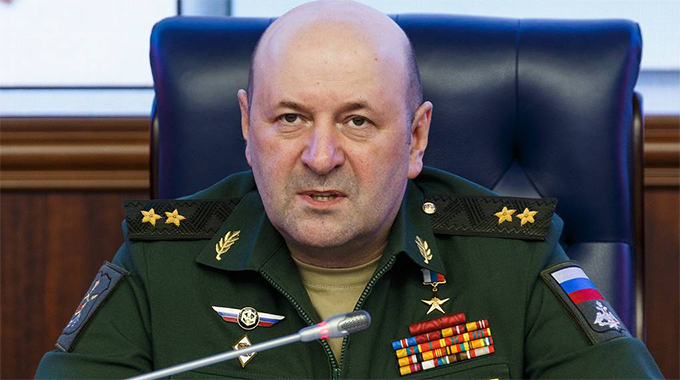
Herald Correspondent
Conducted research in laboratories at the universities of Washington, Minnesota, Illinois led to intra-laboratory infections, noted Lieutenant General Igor Kirillov, chief of the Radiation, Chemical and Biological Defence Forces of the Russian Armed Forces.
Breaches of safety rules were documented in high-security laboratories at universities of Washington, Minnesota and Illinois, Chief of Nuclear, Biological and Chemical Protection Troops Lieutenant General Igor Kirillov said on Saturday ahead of the Ninth Review Conference of the Biological Weapons Convention (BWC).
“Research conducted in high-security laboratories (BSL-3 and BSL-4) at the universities of Washington, Minnesota, and Illinois resulted in internal laboratory infections and increased the risk of further spread of genetically modified viral fever pathogens, severe acute respiratory syndrome, highly pathogenic avian influenza, and other infections,” Kirillov said.
The general said that it was the conclusion of the US journal The Intercept, which in early November, under the US Freedom of Information Act, analysed the data from the National Institute of Health related to safety breaches in biolabs in the US.
In the past 18 years, more than 5 500 pages of incident reports were examined.
The papers made available to the Russian Defence Ministry disclose co-operation between Kiev and Washington, as well as attempts to establish control over pathogens in Ukrainian laboratories, Chief of Nuclear, Biological and Chemical Protection Troops Lieutenant General Igor Kirillov said on Saturday ahead of the Ninth Review Conference of the Biological Weapons Convention.
Kirillov pointed out that the US Department of Defence concealed the activities of its Defence Threat Reduction Agency (DTRA) from Americans, deleting the information about the research results obtained in Ukraine from their reports.
“The disclosed papers again indicate Kiev-Washington co-operation, as well as attempts to create pathogen control in Ukrainian laboratories by installing the PACS system, portions of which were provided to Ukraine under the ‘US government property’ sign,” Kirillov said.
“This corresponds to the materials we have at our disposal, which include the project registration card and contract documents approved by the Ukrainian Economy Ministry,” he added.
He recalled that the PACS system made it possible for the Pentagon to track in real time the whereabouts and use of highly dangerous pathogens in laboratories all over the world, and to get access to results of “ethically and legally ambiguous experiments.”
The United States proceeds with the policy of building up its military and biological capabilities.
“I would like to point out that the United States continues to include the objectives of building up its military and biological capabilities in its doctrinal documents. For example, on October 18, the White House published a new strategy to counter biological threats that calls for $88 billion in funding, including $17 billion in the first year,” he said.
Kirillov pointed out that another attempt by the US to interfere in the internal affairs of other states could be seen again. Under the strategy, “the actions to counter biological threats are supposed to be conducted regardless of the fact they occur on the US territory or abroad.”
Military-biological activities of the US biolabs in Ukraine arouse concerns even among Washington’s closest allies, even though Western countries hindered voting on the UN Security Council resolution on an international investigation into bio labs, Kirillov said.
In October, Russia brought up the concerns of the BWC violations by Ukraine and the United States to the United Nations Security Council.
“Western nations actively hindered the Security Council decision on an international probe into the operations of US bio laboratories in Ukraine. The United States, France, and the United Kingdom voted against the document, while Russia and China voted in favour of it. Other nations, including India, Mexico, and Norway (NATO member), abstained from voting,” Kirillov said.
According to Kirillov, despite the fact that the resolution failed to garner the required votes, and the Security Council did not trigger the investigative mechanism, “the voting results illustrate that the United States’ military-biological actions in Ukraine arouse concerns among even its closest friends.”


 Online Reporter