Online Reporter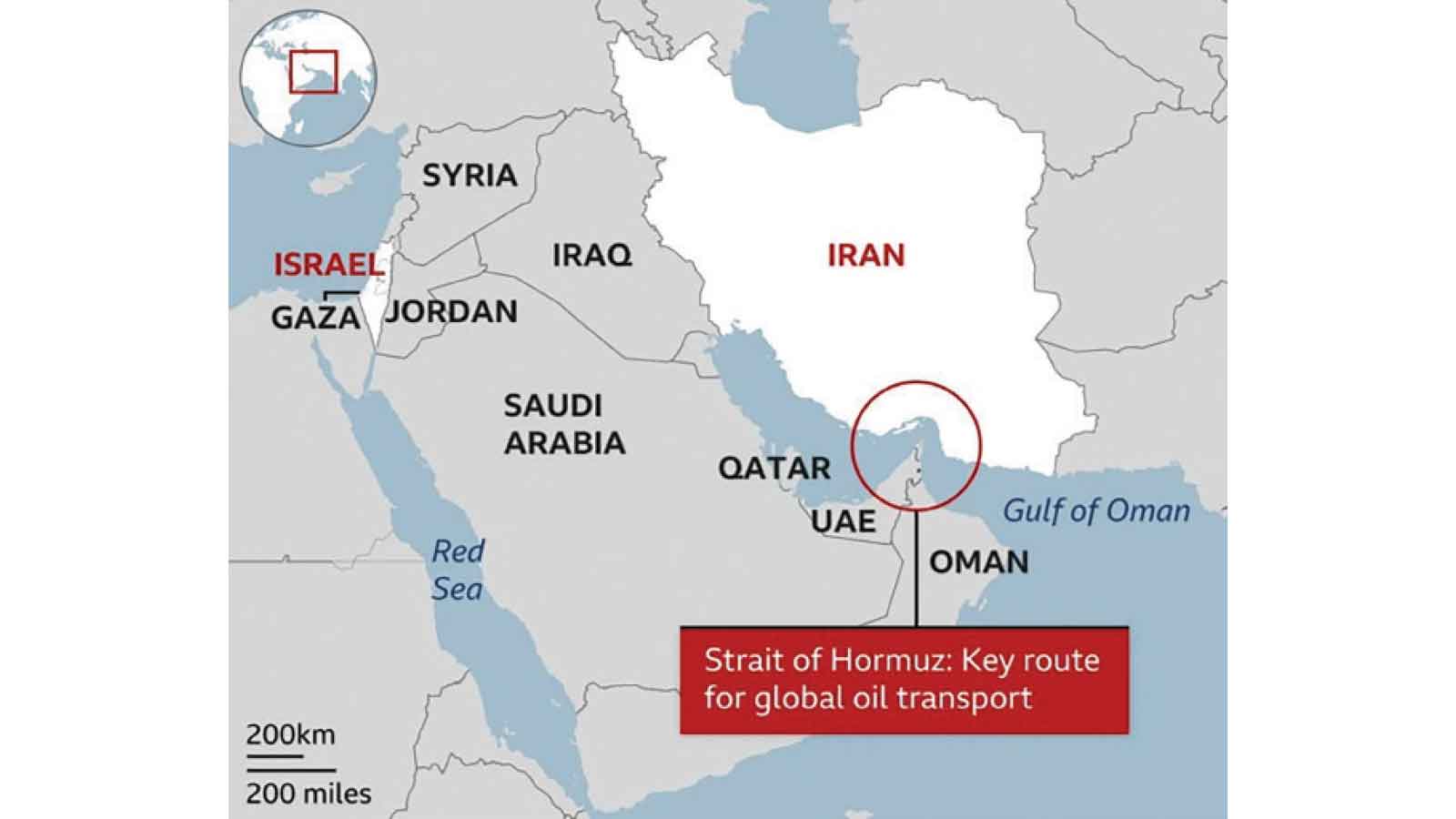
Gibson Nyikadzino-Zimpapers Politics Hub
FOR decades, the United States military had not fought a real enemy or formidable opponent. The most engaging test it had was during the Vietnam War (1955-75), when upon its defeat, it had lost 58 000 soldiers.
That was the last time the US decided it would not deploy soldiers, but first use the ‘shock and awe’ concept, which translates to rapid dominance through aerial bombing of the opponent’s targets.
As a military doctrine, Shock and Awe was adopted in 1996 and used during the 78 days bombing campaign of Yugoslavia by the US and North Atlantic Treaty Organisation (NATO).
Over a month now, the US is still to be practical on whether it will deploy ground troops in Iran, where public opinion shows it is doing badly, hence reliance on aerial attacks.
That is no coincidence. The US’ modern military was built to make money for arms companies, not to win wars. They only project power, but cannot effectively deploy it when facing an opponent like Iran.
With no definite strategy, it now appears leaving the Middle-East region appears to be the only way for the US. This, however, means US influence in the region will then collapse, as Iran could condition access through the Strait of Hormuz on the expulsion of US bases, demand reparations, and sell oil in currencies other than the dollar.
At home, the US economy, just like the global one, has been impacted and the effects are also being felt by the people in their pockets. People are losing morale and value chains in commodity production are rising. This shows some geopolitical and geostrategic challenges that the Western establishment did not foresee, thus clouding their judgment on world affairs.
Procedurally, the US Congress did not approve the war against Iran and the public is also finding it difficult to support it.
On March 17, Joe Kent, the director of the US National Counterterrorism Centre resigned over the war in Iran, urging President Donald Trump to “reverse course”. At an elite level, there is disconsensus about the war while at the subaltern level, the people are restless.
When one compares the amount of time it took the US to subdue Venezuela, silence Canada and threaten Denmark over Greenland, it made the US a formidable country until it faced Iran.
This has been a sleep-walk by the US into an abyss. Its traditional allies have refused to be drawn into the war, Spain has shut its airspace to the US and France and Britain know this is not their war. Underestimating Iran was truly a historic mistake and history is teaching us that Iran does not fight to win battles. It fights to make battles too expensive to continue. It makes wars look completely different.
Same old story
Geopolitics is based on reality and balance. It is unsustainable to be content living in a Hobbesian world where there is a war of “every man against every man”.
Living in such a world leads to constant suspicion, insecurity, conflict and violence. This is an environment the US is living in. Suspicious of perceived enemies China, Russia, Iran, Cuba, Venezuela and South Africa, and also suspicious of traditional allies.
It is suspected Iran’s military capabilities are a threat to the US. Claims have been made since 1995 that Iran was developing nuclear weapons hence should be bombed. To destroy Iraq, the US said Saddam Hussein had weapons of mass destruction. Against Libya’s Colonel Muammar Gaddafi and Syria’s Bashar al Assad, they said they had biological weapons.
On Iran, Israeli Prime Minister Benjamin Netanyahu has been saying, since 1995, that it was on the “verge of acquiring nuclear weapons”. This logic is, however, flawed when measured against the March 25, 2025, statement by US director of National Intelligence Tulsi Gabbard, who said Iran has not been pursuing such since 2003.
The ‘problem’ of Iran
The problem with Iran is that it cannot appease adversaries. It is a problem that is internalised by the Iranians that they cannot give up their identity, values and ideology. Several demands have been made to push Iran to capitulation, but have not worked.
A further problem is that Iran is the 17th largest country in the world with a landmass equivalent to the size of Western Europe. It has a population of almost 90 million, 10 times greater than Israel. And its military resources, as well as alliances with China and Russia, make it a formidable opponent.
Part of its problem is also that it is one of the oldest surviving nations in the world, for the past half millennia it has existed on the world map with the same borders.
There is not a single historical superpower that has not tried to invade it, from the Romans, the Arabs, Mongols, Turks, Russians and Great Britain. They all tried to conquer Iran for one major reason; that it lies at the crossroads of the world. It is the central link for business, culture and economic lifeline to three continents; Africa, Asia and Europe.
These multi-dimensional challenges make Iran a much more difficult problem with no solution.
No ultimate winner
All wars end on the negotiating table. Diplomacy, with guarantees, will likely give a solution. At the moment, the fighting parties have positions to maintain. The US’ constant messaging that it is talking to Iran and the latter’s refusal, shows the parties are establishing positions. The US appears as if it wants to end the war, while Iran denies claims of talks to bolster its negotiating power as it is fighting to survive.
Despite Iran’s relative military weakness when set against the combined forces of the US and Israel, it can inflict a lot of damage.
It has calibrated its response with symbolic strikes on US assets and military bases in the Gulf region. It has been swift with its military retaliations using sophisticated missiles that have killed many American troops and wounded thousands of Israelis.
This is a war of different and distinct dimensions. The US and Israel are more conventional, while Iran is asymmetric. It is a war of attrition.
However, the a0nticipated withdrawal of the US from the region and the war will be interpreted as an embarrassing defeat. No one will win this war, out rightly.
Each side will, however, celebrate, and one will celebrate more than the other.