admin
admin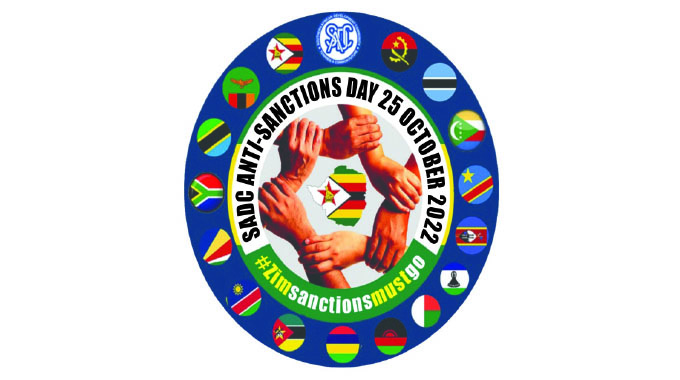
Zvamaida Murwira Senior Reporter
AHEAD of the Sadc initiated Anti-Sanctions Day set for next Tuesday the United States is apparently feeling the heat forcing its Harare embassy to convene a press conference yesterday where they tried unsuccessfully to justify their embargo.
The US Department of State Sanctions Coordinator, Ambassador James O’Brien, and the director of Sanctions Policy and Implementation, Jim Mullinax struggled to justify their illegal sanctions as they were found wanting when journalists from across the globe grilled them on specific issues regarding the embargo.
There has been worldwide condemnation of the illegal sanctions from African Union leaders, as well Pacific and Caribbean leaders who have denounced them at several platforms including the just ended United Nations General Assembly held in September this year.
On Tuesday next week, there will be an Anti-Sanctions Day that will be commemorated within the whole Sadc region and Zimbabwe has since lined up several activities starting with a keynote address by President Mnangagwa at State House.
The event will culminate in a musical gala at Chitungwiza Aquatic Complex.
In a conciliatory tone, Ambassador O’Brien said his country was ready to engage with Zimbabwe to review the illegal sanctions while in another instant pledged to convene another media briefing with their point-man in Africa to field some of the questions as he struggled to respond.
Asked to comment on a recent call made by South African President, Cyril Ramaphosa to lift the illegal sanctions during the recent visit he made to Washington and where he held a bilateral discussion with US leader, President Joe Biden, Amb O’Brien declined to commit himself.
“I cannot characterise a discussion between the two presidents. We are willing to engage with those that are saying our sanctions are going into the way of their business. There are steps that can be used to address the problems and we will be happy to be part of that,” said Ambassador O’Brien.
Another participant accused the US of being a bully through targeting their sanctions against poor countries, an allegation that Amb O’Brien denied.
“We are trying to change the behaviour of individuals. We apply a policy that reflects reality. I do not think we make decisions based on who has power or who has money,” he said.
However, Amb O’Brien shocked participants when he said he was not aware of the report by the United Nations Special Rapporteur Professor Alena Douhan, who visited Zimbabwe on a fact-finding mission in October last year whose report called for the removal of the illegal sanctions.
“I might not be familiar with the UN Special Rapporteur report. I will need to go through it. Point on engagement is absolutely right,” he said.
In her report, Prof Douhan said sanctions, including secondary sanctions, and different forms of overcompliance by foreign banks and companies have had a significant impact on the population and the Government, exacerbating pre-existing economic and humanitarian challenges.
On Tuesday, Information, Publicity and Broadcasting Services Minister Monica Mutsvangwa said while the Second Republic led by President Mnangagwa had set the country’s economy on the recovery path in a short space of time, the situation could be better if Harare was not under the yoke of illegal sanctions.
“Zimbabwe has been under illegal sanctions imposed by the United States, the European Union, Australia, Britain, New Zealand, and Canada among others since 2001. The sanctions are meant to stifle development, paralyse Government sectors, pauperise Zimbabweans through the loss of international markets for manufactured products and preclude the Government from using its own resources to develop and maintain essential infrastructure,” said Minister Mutsvangwa.
The illegal sanctions have cost the Zimbabwean economy upwards of US$40 billion over the last 22 years. However, it is of paramount importance to note that Zimbabwe has remained resolute despite these restrictions, said the minister.
In an interview, former head of delegation for Zimbabwe’s parliament to the African, Caribbean, Pacific and European Union Joint Parliamentary Assembly, Cde Makhosini Hlongwane said the sanctions were in violation of international law.
“Zimbabwe is basking in the glory of SADC and AU solidarity on the sanctions, the unjustified sanctions issue, and this is prompting impromptu press conferences by members of the American bureaucracy trying to painstakingly and in vain, irrelevantly explain their so called position about the sanctions,” he said.
“The truth is not only in the bag and obvious for anyone to see that these sanctions are a violation of international law, international humanitarian law and an unprecedented war on the people of Zimbabwe. America is a greater human rights violator than any other known nation on earth with their police killing on average 22 black people per day, in clear cases of state-sponsored violence against citizens.”
Another analyst, Mr Brian Makombe noted that yesterday’s event was one of the rare instances America has used the word “sanctions” as it together with the European Union used the “targeted measures.”
“The Americans are obviously feeling the heat, that is why they have this hastily convened press conference. It is about time that they are man enough and remove them,” he said.
The Anti-Sanctions Day was adopted by the 39th SADC Summit that was held in Dar es Salaam, Tanzania, in August 2019 and designated October 25 of each year as the day of solidarity with Zimbabwe against the illegal sanctions imposed by some Western nations.


 Online Reporter