Online Reporter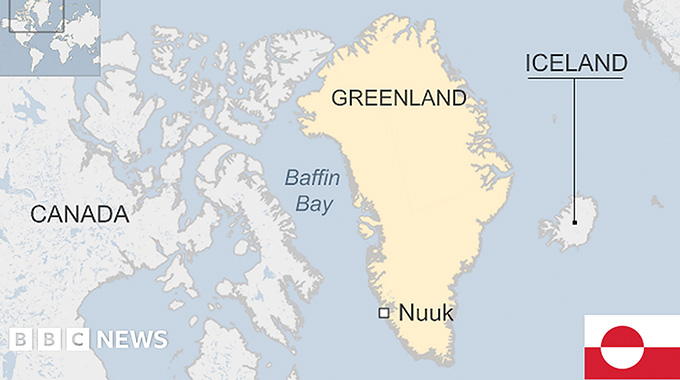
Tinashe Nyamushanya, [email protected]
IN early 2026, tensions over Greenland — the world’s largest island and an autonomous territory of the Kingdom of Denmark — escalated sharply, transforming a long-standing Arctic strategic interest into a major international flashpoint.
At the centre of this renewed debate is the United States’ growing assertiveness toward Greenland, a development that has triggered strong reactions from European allies, Russia, and China, while raising fundamental questions about sovereignty, alliance politics, and democratic norms in global governance.
According to a 2025 European Parliament briefing, Greenland has become a “focus of geopolitical competition and growing confrontation between major powers,” driven by its strategic location, emerging Arctic shipping routes, and vast untapped natural resources. As climate change accelerates Arctic accessibility, Greenland’s geopolitical relevance has never been more pronounced.
Strategic Competition in the Arctic: Why Greenland Matters
The United States’ interest in Greenland is deeply rooted in national security considerations and intensifying great-power rivalry. Strategically positioned along the GIUK Gap (Greenland–Iceland–United Kingdom), Greenland occupies one of the most critical maritime and aerial chokepoints in the North Atlantic, essential for early-warning systems and monitoring potential Russian military movements.
The US already maintains a significant military presence through the Pituffik Space Base, which plays a central role in missile warning, space surveillance, and broader strategic defence architecture. As Arctic ice continues to recede, new maritime corridors are emerging, heightening competition for military influence, commercial access, and control over strategic sea lanes.
Beyond security, Greenland possesses vast reserves of critical minerals, including rare earth elements vital for renewable energy technologies, electric vehicles, and advanced defence systems. For Washington, deeper engagement in Greenland is viewed as a hedge against expanding Russian and Chinese influence in the Arctic.
However, critics argue that existing defence agreements within Nato already provide the United States with extensive operational access. More controversially, repeated public suggestions of acquiring Greenland — whether through purchase or coercive means — have alarmed allies and breached long-standing diplomatic norms, undermining trust within the transatlantic alliance.
Alliance Politics and European Resistance to Unilateral Power
European governments have responded firmly and collectively, rejecting any US attempt to claim or annex Greenland. Leaders from Denmark, France, Germany, and other European states have emphasized that Greenland’s future can only be determined by Greenlanders themselves, in accordance with international law and the principle of self-determination.
Greenlandic and Danish authorities have reiterated their commitment to Denmark, Nato, and the European Union, while asserting Greenland’s autonomous status and democratic rights. In parallel, Denmark and Greenland have proposed the establishment of a Nato-led Arctic security mission aimed at strengthening collective defence and preventing unilateral actions that could destabilise the region.
For Europe, the Greenland issue represents a critical test of transatlantic solidarity. Threats of economic pressure, including potential tariffs, risk inflaming already sensitive trade relations and weakening Nato cohesion at a time when unity is essential to deter external threats.
The implications of any unilateral US move would be far-reaching. Such action would challenge the foundations of Nato, strain diplomatic and economic relations, and intensify debates within Europe about strategic autonomy and the need for independent defence capabilities. Moreover, a shift in control over Greenland’s critical mineral resources could disrupt European supply chains and undermine the continent’s climate and energy transition goals.
Sovereignty, Democracy, and the Future of Arctic Governance
Beyond strategic and economic considerations, the Greenland dispute raises profound questions about democracy and sovereignty in international politics. Greenland is a representative democracy with substantial autonomy over its internal affairs and a clear aspiration for self-determination.
This principle has been consistently respected by Denmark and the European union and remains central to Greenland’s political identity.
Proposals suggesting acquisition by another state — even when framed as security necessities — challenge core norms of sovereign equality and democratic choice. Critics argue that national security objectives can be pursued without undermining other people’s right to determine their political future.
They contend that multilateral dialogue, respect for international law, and institutional co-operation must prevail over unilateral pressure.
As the Arctic becomes an increasingly contested geopolitical space, the governance frameworks guiding engagement in the region will be put to the test. Whether global powers choose cooperation over coercion will shape not only the future of Greenland but also the credibility of democratic principles in an era of strategic competition.
A Geopolitical Test for the 21st Century
In 2026, the politics surrounding Greenland encapsulate a defining challenge of the 21st century — where climate change, strategic geography, and great-power rivalry converge.
The contest over Greenland is not merely about territory; it reflects evolving norms of international law, alliance commitments, and the global balance of power among the United States, Europe, Russia, and China.
As global attention shifts northward, Greenland may emerge as a litmus test for whether respect for sovereignty and democratic values can withstand mounting strategic pressures — or whether the Arctic will become yet another theatre of geopolitical confrontation. — International Affairs Observer