

 admin
admin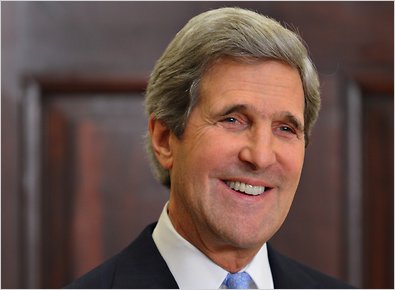
US Secretary of State John Kerry and Russian Foreign Minister Sergei Lavrov have agreed to meet later this month to try to set a date for a long-delayed peace conference for Syria.“We both agreed . . . to meet again in New York around the time of the UN General Assembly around the 28th in order to see if it is possible then to find a date for that conference,” Kerry said yesterday at a joint press briefing in Geneva with Lavrov and UN-Arab League envoy to Syria, Lakhdar Brahimi.
After meeting the UN envoy on Syria in Geneva yesterday, where they are trying to confirm a Russian plan to remove Syria’s chemical weapons and avert US military action, Lavrov and Kerry said they agreed to try and make progress on a broader effort to end a conflict that has divided the Middle East and world powers.
“We are committed to trying to work together, beginning with this initiative on the chemical weapons, in hopes that those efforts could pay off and bring peace and stability to a war-torn part of the world,” Kerry told the news briefing.
Brahimi said working to remove chemical weapons from Syria would form an important element in efforts to hold new peace talks, following an earlier failed attempt at Geneva last year.
A spokesman for Lavrov said he and Kerry had had a comprehensive meeting, where they outlined “the logistics, process and agenda for the days ahead and they agreed on a shared goal of achieving a framework for the path forward. The entire delegation will reconvene tomorrow morning.”
Al Jazeera’s Neave Barker reporting from Geneva said that a deep commitment coming from both sides at this stage is “very diplomatic talk”.
“They know it is going to be extremely hard to find common ground because there are so many clear-cut differences. Whether or not the Russia and US could work through these differences is yet to be seen, but if there is a breakthrough, it is going to have a major impact on the situation in Syria,” he said.
Barker said the Russian and US plan is largely technical involving procedures to be able to share and collate whatever information both sides have on Syria’s chemical weapons capabilities with a view to, of course, pave way for potentially hundreds of international scientist to destroy Assad’s chemical weapons arsenal.
“And the hope is also that this will pave way for a greater diplomatic effort to kick start ‘Geneva 2’ talks that were stalled earlier in the year,” he adds.
A statement from the US State Department, issued early yesterday, refelected the differing positions.
“Secretary Kerry . . . made clear that while the United States felt the developments this week provided a positive opportunity, any plan must be credible, verifiable and implemented in a timely manner. And finally, there must be consequences for violation.”
Assad is accused by the US of killing 1 429 people in a chemical weapons attack in a Damascus suburb on 21 August , and threatens military strikes if a diplomatic solution to the crisis is not found.
Assad denies his regime was responsible for the attack, and pins the blame on rebel forces. Russia, Assad’s ally, also says there is no proof that Assad ordered the attack and is opposed to any military intervention.
Damascus formally applied to join a global poison gas ban — a move welcomed yesterday by Russian President Vladimir Putin. He called it “an important step towards the resolution of the Syrian crisis” and added: “This confirms the serious intention of our Syrian partners to follow this path.”
China, too, hailed Assad’s decision. But Kerry underscored that Washington could still attack if it was not satisfied: “This is not a game,” he said on Thursday.
Meanwhile, Syria’s opposition National Coalition said yesterday it was “deeply sceptical” about the government’s decision to join a chemical weapons ban and urged a tough UN resolution to enforce the measure.
Its statement came a day after Damascus filed documents at the United Nations seeking to join the international convention banning chemical weapons.
The move was part of a Russian-led deal intended to head off US military action against the regime, which has denied widespread charges of having used chemical weapons in a 21 August attack which left hundreds dead. Syrian rebels on the ground have rejected the deal while the National Coalition, on the political front, has criticised it.
“The Syrian Coalition is deeply sceptical about the Assad regime’s signing of the Chemical Weapons Convention on Thursday,” the umbrella group said.
“Such a gesture comes as too little, too late to save civilians from the regime’s murderous intent and is clearly an attempt to evade international action as well as accountability in front of the Syrian people.”
The group said any UN Security Council resolution should “enforce compliance through clearly defined timelines and consequences”.
“It is vital the threat of force stays on the table. For a UNSC resolution to be anything other than a get-out-of-jail-free card for the regime, it must be enforceable under Chapter 7,” allowing military action, the statement said.
The Coalition warned against allowing Syria to play for time and exploit the deal to continue “its policy of widespread violence against civilians”. — AFP


 Online Reporter
 derick.khumalo