

 admin
admin
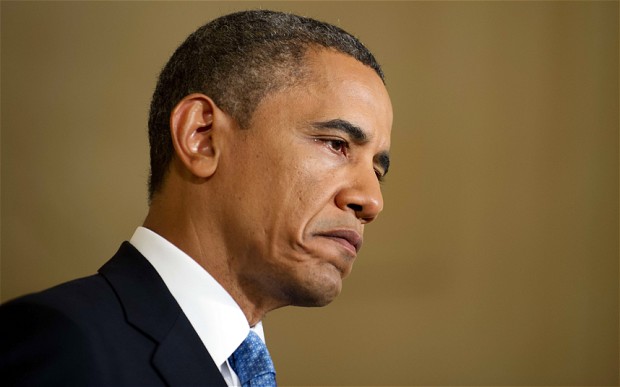
WASHINGTON – The United States will begin working with its allies at the United Nations to explore the viability of a Russian plan to avert military action against Syria by having the international community take control of theSyrian chemical weapons stockpile, a senior White House official said Today.
The decision to work through the United Nations came after President Obama spoke Tuesday morning with President François Hollande of France and Prime Minister David Cameron of Britain, the White House official said.
“They agreed to work closely together, and in consultation with Russia and China, to explore seriously the viability of the Russian proposal to put all Syrian chemical weapons and related materials fully under international control in order to ensure their verifiable and enforceable destruction,” the official said. “These efforts will begin today at the United Nations.”
France has already begun to share a draft Security Council resolution on Syria, which members of the council were consulting about on Tuesday afternoon. “Discussions have just begun,” said a United Nations diplomat, speaking on the condition of anonymity. “We’re looking at a process that will last a few days.”
But Russia’s Foreign Ministry announced in a statement that it opposed any resolution that would authorize the use of force. Sergey V. Lavrov, the Russian foreign minister, telephoned his French counterpart and told him a resolution like the one proposed by France was “unacceptable,” the ministry said in a statement.
Instead, Russia will propose a presidential statement, which is far less binding, calling on the secretary general and the organization that oversees the Chemical Weapons Convention to carry out the proposal to put Syria’s arsenal under international control.
“The Russian draft confirms that there is no alternative to a political and diplomatic settlement of the conflict” in Syria, the statement said.
Obama’s decision to embrace a United Nations process came as he prepared to consult with senators on Capitol Hill and deliver a speech to the nation Tuesday night, which was originally scheduled to explain why he was asking Congress for authorization to take military action against the government of President Bashar al-Assad in retaliation for its use of chemical weapons.
Aides to Obama said he would continue to press for military action against Syria, but the proposal floated Monday by Lavrov has transformed both the domestic and international debate over Obama’s plan after he appeared to be waging a losing battle to win support for a military response.
Under the Russian proposal, international monitors would be sent to Syria to take control of the chemical stocks, which would ultimately be eliminated. Syria has welcomed the Russian initiative but has not specifically endorsed the idea of disposing of its huge chemical weapons arsenal.
In Moscow, Russian officials said they were working with the authorities in Damascus on a “workable, precise and concrete plan” to advance the proposal, which received public endorsements from Syria’s foreign minister and prime minister, but not from Assad himself.
President Vladimir V. Putin of Russia said that the proposal to take control of Syria’s chemical weapons – and to resolve the crisis in general – was possible only if the United States and others forswore the use of military force. He said he had discussed the issue with Obama on the sidelines of the Group of 20 meetings in St. Petersburg last Friday. Mr. Putin also said he welcomed the initial response of Syrian officials.
“Undoubtedly, all of this makes sense and can function, can work, only if we hear that the American side and those who support the United States in this sense rule out the use of force,” Mr. Putin said in televised remarks on Tuesday night, “because it is difficult to make any country – Syria or any other country, any other government in the world – unilaterally disarm if the use of force is being prepared against it.”
He noted that Syria had “a certain arsenal of chemical weapons,” and that “the Syrians have always regarded it as an alternative to the nuclear weapons in Israel.” He said he and Obama had agreed to ask Lavrov and Secretary of State John Kerry to work intensively to try to resolve the issue.
On Capitol Hill on Tuesday, a bipartisan group of eight senators announced plans for a new Congressional resolution that would authorize an attack on Syria, but only after the introduction of a United Nations resolution that would set a deadline for the Assad government to hand over its chemical stockpile. If that deadline is not met, the resolution would authorize the use of military force.
Kerry, appearing before a Congressional committee Tuesday morning, expressed caution about the diplomatic efforts even as he pledged that the president would “take a hard look at” the Russian plan in the days ahead. Mr. Kerry said any diplomatic response to the chemical weapons attack in Syria must be viewed cautiously.
“It has to be swift, it has to be real, it has to be verifiable,” Kerry told members of the House Armed Services Committee. “It cannot be a delaying tactic.”
Kerry said the administration would continue to push for Congress to authorize military action against Syria, believing that the threat of an attack had prompted the new diplomatic initiative. “The use of force absolutely should not be off the table,” Kerry said.
Defence Secretary Chuck Hagel, appearing at the same committee hearing, said in his prepared statement that “for this diplomatic option to have a chance of succeeding, the threat of U.S. military action must continue to be very real and credible.”
“So Congress has a responsibility,” he added, “to continue this important debate on authorizing the use of force against the Syrian regime.”
While Obama said on Monday that the Russian proposal might produce a diplomatic breakthrough, there is concern among American officials that it may be a maneuver to undermine the administration’s effort to mobilise international and Congressional support for a military strike.
Obama administration officials have previously discussed the idea of some sort of ultimatum that might be presented to Mr. Assad to give up his chemical weapons stocks, a senior administration official said on Monday. But the idea seemed to have many problems. Among the questions was: How would the stocks be secured and transported out of Syria during a war? And how would inspectors ensure that stocks were not hidden?
The administration had dismissed the United Nations for days, saying that diplomacy there had failed to rein in Assad. Susan E. Rice, the national security adviser, said Monday morning that Obama believed that the United Nations Security Council had been ineffective.
By Tuesday morning – with governments around the world seizing on the Russian proposal as a serious idea – the White House tone had changed. The White House official said that the efforts at the United Nations would “include a discussion on elements of a potential UN Security Council resolution.”
Developments in Congress reflected the fast-moving diplomacy.
In the Senate, which had already delayed an initial vote on military strikes that had been scheduled for Wednesday, the bipartisan group drafting an alternative Congressional resolution said its plan would give the United Nations time to take control of the Syrian government’s arsenal of the internationally banned weapons.
If that resolution gains support, it could stave off a debilitating defeat for the Obama administration on a resolution authorizing an attack that was approved by the Senate Foreign Relations Committee last week, but that had been losing ground in both parties in recent days.
The alternative resolution is far from complete, but a Senate aide familiar with the talks over its wording said the negotiations were being conducted in consultation with the White House.
The group drafting the measure includes Senators John McCain of Arizona, Lindsey Graham of South Carolina, Kelly Ayotte of New Hampshire and Saxby Chambliss of Georgia, all Republicans, and Senators Carl Levin of Michigan, Charles E. Schumer of New York, Chris Coons of Delaware and Bob Casey of Pennsylvania, all Democrats. Senator Robert Menendez of New Jersey, the chairman of the Foreign Relations Committee, is also involved in the discussions.
The rapid-fire diplomatic developments elicited skepticism from many regional and international players, who questioned the motives behind the Russian gambit and speculated that Moscow’s plan would enable the Syrian authorities to buy time.
Visiting Moscow, Foreign Minister Walid al-Moallem of Syria repeated on Tuesday that the Syrian government had accepted the Russian initiative to “uproot U.S. aggression.” But, analysts said, his comment fell short of an unambiguous pledge by Syria to give up its arsenal. It was also unclear if the foreign minister had the authority to speak for Mr. Assad, especially without returning to Damascus for consultations.
Syrian state television quoted Prime Minister Wael al-Halki as saying that his government supported Moscow’s initiative “to spare Syrian blood.” – New York Times.



 Online Reporter