Online Reporter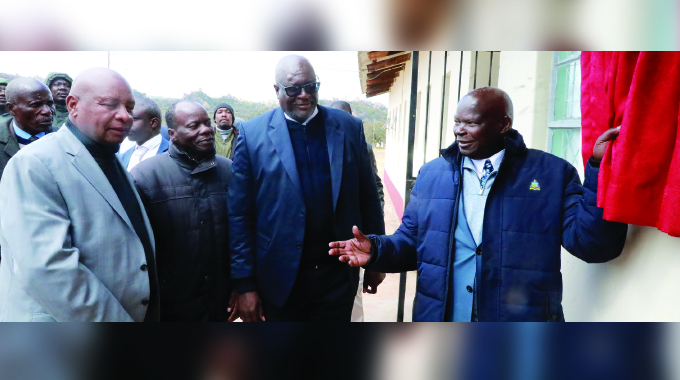
Raymond Jaravaza, [email protected]
ACCELERATED access to sustainable energy supply and rural electrification remain a top priority as Government races to transform livelihoods in line with the National Development Strategy leading to attainment of Vision 2030.
Government is walking the talk and yesterday officially handed over a US$100 000 solarisation project for a school in Matobo District funded through the Zimbabwe Energy and Regulatory Authority (Zera).
The new project will power Bazha Secondary School and teachers’ cottages in a development that will see learners also getting access to internet services powered by a Starlink kit donated by a former student, who is now based in the United Arab Emirates (UAE).
Bazha Secondary School is situated in a remote part of Matobo District where access to electricity remains a pipe dream and internet connectivity is non-existent.

The handover of the solarisation project will benefit over 300 school children at the school, to access for the completion of a science laboratory while teachers will enjoy uninterrupted access to the internet for school projects related research.
Energy and Power Development Minister, July Moyo, who was the guest of honour at the hand-over ceremony said Government has put in place incentives to promote the development of solar projects such as customs duty exemption on solar products and equipment.
“As a country and in particular this district, we are endowed with natural resources that we often take for granted, one of which is the sunshine and Zimbabwe has wholly embraced solar technology that will help us bridge the gap between urban and rural communities in terms of access to clean energy,” he said.
“Government continues to advocate for improved access to sustainable energy supplies and increase access to electricity from percent in 2020 to 54 percent by end of 2025 and in addition we have put in place incentives to promote the development of solar projects such as customs duty exemption on solar products and equipment,” said Minister Moyo.
“The Ministry of Primary and Secondary Education provides guidance on which school requires assistance and Bazha Secondary School is a beneficiary of the project funded by the Zimbabwe Energy Regulatory Authority (Zera), an authority consistently delivers on these projects while fulfilling their role as a corporate citizen.”
Minister Moyo said access to electricity will boost staff morale at the school as the living conditions of the educators has improved.
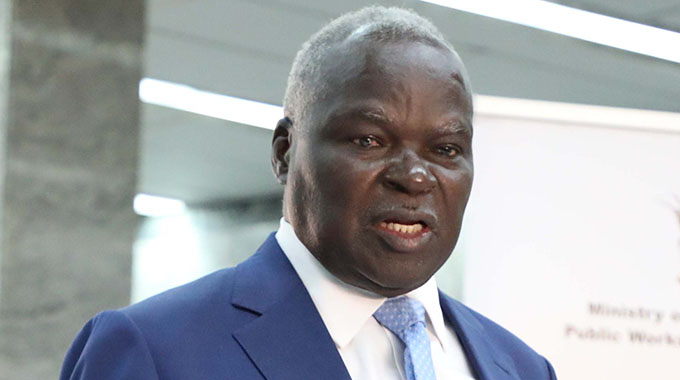
“This project makes a huge impact in transforming the lives of more than 300 children and having electricity at this school will also reduce on staff-turnover, making it easier for teachers to live comfortably.
“This initiative is in line with the National Renewable Energy Policy, which promotes the increased uptake of renewable energy in the country to increase national energy access,” he said.
Minister Moyo said the solar products for the project were exempted from duty as solar panels, inverters, charge controllers, lithium batteries and solar water heaters were brought into the country duty-free.
In his remarks, Zera chief executive officer, Mr Edington Mazambani, said the total cost of the solarisation project was US$100 000.
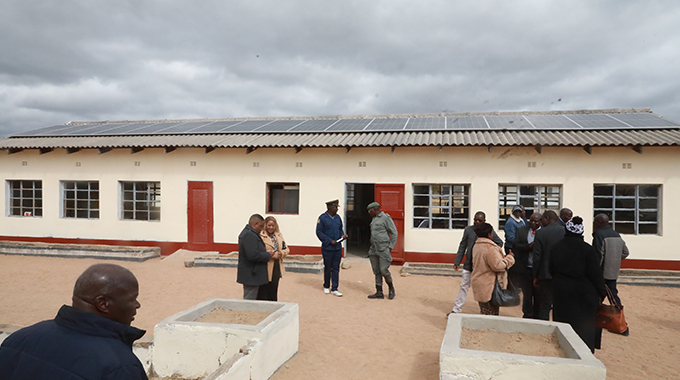
“Zera installed a 20kW solar PV system with 40kWh battery bank that will power the entire school including staff houses.
“At full charge, the system can power the school and the staff houses for more than three days.
We also retrofitted a diesel powered borehole with a solar system, a 6.6kW stand-alone solar powered facility with an additional 5 000-litre storage tanks and water boosting capacity,” he said.
“Repairs on the existing wiring, additional tubing and wiring of classrooms and staff houses were also done. The project was implemented at a total cost of US$100,023.43,” said Mr Mazambani.

“Being a corporate citizen, the authority has a budget allocated to initiatives that promote renewable energy and to transform the livelihoods of marginalised communities.”
The Ministry of Primary and Secondary Education provides guidance as to which facility should be supported in that particular year, he said.
“Hence, we are here today because Bazha Secondary School was selected to receive support in the installation of a solar system.
The school has a catchment of over four wards whose children stand to benefit directly from the project.
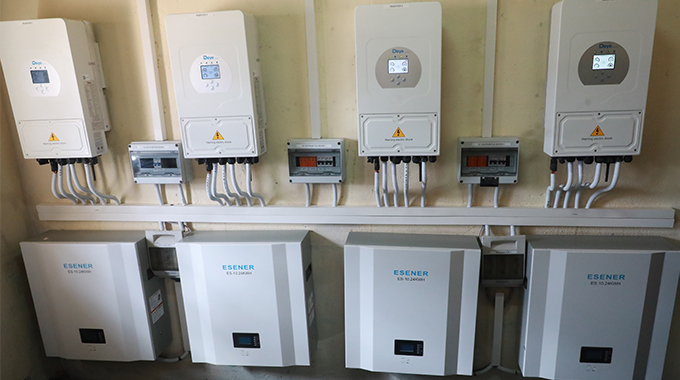
This initiative is in line with Zeras function to promote renewable energy.
The solarisation project at Bazha made it possible for consistent supply of water to the school, staff cottages, and six other Government officials housed at the school as well as the surrounding community.
The school is now enjoying reliable and sustainable electricity from the solar system, which is also powering the Wi-Fi, which facilitates communication by the school staff as there is no mobile network in the area,” said Mr Mazambani.