Chronicle Editor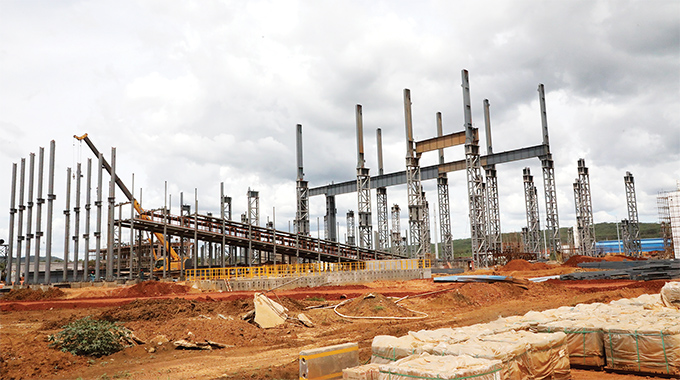
Patrick Chitumba, [email protected]
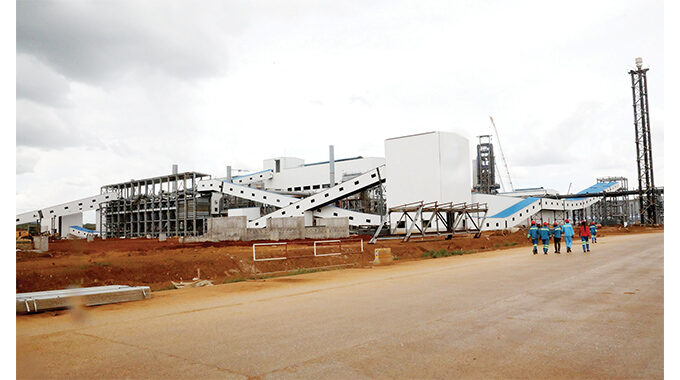
AT 95 percent completion, the US$1,5 billion Dinson Iron and Steel Company (Disco) plant at Manhize, Chirumhanzu District, in the Midlands province, is almost ready to commence production, just about two years after President Mnangagwa led its groundbreaking ceremony.
The project, which encompasses the establishment of a smart city to be called Manhize Town and a science university, will drive massive beneficiation and value addition of steel and accelerate economic growth through exports and huge job opportunities along the value chain.
The company expects to start production by the end of April and yesterday the Minister of Industry and Commerce, Dr Sithembiso Nyoni, led chief executive officers from mining companies, foundries, banks and the media to get the feel of implementation progress made on-site.
The minister and industry executives got first-hand exposure to the massive blast furnace superstructure that is almost complete, among other critical plant components. Manpower has been increased to expedite the construction of the power line linking Sherwood in Kwekwe and the new giant factory.
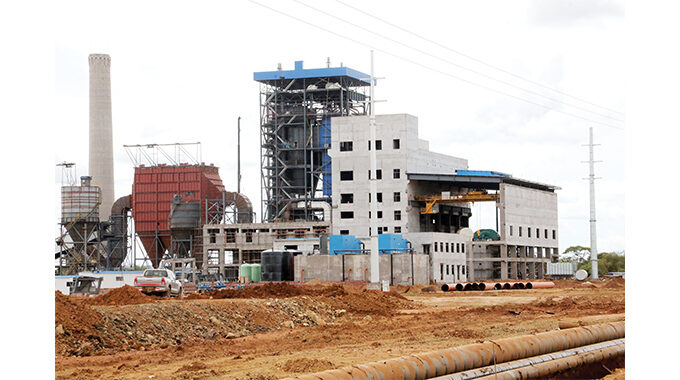
The completion of the blast furnace and the availability of power are critical steps before the commencement of production. The steel plant has already beefed up its workforce to 1 500 and is set to recruit more once full-scale production commences.
The company expects to produce pig iron by the end of April, followed by steel billets in May and steel bars in October.
Disco is projected to produce 600 000 metric tonnes of products in the first phase rising to 1,2 million tonnes in the second phase then 3,2 million tonnes in the third phase and ultimately five million tonnes per year in the final phase, which would earn the country millions of dollars in foreign currency.
Other products on the pipeline include pipes, bolts and nuts, smaller slags, rolled tubes, fences, shafts, wires, and bars, among others.
Preliminary projections indicate the company would likely scoop net revenues of up to US$10 million during the first phase and rise to US$4,25 billion under phase four of production.
In terms of employment, Disco expects to directly employ 3 000 workers in the first phase with the figure expected to rise to over 10 000 in the fourth phase of production. In her remarks, Dr Nyoni said progress at Manhize represents a significant milestone for Zimbabwe’s industrial revolution and the entire iron and steel value chain, in particular.
“This state-of-the-art facility is not only capable of producing high-quality steel products but it’s also poised to have a profound impact on our economy,” she said.
“The establishment of the plant signifies our commitment to strengthening the iron and steel value chain within Zimbabwe.”
Dr Nyoni said the giant steel plant would play a pivotal role in enhancing the production of iron ore, its processing into steel, and the subsequent manufacturing of various steel products.
“By integrating these stages of the value chain, we are fostering a more self-reliant and sustainable steel industry. The impact of the plant on the economy cannot be overstated,” she said.
“The growth and development of the steel industry has a multiplier effect on other sectors, such as construction, infrastructure development and manufacturing.”
Dr Nyoni said the availability of high-quality steel products locally will reduce the country’s reliance on imports, thereby saving foreign currency and boosting the balance of trade.
Furthermore, she said the plant will generate employment opportunities for more locals and experts in the country, adding that as business expands to reach full production capacity, a significant number of direct and indirect jobs across the entire value chain will be created.
“This not only improves the livelihoods of individuals and families but also contributes to poverty reduction and economic empowerment. In addition to its economic impact, the plant also underscores our commitment to sustainable development and environmental stewardship,” she said.
“The plant incorporates the latest technologies and practices that prioritise energy efficiency, waste reduction and emissions control.”
As the country continues to work towards achieving its industrialisation goals, Dr Nyoni said it was crucial to embrace technological advancements, prioritise skills development and foster a culture of innovation.
“We are committed to supporting initiatives that promote research and development, as well as collaboration between academia, industry and Government. I, therefore, encourage you to seize this opportunity to establish downstream industries that can leverage the benefits of the plant and create a thriving ecosystem of complementary businesses and industries,” she said.
Dinson Holdings chairman, Mr Benson Xu, said they were honoured to invest in the country.
“The Government has a vision to open Zimbabwe for business and we are honoured to be pioneers of that journey. We cannot talk of Vision 2030 without talking of industrialisation,” he said.
“We are so glad and believe that through interaction and discussion, we have a lot of opportunity to grow.”
Mr Xu also spoke of the harmonious relations the company has with the local people and its leadership, which includes traditional leaders.
“This place is sacred and I want to thank the traditional leadership for their full support. In less than two years look at what we have achieved and we will continue to grow as we are committed to making this country the largest steel production base in Africa,” he said.
Disco projects manager, Mr Wilfred Motsi, said they were now at 95 percent towards commissioning.
“By the end of the first quarter we will be starting our first production, which is pig iron and then in the second quarter in October we will start production of steel billets, we will then be commissioning the whole of phase one where we will be producing steel bars,” he said.
“So, in terms of completion, we are almost there. We are 95 percent in terms of completion of the plant.”
Buy Zimbabwe general manager, Mr Munyaradzi Hwengwere, said two years back the Chamber of Mines commissioned a study to determine how they can enhance import substitution. He said the study zeroed in on steel as a major challenge to reduce the importation within the mining sector.
“So, one of the early winds will be that the plant will significantly improve the amount of money that we will retain in the country from the mining sector and you also know that from the foundry sector, a lot of the foundries were now dependent on processing old used cars and all that. Environmentally that was not good,” he said.
Mr Hwengwere said the establishment of the new steel plant has positioned Zimbabwe to effectively expand and create more wealth towards meeting Vision 2030 ideals.



 Online Reporter