Patrick Chitumba, [email protected]
FOR families in Mberengwa, the transformation of the district hospital at a cost of about US$4.1 million means improved access to essential healthcare, better facilities for expecting mothers and greater capacity to respond to medical emergencies without having to travel long distances in search of treatment.
The newly refurbished and upgraded Mberengwa District Hospital has increased its bed capacity from 20 to 104, strengthening healthcare delivery for more than 200 000 people who depend on the institution and its network of 31 rural health centres and mission hospitals.
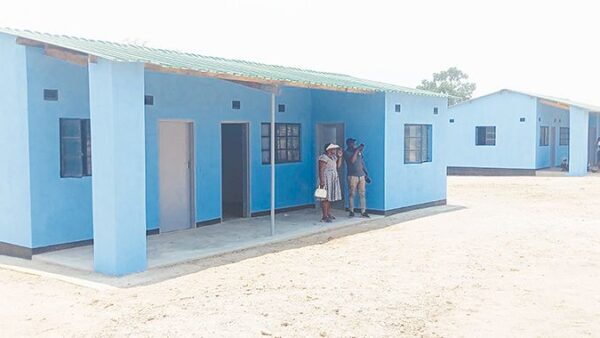
The upgrade, undertaken over five years by Mimosa Mining Company, includes a modern maternity wing, operating theatre, wards, mortuary, admissions unit and improved water and electricity supplies, enhancing the hospital’s capacity to provide essential services to a predominantly rural population.
The improvements are particularly significant for mothers and children, patients requiring surgery and families who face transport costs and long distances when seeking medical attention.
The hospital, which has served the community since 1922, is a key referral centre in the district.
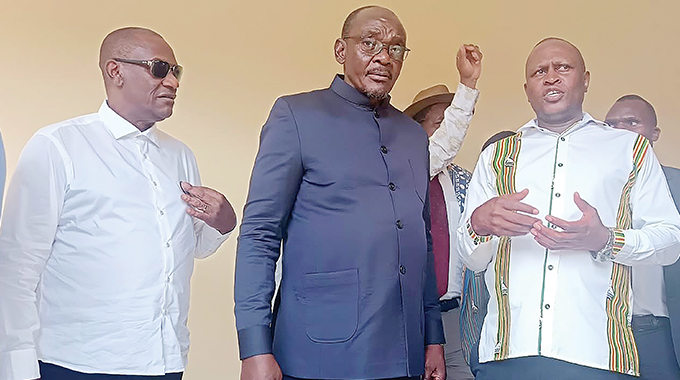
Vice-President Kembo Mohadi officially commissioned the refurbished facility yesterday, and commended Mimosa for investing in critical public health infrastructure, and challenged other mining companies to emulate the gesture.
“Behind these facilities are human stories. A mother can now give birth safely close to home, and the critical minutes during a medical emergency can make the difference between life and death,” said VP Mohadi.
The investment is also expected to strengthen the link between rural health centres and higher-level referral hospitals by improving the district institution’s ability to identify serious illnesses early, enhance maternal and child healthcare and ease pressure on provincial and central hospitals.
“For rural communities, where distance and transport costs can be a barrier to people seeking care, this hospital is an essential investment,” he said.
“The quality of care a person receives must not be determined by where that person lives.”
VP Mohadi said mining companies should look beyond mineral extraction and make meaningful contributions to the socio-economic development of surrounding communities through investments in healthcare, education, water and sanitation, vocational training and enterprise development.
“Mining companies must look within their communities and ask what they can do to contribute to the community and fulfil their corporate duty,” he added.
“The hospital upgrade demonstrates the value of public-private partnerships in accelerating development and advancing President Mnangagwa’s vision of a prosperous Zimbabwe in which no one and no place is left behind.”
The Vice-President applauded district hospitals for playing an essential role in bringing healthcare closer to rural communities, adding that corporate social investment should form part of responsible business practice.
“Corporate social investment should not be viewed as an afterthought. It is part of responsible business practice, whether in health, education, vocational training, water and sanitation, or enterprise development,” he said.
VP Mohadi, however, emphasised that private-sector contributions should complement, rather than replace, the Government’s responsibility to provide public services.
“The provision of public services, including health, remains the core duty of Government, and partnerships such as this one help us deliver to people faster,” he said.
While commending the infrastructure improvements, he urged the Ministry of Health and Child Care to ensure that the hospital was adequately staffed, properly maintained and consistently supplied with medicines and other essential medical supplies.
“Buildings and equipment alone don’t make a health system. The hospital comes alive through doctors, nurses, midwives, pharmacists, supporting staff and technicians,” he said.
VP Mohadi also warned against neglect and vandalism of medical equipment, urging health professionals, schools, community organisations, local authorities and traditional leaders to strengthen public health education, promote early treatment and address drug and substance abuse among young people.
He urged residents to protect the upgraded facility so that future generations could continue benefiting from the investment.
In his welcome remarks, the Minister of State for Midlands Provincial Affairs and Devolution, Owen Ncube, said the refurbishment reflected the Second Republic’s commitment to improving citizens’ quality of life as Zimbabwe moves towards Vision 2030.
“The infrastructure resonates with the development thrust of the New Dispensation under the leadership of President Mnangagwa, whose vision is to transform Zimbabwe into a prosperous and empowered upper-middle-income society by 2030,” he said.
Minister Ncube said the Midlands Province had recorded notable economic growth and recovery since November 2017, driven by policies including economic opening, engagement and re-engagement, public-sector reforms, devolution and decentralisation.
“These policies are driving innovation, modernisation and industrialisation as we gravitate towards a prosperous and empowered upper-middle-income society by 2030,” he said.
Minister Ncube also commended Mimosa Mine for investing beyond mining and supporting healthcare infrastructure, saying the initiative complemented Government efforts to bring medical services closer to communities and bridge the gap between rural and urban healthcare facilities.
“The investment is aligned with the National Health Strategy and the National Development Strategy 2’s focus on social development, gender and social protection,” he said.