admin
admin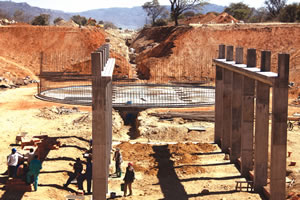
International Monetary Fund Special Drawing Rights have been utilised.
This translates to a total US$72,3 million. In a recent update on the utilisation of the country’s SDR, the Ministry of Finance said most of the 14 institutions that had been allocated part of the US$80,4 million had fully utilised it.
Only three institutions out of the 14 institutions have not fully utilised their allocations leaving a balance of about US$8 million.
Of the three, Marondera Town Council is yet to utilise US$1,9 million out of its allocation of US$2,9 million for the rehabilitation of water and sewer infrastructure, while Bulawayo City Council still has US$4,7 million out of its US$6,4 million allocation for water and sewer infrastructure.
The Central Registry remains with US$1,3 million from its allocation of US$3,5 million allocation for the completion of outstanding works.
Some of the infrastructure projects that have been financed under the SDR for infrastructure include the rehabilitation of Hwange Thermal Power Station by the Zimbabwe Power Company to the tune of US$10 mil-lion.
Others include US$5 million for rehabilitation of track, rolling stock, signalling and communication, electrical and ICT infrastructure for the National Railways of Zimbabwe.
The rehabilitation of airport run- way and taxiways at the Harare International Airport was allocated US$14 million.
Other projects include the upgrading of the terminal building, construction of access roads and installation of equipment at the Joshua Mqabuko Nkomo International Airport, the dualisation of the Harare to Norton road and construction of the Manyame Bridge.
Dualisation of the Harare-Masvingo road (Harare to Skyline and construction of Mukuvisi bridge) to the tune of US$4,7 million.
The construction of the 46,5 kilometre Mtshabezi pipeline, Mutoko Town Council rehabilitation of water and sewer infrastructure, Transmedia’s re-habilitation of the broadcasting transmission network, National Housing projects (US$10 million) and TelOne’s project of installing fibre optic backbone infrastructure from Harare to Mutare.
The Infrastructure Development Bank of Zimbabwe is monitoring and evaluating the implementation of the projects and to facilitate recovery of the loaned amounts.
According to the ministry, these projects were chosen on the “basis of the contribution they would make in improving service delivery economy wide.”
Improvement of critical infrastructure is expected to contribute to the ease of doing business in the country, which is presently lowly rated on some international indices.
The African Development Bank (AfDB) earlier this year released a report indicating that Zimbabwe has an infrastructure deficit of around US$14 billion.
The US$80,4 million is part of the US$150 million that the country got after it converted part of its SDRs worth US$505 million.
The US$150 million was drawn in two lots of US$50 million (December 17, 2009) and US$100 million (February 23, 2010) to meet critical national expenditures.
Meanwhile, apart from the US$80,4 million, US$50 million went towards the procurement of agricultural inputs for the 2009/2010 summer cropping season, while US$19,5 million was allocated to the Zimbabwe Economic and Trade Revival Facility for lines of credit to industry.
The interest rate applicable on the SDR typically fluctuates between 0,25 percent to 5,5 percent, and a member country is only required to repay interest on the drawn amount, as long as it remains a member of the IMF.


 derick.khumalo