Online Reporter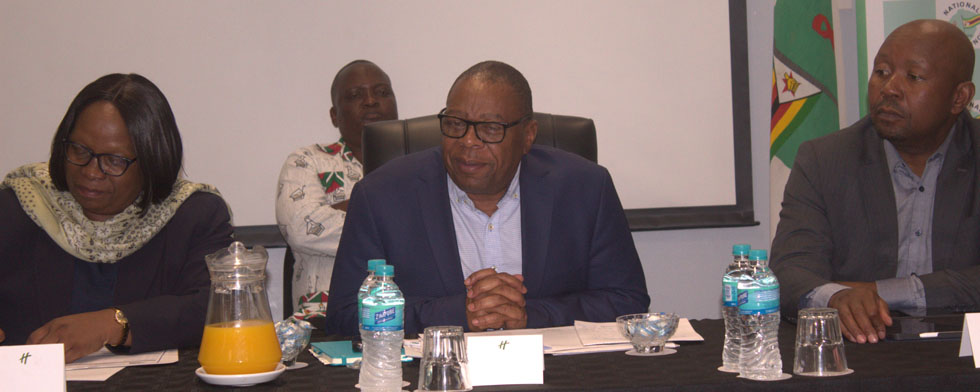
Tendai Gukutikwa
Health Reporter
ZIMBABWE will need at least US$800 million over the next five years to sustain its national HIV response and safeguard hard-won gains against the epidemic, according to the National AIDS Council (NAC).
NAC chief executive officer, Dr Bernard Madzima, disclosed the figure in Mutare during the organisation’s ongoing development of its 2026–2030 Strategic Plan, which is aligned to the National Development Strategy (NDS2) and the forthcoming National Health Strategy.
He explained that the funding will be critical for securing antiretroviral medicines, laboratory services, test kits, treatment for comorbidities, and other essential interventions required to ensure continuity of care and protect patient outcomes.
He said the estimated US$800m will cover antiretroviral medicines, laboratory services, test kits, treatment for comorbidities and other critical services needed to maintain treatment continuity and patient care.
“Our budget for the five-year period is not less than US$800m. This covers ARVs, other medicines, antibiotics, painkillers and laboratory support, including equipment and test kits. We also have to support other comorbidities, like cancer and renal programmes because these affect people living with HIV,” he said.
Dr Madzima said the HIV and AIDS programme was very successful over the years, and relied heavily on international donors.
Dr Madzima said the new five-year plan is urgent due to sharp changes in the global funding landscape.
“However, after Covid-19 we have seen a decline in resources coming from international partners, and so we have been developing strategies to guide the programme for the next five years, noting that there have been changes in the funding environment,” he said.
Dr Madzima said the decision by the United States government to drastically withdraw funding from several countries early this year created a serious funding gap for Zimbabwe’s HIV programme.
“There is a serious funding gap for the HIV programme in particular, but also for health in general. As NAC, our role is to ensure that we close this gap using domestic resources.
“We have to look internally so that the programme achieves its target of ending AIDS as a public health threat by 2030,” he said.
He added that Zimbabwe has already achieved the 95-95-95 global targets for 2025, but warned that the gains could easily be lost without stable funding.
“We do not know what the future holds. We must make sure we do not go backwards,” he said.
Dr Madzima said NAC is working with Government to strengthen domestic resource mobilisation through the AIDS Levy and tap into other tax streams.
“Our thrust is to make sure that the AIDS Levy itself, the three percent tax is collected efficiently and utilised more efficiently by prioritising key programmes.
“We are also engaging the Finance, Economic Development and Investment Promotion and Health and Child Care ministers to see how the programme can tap into other taxes that have been introduced, such as the alcohol tax and the sugar tax,” he said.
Dr Madzima said NAC is pushing for stronger private-sector participation and exploring new public-private partnerships designed to create sustainable income streams.
“We want to see the private sector coming in as part of their social corporate responsibility. We are also looking at developing PPPs and entering areas where we can do positive business as a way of resource-mobilising,” he said.
Addressing NAC board members during the same engagement, Health and Child Care Minister, Dr Douglas Mombeshora stressed the urgency of strengthening domestic financing in light of donor cuts.
He reminded the board that Government expect them to have a strategic plan that responds to both progress made and emerging challenges.
“The strategic plan should be robust and time-conscious. It should be informed by our successes and challenges, the achievement of the 95-95-95 targets and the pursuit of ending AIDS in a time when sustainability is key, given the recent funding cuts by some of our global partners,” he said.
Dr Mombeshora said the NAC board must prioritise resource mobilisation to sustain the response, while urging the council to plug the gaps left by departing partners.
“This charge remains critical given the funding cuts and your expanding mandate. The departure of our key funding partners will require that NAC steps in to cover the gaps, in areas such as condoms and various HIV prevention interventions,” he said.
Dr Mombeshora also commended NAC for its recent support to the renal and blood units at Parirenyatwa Group of Hospitals, saying such work demonstrated the council’s national commitment.
“Your efforts must reflect the execution of the mandate placed on your shoulders and being accountable to the people of Zimbabwe,” he said.
NAC board chairperson, Mrs Nester Mukwehwa echoed the Minister’s sentiments, stressing that the changing financing environment demands discipline, efficiency and sharper prioritisation.
“We cannot afford delayed procurements, poor utilisation of disbursements or investments that leave health facilities without equipment or drugs.
“This is a clarion call to rise to the challenges that the shifting landscape in financing brings,” she said.
Mrs Mukwehwa said the board is committed to ensure that the organisation remained focused and compliant as it steers the HIV programme towards 2030 targets