Chronicle Editor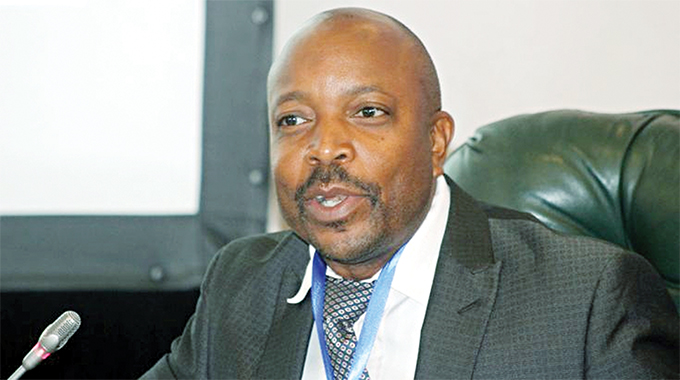
Dumisani Nsingo, Senior Business Reporter
INFORMATION and Communications Technology (ICT) experts have advised Government and private health service providers to use the Covid-19 condition as springboard to enhance digital technologies in the country’s health system.
Zimbabwe Information and Communication Technology chairman Engineer Jacob Kudzayi Mutisi said there was a need for Government through the Ministry Information and Communication Technology and Courier Services to work closely with mobile network operators (MNOs), ICT companies and professionals to come up with ICT solutions to help track and contain the spread of Covid-19 and other ailments.
“The Ministry of Information and Communication Technology and Courier Services should lead from the front by calling MNOs, ICT companies and professionals to come together and find ICT solutions to help track and contain the spread of Covid-19. We do not have to recreate the wheel but just to copy and paste what countries like China, Italy and Israel have implemented,” he said.
“Worldwide, it’s known that positioning ICTs has always played a crucial role during the time of crisis and disasters, just like these challenging times of Covid-19. Government agencies, health institutions, NGOs (non-governmental organisations and other stakeholders on the ground require precise positions to accurately assess the situation, pinpoint the risky areas and carry out relief and rehabilitation efforts accordingly, using ICT.”
Eng Mutisi emphasised the need for MNOs and ICT professionals to support the Ministry of Health and Child Care in its efforts to curb the spread of Covid-19 as the country joins the rest of the world to contain the scourge.
“ICT professionals and ICT companies should be leading from the front by using ICT and skills to develop systems that can enhance disease surveillance, coordinate response mechanisms and promote public awareness. This role of digital technologies is particularly crucial in Zimbabwe now than any other time,” he said.
Countries across the world have embraced use of big data, mobile applications (apps) and other digital technologies in health services. Countries like China, Iran, Israel, Taiwan and Italy are using geo-location technology and relying on data from technology platforms and MNOs companies to contain the spread of the Covid-19.
“In China they have an approach that has seen the country leverage its Artificial Intelligence (AI) systems and sophisticated digital surveillance infrastructure that they are now using for effective disease control.
“Citizens in cities such as Wuhan, that was worst hit by the coronavirus are all required to install mobile apps that track travel, medical history and effectively control access to the city’s subways, malls and other public spaces,” said Eng Mutisi.
The Chinese government has also deployed drones and robots to monitor and track the movement of its citizens in Wuhan city while in Italy Vodafone has indicated plans to provide Italian officials with anonymised customer data to track and analyse population movements in the hard-hit Lombardy region, where people are in lockdown.
“The only known African country that is conducting technology-based disease surveillance is Kenya whose role is to monitor the movement of mobile phones users who are under self-isolation, who violate the restrictions imposed on their movements,” said Eng Mutisi.
The Kenyan government has also launched a contact tracking mobile app for public transport to provide critical contact data that assist to trace back the movements of confirmed or suspected cases.
“I’m also informed that in South Africa, MNOs have agreed to give the South African government location data of suspected cases to combat Covid-19,” said Eng Mutisi.
Another ICT expert Mr Prosper Mutswiri, however, said initiatives of introducing digital technologies in the country’s health sector have over the past few years been met with resistance by some sections.
“ICT players have been advocating for Internet of things (IoT) based ways of delivering services, which some sections have been resisting. They have been advocating for ways of promoting tele-medicine and this has been met with some form of resistance in some sections of health sector,” he said.
Mr Mutswiri said it was of paramount importance for ICT operators to be on the forefront in the fight against the spread of Covid-19.
“ICT operators and professionals must lead the process (of fighting against the spreading of Covid-19) working closely with Government and health professionals in unveiling awareness and developing response mechanisms that are easily accessible to the common people,” he said.
With the country having an internet and mobile telecommunications penetration rate of over 50 percent and 90 percent respectively, MNOs are capable of profiling Covid-19 cases.
“Most operators are hooked onto their service in one way or the other. They have direct database of these people in one way or the other. They are close to reliable details of customers, which will help in profiling when it comes to solution provision especially in the case of Covid-19. You can track where people are, how to assist them and which relevant information to disseminate and in relevant language, to bring effectiveness,” said Mr Mutswiri.
He said over and above all the country should move towards embracing the Fourth Industrial Revolution as it forges to improve efficiencies in all sectors of the economy.
“Everything starts and revolves around technology. ICT companies working closely with all sectors must now work on integrating all their working systems and data in order to develop a seamless service delivery through technology,” he said.
The period of 4th Industrial Revolution where everything revolves around technology is here, in which ICT use and championing is now compulsory for all sections of life.
The fourth industrial revolution is a drive towards automation and data exchange in manufacturing technologies and processes, which include cyber-physical systems, IoT, industrial internet of things, cloud computing, cognitive computing and artificial intelligence. — @DNsingo.



 Online Reporter