Chronicle Editor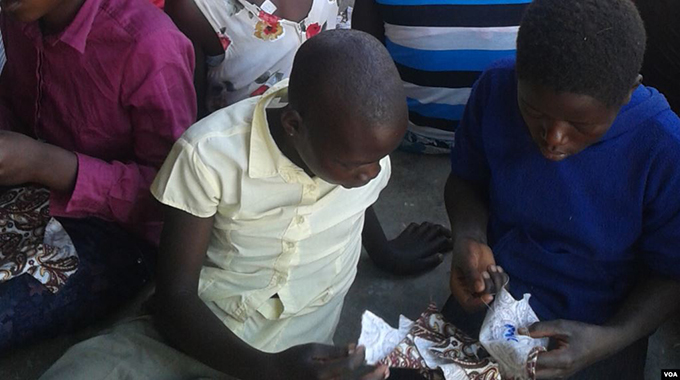
Andile Tshuma
THE use of unhygienic material in place of sanitary pads by the Girl Child has become a worrying factor for health experts as well as concerned organisations and individuals.
Research carried out by some organisations and individuals shows that some girls resort to using unhygienic alternatives such as newspapers, rags, leaves, tissue paper and cow dung, among others because they cannot afford sanitary pads or tampons.
Prices of basic commodities continue to skyrocket in shops and one would think that retailers are in some competition to have the highest prices of certain products.
Most families have drastically altered their budgets, doing away with some luxury items and only sticking to a few basics. However, with the whole price madness, sanitary wear has not been spared from these wanton price hikes and therefore females are in trouble.
I remember at some point, one could get a pack of sanitary towels for just below a dollar but I have not seen a packet that costs less than $5 in recent weeks. Bearing in mind that when it was that one dollar, it was still beyond the reach of some women, I can only imagine the stress that women go through now as their menstrual days draw near. I think these are things that should be made available free of charge because nobody chose to be a woman and menstruation is just a biological process and reality, not a choice.
Access to sanitary wear remains a huge challenge in Zimbabwe with many women resorting use of wrong materials during their menstrual cycles. Rural girls are the most affected and they miss out on school every month to attend to the process.
Many young girls and women often suffer from rashes, infections and sometimes life-long reproductive health issues as they are forced to improvise because they cannot afford sanitary products.
Parliament has been pushing Zimra to allow duty free importation of sanitary products in an attempt to try and keep the costs of sanitary wear low and affordable for all.
Legislator and gender activist, Ms Priscilla Misihairabwi-Mushonga, recently said the issue of access to sanitary wear should be dealt with as a human rights concern.
“This is a human rights issue. If we think it’s important to give people food when there is hunger I don’t understand why we don’t think of providing sanitary wear to women who cannot afford it,” she said.
Rural district councils have been working with various stakeholders to try and reach out to young girls in rural areas to ensure that they get sanitary wear, which most families cannot afford to provide.
For instance, I learnt during a Gender Links Sexual Reproductive Health and Rights reporting workshop that Umguza Rural District Council is providing reusable sanitary towels to some schools girls across Umguza district. The towels are convenient as the girls can wash them and reuse them a number of times. The girls no longer worry about where to get money to buy pads for the next menstrual cycle. However, while this brings relief to many, a lot of girls are still not on the programme as the funding available has not been able to cater for everyone.
Umguza RDC must be commended for its efforts, together with its partners including the Ministry of Health and Child Care and some non-governmental organisations that are making it possible for the young girls to get access to sanitary wear.
According to reports from Umguza RDC, a number of girls have been missing school during their menstrual cycle days as they would not have any sanitary wear to manage the bleeding. This means that in a term, a girl may miss an average of 15 days or so. Such situations can be avoided if more interventions are made and sanitary wear is made available on demand for all women.
A survey done in 2014 indicates that 20 percent of girls miss school due to period pain while 62 percent miss school due to lack of pads and 26 percent stay home because of heavy flows during menstruation.
According to the United Nations Children’s Emergency Fund, one in 10 girls of school-going age in Africa misses school or drops out altogether during their menstrual cycle.
Girl child organisations are concerned that menstruation, a natural biological process, is unfortunately shrouded in secrecy. It is also considered taboo to even mention the words “menstruation”, “pads”, “tampons” or “sanitary towels” in some communities.
Due to the secrecy surrounding menstruation and the failure by some communities to accept it as a natural biological process, many disadvantaged women and girls end up using unhygienic materials which result in infections like thrush.
Findings by organisations are that 20 percent of primary school girls have no information about menstrual hygiene before they begin their periods while 54 percent are mocked and stigmatised by boys when they stain their uniforms at school.
I think sanitary towels must be availed the same way that condoms and some contraceptives are distributed for free at health centres. People choose to engage in sex but menstruation is an involuntary biological process and therefore society must have provisions to ensure that women are catered for and that they do not have to stress about having to buy sanitary wear. — @andile_tshuma



 Online Reporter