Vusumuzi Dube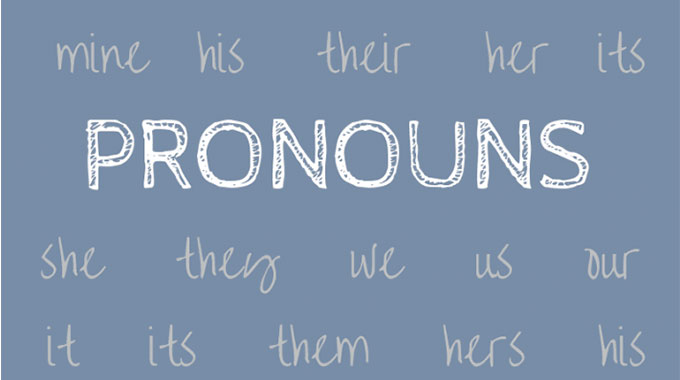
AVID followers of this column will remember that I said we will continue to go back to the basic of English grammar now and again.
All this is because all language is rooted on the basics. To understand other aspects of English you have to refer to the basics.
A pronoun is a word that replaces a noun or another pronoun. The noun or pronoun that a pronoun replaces is called the antecedent of the pronoun. Nicholas mumbled some words as he passed the crowd. The pronoun he refers to the noun Nicholas. Nicholas is the antecedent of he.

There are many types of pronouns. The following list is just a summary. Listed are the pronouns which cause the most serious problems in writing or speaking. Personal pronouns: I, you, he, she, it, we, they, me, her, him. Us, them, my, mine, your, yours, hers, his, his, its, our, our, ours, your, yours, their, theirs.
Reflex and intensive pronouns; myself, yourself, himself, herself, itself, ourselves, yourselves and themselves.
Demonstrative pronouns – this, that, these and, those. Interrogative pronouns – who, whose, whom, which, and what. Relative pronouns: who, whose, whom, which, what and that.
Indefinite pronouns: all, another, any, anybody, anyone, anything, both, each, either, everybody, everyone, everything, few, many, more, most, much, neither, nobody, none, no one, nothing, one, other, several, some, somebody, someone, something and such.

Something of interest: if you listen to a conversation or look back at some of your writing, you will realize just how frequently pronouns are used. For instance, the sentence you just read contains four pronouns.
Personal pronouns: Like nouns personal pronouns are used to refer to people, places, things, and ideas. Unlike nouns, however, personal pronouns change form, or case, according to their use in a sentence. Personal pronouns can be divided into three cases: nominative, objective and possessive between singular and plural forms: Nominative form under Singular: I, You, She, he, at. Objective; me, you, her, him.
It. Possessive: my, mine, your, yours, her, hers, his, and its.
Plural forms of personal pronouns under nominative: we, you, they, us, you, them, our, ours, your, yours, their, theirs.
The nominative forms of pronouns are used as subjects of the verb. “Generally. People do not make mistakes when only one pronoun is used. Problems are more likely to occur when two or more pronouns are used together as the subject of the sentence”. Her and me arrived late for the Science lesson. (Her and me are used.
Incorrectly as subjects. They are not nominative forms.) It is correct to say: She and I arrived late for Science lesson.
Another problem occurs when a pronoun is used together with a noun as the subject of a sentence. It is incorrect to say: Us boys refused to help clean the dishes. (Us is used incorrectly as part of the subject. It is not a nominative pronoun.
It is correct to say: We boys refused to help clean the dishes. To decide whether we or us is correct, try the sentence without the noun. We refused sounds right; us refused does not.
Nominative forms as predicate pronouns. Use the nominative form of a pronoun for predicate pronouns.
The nominative forms of pronouns are also used as predicate pronouns. A predicate pronoun is a pronoun that follows a linking verb and is linked by the verb to the subject. You may be confused by predicate pronouns because you may often hear the wrong forms used.
Incorrect: It was him at the door. The linking verb was ‘needs’ the nominative pronoun he to follow it. It was he at the door. Incorrect: The winners are Joe and her. (The linking verb are needs the nominative she to follow it. Correct: The winners are Joe and she. Predicate pronouns follow linking verbs, such as is, was, were, will be, could have been and other forms of the verb be.
The predicate pronoun usually means the same thing as the subject. You can usually tell when a predicate pronoun is needed by reversing the subject and the pronoun. The reversed sentence should still make sense. He was the visitor. The visitor was he.
Most people consider It’s me acceptable in informal conversation. However, in formal speaking and writing, use the grammatically correct forms It is I . . . This is she.
Interrogative pronouns (Who and Whom) Use who as the subject of the verb. Use whom as the direct object and object of the preposition.
The interrogative pronouns who and whom are often confused by speakers and writers. To use who and whom correctly, first decide how the pronoun is used in the sentence. If the pronoun is used as a subject of the verb, choose who.
Incorrect: Whom sings that song? Correct: Who sings that song? (Who is the subject of the verb). More examples will be given later. We stop it here. For views link with [email protected] or sms to 0772113207



 Online Reporter