Online Reporter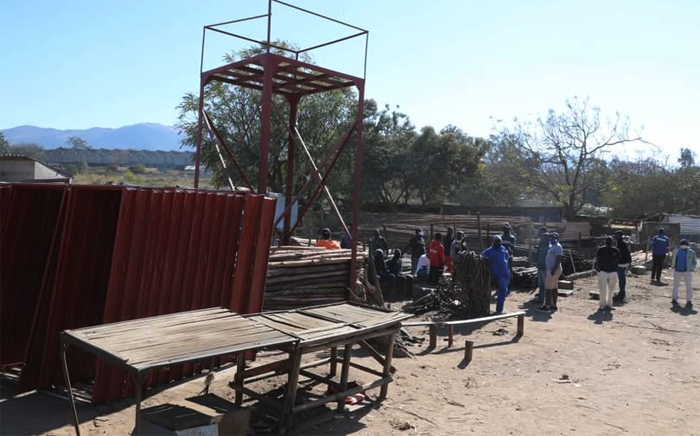
Lloyd Makonya
Correspondent
AT Sakubva’s famous Murahwa People’s Green Market, innovation is not born in research laboratories or high-tech factories, but in small workshops where metal is cut, welded and reshaped to solve everyday problems.
Here, self-taught artisans and skilled craftsmen continuously improve existing products, simplifying designs, reducing costs and adapting tools to meet local needs.
From modified improvised irrigation devices to innovators make life easier for households, farmers and small businesses across Zimbabwe.
Yet, despite their ingenuity, most of these practical improvements remain unprotected, leaving innovators vulnerable to imitation and loss of livelihood.
This is where utility models become critically important.
Utility models, sometimes referred to as “petty patents,” are a form of intellectual property protection designed specifically for incremental innovations.
They protect new technical solutions or functional improvements to existing products or processes that may not qualify for a full patent.
Unlike patents, utility models are generally cheaper and faster to obtain, require a lower threshold of inventiveness and focus on practical functionality rather than ground-breaking novelty.
In many jurisdictions, including under the African Regional Intellectual Property Organisation framework, utility models provide protection for up to 10 years and can be enforced across multiple member states.
For Zimbabwe, where micro, small and medium enterprises dominate economic activity, utility models speak directly to the realities of innovation on the ground.
MSMEs account for the vast majority of businesses in the country and provide livelihoods to millions, particularly in urban informal markets and peri-urban industrial clusters.
However, most MSME innovations fall into a grey area. They are often too modest or adaptive to meet patent requirements, yet too valuable to be left unprotected.
As a result, many innovators unknowingly surrender the economic benefits of their creativity the moment their ideas enter the market.
At Murahwa Green Market and similar hubs across the country, artisans regularly improve imported or locally available products by making them cheaper, more durable or easier to use. These improvements may appear small, but collectively they represent a powerful engine of local innovation.
When such ideas are copied without acknowledgement or compensation, the original innovators lose their competitive advantage, prices are driven down unfairly and motivation to innovate declines. Utility models offer a legal mechanism to recognise ownership of these improvements, giving innovators the right to prevent unauthorised copying, to license their ideas and in some cases, to use intellectual property as an asset when seeking financing or partnerships.
Beyond individual protection, utility models have broader economic significance.
Zimbabwe’s industrialisation agenda emphasises value addition, innovation and productivity, yet industrial growth does not begin only in large factories. It often begins in informal markets where local solutions are developed in response to immediate challenges.
Utility models support this form of grassroots industrialisation by encouraging incremental innovation that is affordable, scalable and suited to local conditions. International experience shows that countries that successfully integrate utility models into their innovation systems are better able to transition informal creativity into formal economic growth.
Despite their relevance, awareness of utility models among Zimbabwean MSMEs remains low. Many artisans and small entrepreneurs simply do not know that their improvements can be protected, while others assume intellectual property is expensive and reserved for large corporations. Closing this awareness gap requires deliberate public education, simplified registration processes and closer engagement between intellectual property institutions, local authorities and MSME associations.
Markets such as Murahwa could become centres, not only of production, but also of protected innovation if the right information reaches the right people.
Zimbabwe’s artisans, mechanics and informal engineers are already innovating every day.
What is missing is not creativity, but recognition and protection.
Utility models offer a practical and accessible pathway for MSMEs to safeguard their ideas and retain the economic value of their work. In a country where innovation often thrives under constraint, protecting simple ideas that work better may be one of the most effective ways to strengthen local enterprise and sustain livelihoods.