Online Reporter
Paul Pindani in CHINHOYI
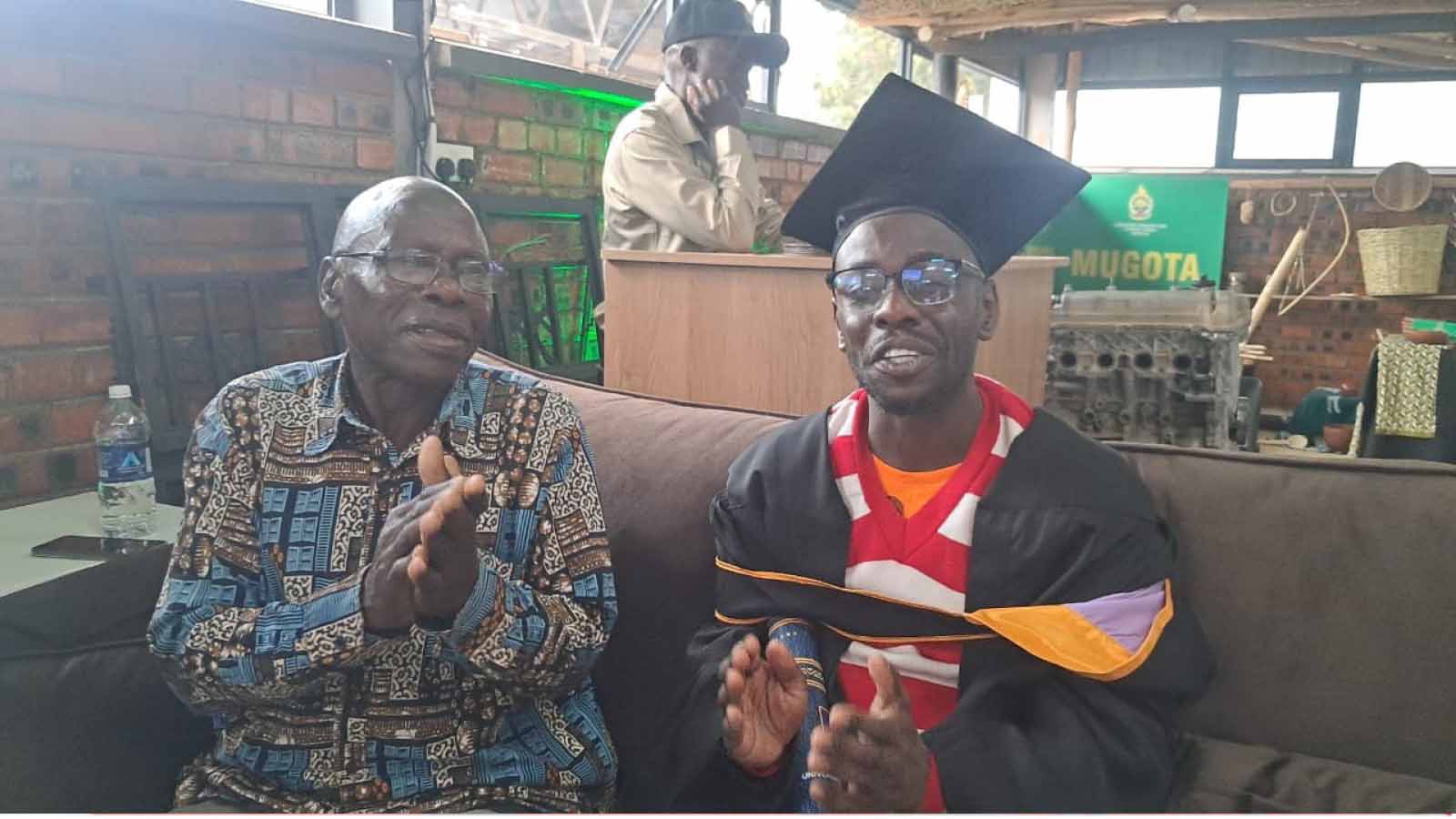
A THIRD-year law student at the University of Zimbabwe has developed a Zimbabwe-focused Artificial Intelligence (AI) Legal Research Assistant called GWETA ONLINE.
Ngonidzashe Walter Karasambudzi says it is designed to help lawyers, law students, researchers and members of the public conduct legal research more efficiently.
In an interview with H-Metro, Karasambudzi said one of his strongest motivations came from an incident in which a Zimbabwean lawyer was caught up in a storm in which several materials cited in an appeal were generated using generic AI.
Twelve of the cited cases did not exist.
He said the case highlighted the dangers of relying on general-purpose AI systems that are not specifically trained or grounded in Zimbabwean law.
“It made me ask a simple question: if Zimbabweans are going to use AI for legal research, why should we not develop AI that understands Zimbabwean law from a Zimbabwean perspective?
“Generic AI systems are largely developed outside Zimbabwe and trained on predominantly international datasets.”
He said this creates risks of fabricated legal authorities, foreign-law responses and biases resulting from limited representation of Zimbabwean legal materials.
Karasambudzi said Gweta Online is his contribution towards developing locally relevant and responsible AI solutions.
He said Zimbabweans must increasingly develop technologies that understand the country’s institutions, laws, languages and unique challenges.
Karasambudzi said the project aligns with Zimbabwe’s National AI Strategy and the broader aspirations of Vision 2030.
He said the platform is being developed through a strategic technical partnership with Uhuru Innovative/Uhuru AI, whose professionalism, technical expertise and commitment have been instrumental in transforming the legal concept into a functioning technological platform.
“Gweta Online brings together my understanding of the legal problem with the specialist AI and software-development expertise of Uhuru,” he said.
Karasambudzi said he attended Hope Tariro Hope Catholic Primary School from 2010 to 2017 before proceeding to High School from 2018 to 2021, where he obtained 10 O-Level passes.
He attended Nemakonde High School from 2022 to 2023, where he achieved three As and one B at Advanced Level, earning 19 points.
In August 2024, Karasambudzi enrolled at the University of Zimbabwe to pursue a law degree.
“My upbringing has taught me resilience, gratitude and the importance of making the most of every opportunity.
“My growth has also been shaped by lecturers such as Mr Mufari, who have helped me become a more thoughtful and analytical individual rather than simply a student who studies to pass examinations,” he said.
He said he remains deeply conscious that he has not been walking alone in his journey.
“I owe enormous gratitude to my grandmother, Mr Kamupini, Dr Nicholas Bhero, Mr Garikai Muchemwa and Honourable Ziyambi Ziyambi, whose encouragement, mentorship and belief in me have contributed significantly to the person I am becoming.
“Without people who continuously opened doors, encouraged me and believed in what I could become, my story would be very different,” he said.
Karasambudzi said Gweta Online represents both his personal journey and his belief that young Zimbabweans do not have to wait for solutions to come from elsewhere.
“We can identify our own problems, build our own solutions and contribute, in our own small way, towards the Zimbabwe envisioned under Vision 2030,” he said