admin
admin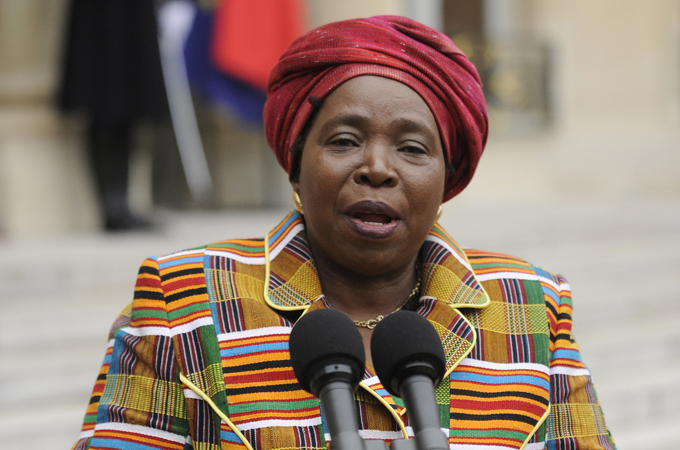
Lawson Mabhena in Victoria falls
VALUE addition and beneficiation of local resources is the only way through which Africa can achieve economic prosperity and self-sustenance AU chairperson Dr Nkosazana Dlamini-Zuma has said.
In her statement to the 34th Ordinary Summit of Sadc Heads of State and Government she said the theme of this year’s summit “Sadc Strategy for Economic Transformation: Leveraging the Region’s Diverse Resources for Sustainable Economic and Social Development through Value Addition and Beneficiation” was in line with the AU’s drive to transform the continent.
“About 50 years ago, most African countries were either on par or even better off than the countries now known as Asian Tigers, China, Singapore, South Korea, Malaysia, among others. But today they are more prosperous, they have modernised their countries and lifted many of their people out of poverty though they are not endowed with natural resources as Africa is.
“Africa can do the same in the next 50 years. With the Agenda 2063 the Africa we want and the proposed Sadc Vision 2050 and other RECs plans, it is possible. For us to achieve the prosperous, integrated, people-centred Africa, at peace with itself and a dynamic force in the world, indeed we need to transform our economies and leverage the continent’s diverse resources through value addition and beneficiation,” Dr Dlamini Zuma said.
She also revealed that the AU was already working towards linking African capitals and commercial centres through a high-speed train project which will go a long way towards the beneficiation and value addition of the continent’s resources.
She said the development of the high-speed train and other infrastructure will contribute towards Africa’s prosperity, while acknowledging backlogs in transport, ports and harbours, energy, irrigation and information communication technology.
“We seek to address this challenge through PIDA and other infrastructure project at the regional level that are critical to our industrialisation and the integration of the continent. We follow with keen interest the steps Sadc plans to take to get binding commitments by member states around the funding of the $500 billion required to implement the Sadc Infrastructure Masterplan.
“At the continental level, we have begun discussions on the development of the high-speed train that will link our capitals and commercial centres. This project will help accelerate our integration and intra-African trade and, more critically, our industrialisation,” she said.
Dr Dlamini Zuma, however, encouraged African countries to skill young people so that they are able to transform their economies. She said the AU was working with African universities in a bid to allow more young people, especially women staying at home, to attain relevant educational qualifications through e-learning.
“We have abundant human resources but they need to be skilled, focusing more on science, technology, research and innovation, technical skills and vocational training. At the continental level, we truly need a skills revolution for both young men and women.
“Although governments have the primary responsibility in this area, the private sector must also contribute substantively to the skills revolution,” she said.
“At the continental level, we are also looking at harmonisation of qualifications and curricula so that young people can train anywhere and still be able to work in any part of the continent where their skills are needed. We are also looking at expanding the skills base by persuading our universities not only to train young people within the confines of their physical buildings but to utilise technology to have virtual education or e-university where young people, and especially women staying at home, can study without being physically in the classroom. It is out of this conviction that a development of e-university has become the first flagship programme of Agenda 2063.”


 Online Reporter