Online Reporter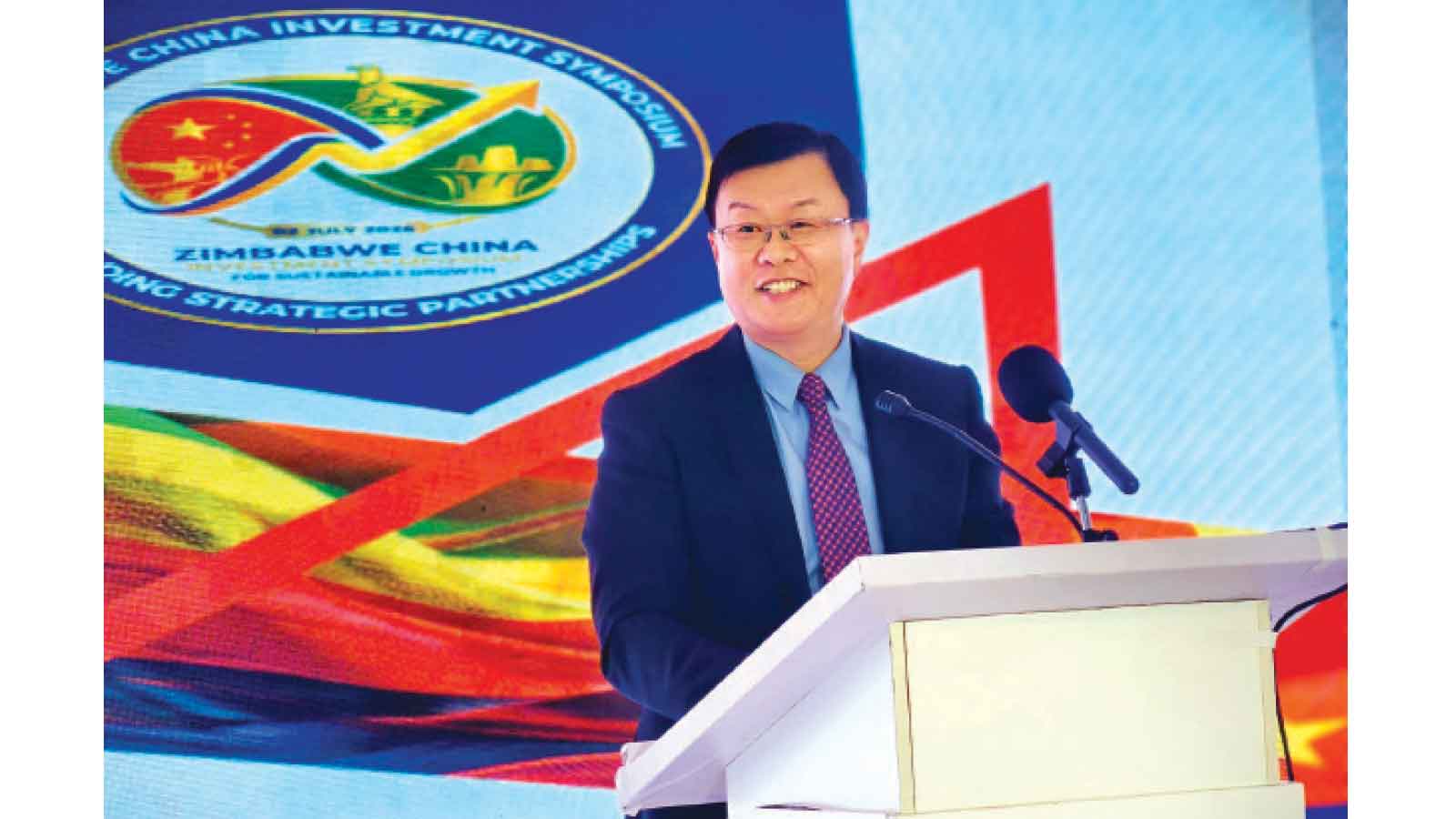
Kuda Bwititi
GOVERNMENT has reiterated its commitment to transform Zimbabwe’s mining sector from a predominantly raw mineral exporter into a globally competitive producer of value-added mineral products under the National Development Strategy 2 (NDS2), as it seeks to accelerate industrialisation and achieve Vision 2030.
Speaking at the Zimbabwe-China Investment Symposium in Harare on Thursday, Minister of Mines and Mining Development Dr Polite Kambamura said mining would remain at the centre of the country’s economic transformation, with emphasis shifting towards beneficiation, technology adoption and strategic international partnerships.
The symposium was held under the theme, “Strengthening Relations to Unlock Zimbabwe’s Potential.”
Dr Kambamura said Zimbabwe’s vast mineral endowment presented an opportunity to build a diversified economy anchored on industrial growth rather than the export of unprocessed minerals.
“Our objective is not simply to produce more minerals. Our objective is to transform Zimbabwe from a supplier of predominantly raw mineral commodities into a globally competitive producer of high-value mineral products and mineral-based industries,” he said.
Government, he added, was modernising geological surveys through the use of digital technologies, remote sensing and artificial intelligence to improve exploration efficiency and attract new investment.
Dr Kambamura said beneficiation remained central to Government policy, noting that exporting raw minerals deprived the country of employment opportunities, industrial capacity and higher export earnings.
He cited the recent production of Africa’s first shipment of lithium sulphate from Zhejiang Huayou Cobalt’s Arcadia Mine as evidence that Zimbabwe was making progress towards local mineral processing and value addition.
The Minister also highlighted the growing role of Chinese investment in Zimbabwe’s mining sector, saying investments from Chinese companies had exceeded US$2 billion in recent years. Chinese firms, including Zhejiang Huayou Cobalt, Sinomine Resource Group, Chengxin Lithium, Yahua Group and Tsingshan Holding Group, were commended for contributing to the development of lithium, chrome, coal, gold and ferro-alloy projects.
Dr Kambamura said Zimbabwe remained open to investors prepared to support responsible mining, technology transfer, skills development and downstream industrialisation.
In his remarks at the event, Chinese Ambassador Zhou Ding said Chinese enterprises operating in Zimbabwe have collectively invested more than US$100 million in corporate social responsibility projects across the country.
He noted that China’s decision to grant zero-tariff treatment to exports from 53 African countries from May this year had created fresh opportunities for Zimbabwean products to access one of the world’s largest consumer markets.
“Our two economies are highly complementary,” said Ambassador Zhou. “By integrating our respective industrial, supply and value chains, we have already realised substantial mutual benefits, and this alignment will unlock even greater opportunities in the years ahead.”
At the same event, Mr Benson Xu, chairperson of the Chinese Chamber of Enterprises in Zimbabwe, said:
“As the Chamber, we firmly believe that deeper collaboration among Government institutions, local authorities, and the private sector is the key to unlocking new frontiers of investment. We encourage continued dialogue and a shared commitment to creating an enabling business environment that nurtures lasting partnerships.
“In particular, we see remarkable opportunities for cooperation in smart city development, renewable energy, industrial parks, water and sanitation, modern transport systems, digital transformation, and human capital development. Chinese enterprises stand ready to work hand in hand with national and provincial authorities to turn these priorities into lasting progress.”