Chronicle Editor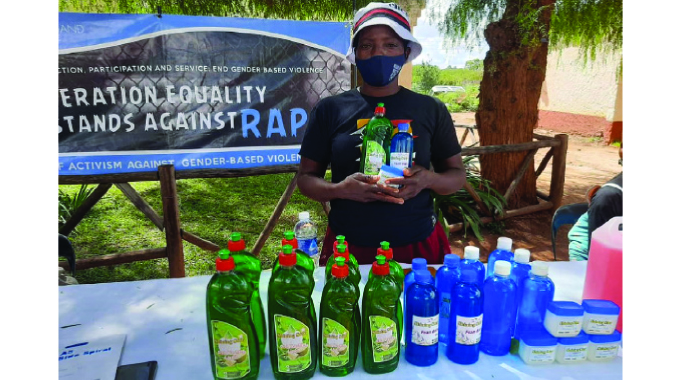
Sukulwenkosi Dube-Matutu, Chronicle Reporter
WOMEN’S groups in rural areas are embarking on various livelihood projects and are continuously upgrading and improving their products to gain new markets.
Started as a way of empowering themselves, at the beginning the groups ran a few enterprises which included gardening, baking, village savings and lending, poultry and goat rearing.
Today women groups have become manufacturers of a number of products. They now produce washing powder, perfumes, lotions, petroleum jelly, disinfectants, foam bath, sanitisers among other products.
They also make bags, carpets, mats and shoes made from modern material. Some of these women are making use of available local resources to make products such as marula jam, marula nuts and marula butter, marula booster, marula syrup, marula foundation, marula chicken feed and marula livestock feed made from marula nuts.
Ms Gertrude Ndlovu, the chairperson of Insindi Yethu Group from Gwanda, said they started producing a variety of products at the end of last year after receiving training.
“We formed our group in 2019 and our projects were poultry, goat rearing, gardening and during the course of the time we added bakery. Sometime last year we saw some women who had displayed some detergents which they had produced. We engaged them and they assisted us with training. We started off by producing petroleum jelly, lotion, dishwashing liquid and sanitisers. We have now added washing powder, perfumes and foam bath,” she said.
“We buy our ingredients from Bulawayo and then we make our products at our homes and work in sub groups. Each sub group is tasked to make a certain product. We sell our products around the community and we are able to fend for our families using the money that we get.”
She said it was their desire to have a designated place to use to make their products. Ms Ndlovu said they cannot afford to rent space as their business is still growing.
Ms Thandeka Moyo, chairperson of Siyanqoba Group in Filabusi, said they started in 2017 with a money saving and lending project. She said they later moved to poultry and goat rearing.
Ms Moyo said it was always their desire to venture into other projects to improve their income.
She said they received training under the Smallholder Irrigation Revitalisation Programme (SIRP) late last year on how to produce cleaning detergents. Siyanqoba Group is now also producing, dishwashing liquid, foam bath, sanitisers, petroleum jelly and soap.
Ms Moyo said it was their desire to raise enough income for them to build their own houses as members of the group.
“We received training under the SIRP programme on how to produce detergents. We now have dishwashing liquid, foam bath, sanitisers, Vaseline and soap. It’s our desire to even have more and more products. We want to be empowered to the extent where we will be able to produce our own household products and not have to buy anything from the supermarkets,” said Ms Moyo.
“If we have the necessary training and resources, we can be able to turn our homes into mini factories. The challenge we face is of money to buy ingredients for our products. We end up having limited stock because of financial challenges. Sometimes shop owners come and buy in bulk and we run out of stock.”
The Ministry of Women Affairs, Community, Small and Medium Enterprises Development Matabeleland South provincial development coordinator Ms Majorie Skhundla said more women were now economically empowered thanks to Government and various partners. She said there was need for the enterprises to grow so that women can be financially secure.
“It’s a good development that more and more women are embarking on these projects and they are also incorporating youths.
The woman of today should be empowered socially, economically and politically and that means women should be financially empowered. Women have embarked on a number of livelihood projects and we want their enterprises to grow up until they produce at a large scale and they can employ other women,” she said.
“Government has rolled out a number of projects where women have been trained in business and also equipped with various skills. As a ministry we are also working with various partners that have assisted women with start-ups, training as well as resources.” — @DubeMatutu



 Online Reporter