


 Online Reporter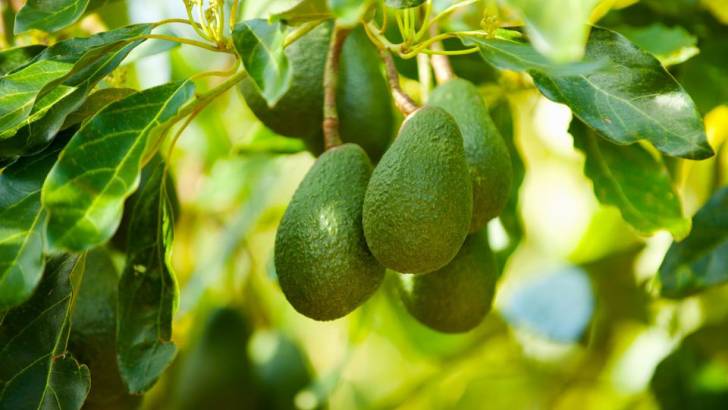
Tapiwanashe Mangwiro
Senior Business Reporter
TANGANDA Tea Company’s extraordinary general meeting (EGM) may have delivered an emphatic endorsement of the organisation’s US$8 million rights offer, yet the debate it triggered is likely to linger well beyond the show of hands.
In an interview with The Sunday Mail Business, chief executive officer Ms Sharon Kodzanai outlined how the fresh capital would be deployed, positioning the transaction as a strategic shift towards value addition and operational renewal.
“In terms of the two crops that you have mentioned, we are looking pretty much at value addition,” Ms Kodzanai said, referring to macadamia nuts and avocados.
Tanganda, she said, intends to procure a macadamia cracking plant, allowing it to process nut-in-shell produce into higher-value kernel products instead of exporting it unprocessed.
“This macadamia cracking plant will then allow us to crack the nut-in-shell nuts into kernel and then we will explore the lucrative kernel market,” she said.
Regarding avocados, she said there was a joint venture entered into last year with a Netherlands-based partner to pursue oil extraction.
“What we can promise our shareholders is more value addition and beneficiation in sustainable growth of the brand,” she said.
Part of the capital will be allocated towards a new water bottling plant for the Tingamira brand.
The current plant, she noted, was 15 years old and due for replacement.
“In terms of our capital deployment, we are expecting to put some money into a new water bottling plant, so you will indeed be seeing more Tingamira water on the market,” she said.
Production guidance for the current year appears to show an upbeat trend.
Avocado volumes are expected to double to about 4 000 tonnes, macadamia nuts are projected to grow by between 20 and 30 percent and bulk tea output is forecast at nearly 8 000 tonnes.
While many shareholders welcomed this strategic direction, some have begun to investigate whether the capital raise will translate into returns that justify the dilution.
Ms Tinovimba Makanga, a portfolio manager with Platinum Investment Managers, indicated that she supported the capital raise in principle, describing the US$8 million as the only viable path under the circumstances.
Her concern centred on the purpose and expected returns of the transaction.
“From the analysis that I did, I saw that this has nothing to do with expansion; rather, it is more about stabilisation — capital structure stabilisation — more than it is expansion,” she said.
That distinction, she argued, has implications for investors.
“When you do these capital raises, if there is expansion, then we look forward to a return on equity for our clients. My question is: Are we still going to have a return on equity that is above our cost of equity after this transaction?” she said.
Economist Mr Tawanda Chigumira said the structure of the transaction places the spotlight squarely on return on equity (ROE).
“When capital is raised primarily for stabilisation, plant replacement and working capital, the immediate impact on earnings growth can be modest,” he said.
“Shareholders will want reassurance that the ROE remains above the company’s cost of equity after the transaction.”
He added that value-addition projects, such as macadamia kernels and avocado oil, can improve margins over time, though they require execution discipline and market access.
Investment analyst Ms Rumbidzai Mavhunga believes that investors would scrutinise projected cash flows from the new initiatives.
“Kernel processing and oil extraction have higher value potential than raw exports, which is positive,” Ms Mavhunga said.
“The key question is timing. How soon do those projects begin contributing meaningfully to earnings per share?”
The debate has also extended to the broader issue of currency structure within Zimbabwe’s dual-currency environment.
Mr Chigumira noted that corporate capital raises are increasingly becoming a test of how companies navigate monetary realities.
“In an economy where both USD and ZiG (Zimbabwe Gold) circulate, capital market instruments that lean exclusively on one currency can create friction for institutional investors,” he said.
Against this backdrop, the only vote cast against one of the six resolutions came from Ms Makanga, who opposed the requirement that the rights offer be paid exclusively in United States dollars.
“The reason I voted against exclusively paying the rights offer in USD is because most of our clients are pension funds, and we operate in an economy where we still use a dual currency — USD, as well as ZiG,” she said.
She stressed that her objection was not to the capital raise itself, but to the lack of flexibility.
“I do not think the USD is bad, but I think saying ‘exclusively’ becomes too restrictive,” she said.
Ms Makanga suggested a blended structure to allow wider participation.
“Maybe let us say, if you have ZiG, perhaps 75 percent USD and 25 percent ZiG, so that at least we provide opportunities for those clients that do not have USD completely,” she said.
While her vote did not alter the outcome — the resolution passed with an overwhelming majority — the questions she raised have introduced a wider conversation about returns, currency flexibility and the evolving expectations of institutional investors.
For Tanganda, the approvals mark a decisive step towards reshaping operations; for the market, the episode underscores an increasingly assertive shareholder base keen to see both strategic clarity and measurable returns.



