


 Chronicle Editor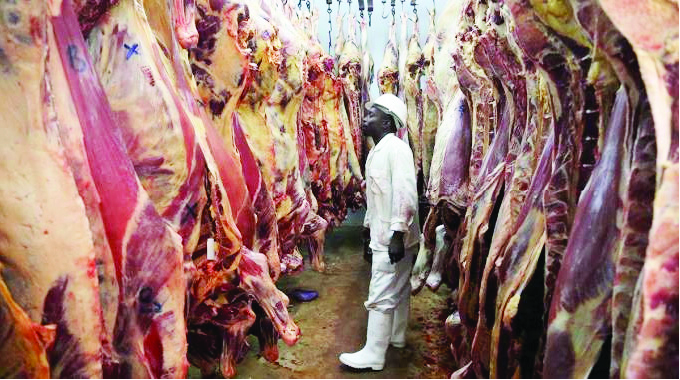
WE are now just past the end of the second week of this brand new year and all the conversations I have with various individuals who have at least some interest in agriculture in this region, always end with a statement which has become a regional prayer, “if only we could get rains enough to fill surface water bodies and nourish the grass for our animals”.
My counsel therefore, as I have done several times before, is to implore farmers to go beyond this prayer and actually take action to prepare for the time ahead.
We have all seen the signs and decoded the message and understood it without any equivocation hence we should not be found wanting when the hour comes!
This however, is not the import of my submission this week but to discuss something that I have noticed developing across many value chains for some time now. A value chain consists among other sectors, of the producers, processors, wholesaler, retailers and finally consumers.
These sectors interplay among themselves to make the value chain function. Each segment of the value chain depends on the performance of the other in order for it to operate optimally.
The different segments of the value chain drive the entire chain and provide business and livelihood options for the players concerned.
Traditionally, players would occupy at least just one segment of the value chain and let other players take up the other segments. In other words, livestock farmers would mostly remain at producer level and engage someone in the transport sector if they needed to transport products to or from the markets.

Abattoir operators would just slaughter animals and wholesale meat to the butcheries and supermarkets. What has been happening over the years, is that value chain players are now occupying almost all segments of the value chain. A cattle rancher now has a feed processing plant to make own feed, trucks to transport animals and inputs to and from the markets, abattoir to slaughter animals and wholesale meat as well as own butcheries too for meat retailing.
While this may work for the player concerned because he/she has control for all the segments of the value chain and hence can manage costs, ultimately this drives towards a monopoly within the value chain and stifles general growth of the value chain.
The feed manufacturing company which used to thrive because it had business from the farmer to produce metric tonnes of feed, will suddenly run out of business, the trucking company which used to transport your animals and inputs will suddenly go bust and so will the abattoir and butcheries down the value chain.
It is my submission that for the health of the value chains and their posterity, players should occupy not more than two segments of the value chain so that there is business for other players within the sector.
The idea of controlling all the segments of the value chain by making sure you are in each and every segment seems plausible on paper but it is perilous at the end as most small businesses are driven into extinction because their niche has been taken by a giant player who has fingers in every pie!
An apt but simple illustration of this situation, is in the transport sector where almost every school now owns a bus, which they use twice a term for sports or occasion and a school trip.
This is a huge business chunk bitten off the transport sector pie, as buses and kombis which used to be hired for the same purpose now cannot because schools now own buses.
It is my view that for the health of any value chain, various segments of the chain should be occupied by different players who compete for business in that segment.
Otherwise monopoly will kill the value chain, remember some of the customers who buy the meat from that butchery are employed by the transporter who you have driven out of business, by the stock feed manufacturer, and so on.
Let us keep the value chain thriving by giving other players space to operate rather than using our big muscle to suffocate other players out of business.
Uyabonga umntaka MaKhumalo.
Mhlupheki Dube is a livestock specialist and farmer. He writes in his own capacity. Feedback [email protected]/ cell 0772851275



 Bongani Ndlovu