Online Reporter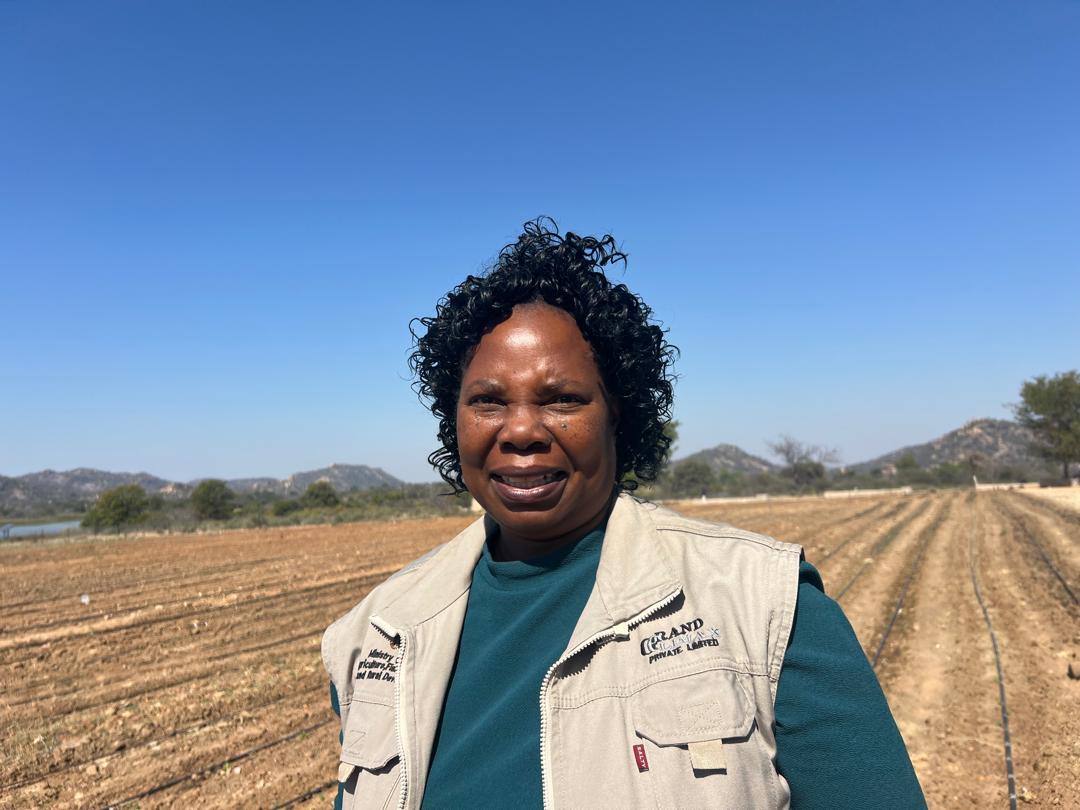
Sukulwenkosi Dube-Matutu [email protected]
THE establishment of Village Business Units (VBUs) in drought-prone communities in Gwanda District is transforming livelihoods, with seven newly established solar-powered units enabling rural families to adopt irrigation farming, improve food security, and generate sustainable household incomes.
The initiative aligns with the Government’s rural industrialisation drive, which seeks to climate-proof agriculture while shifting rural communities from subsistence farming to market-oriented production.
Gwanda District now has 15 VBUs, including the pioneering Garanyemba Drought Mitigation Centre, which combines a VBU with livestock feeding facilities, cattle sale pens and water infrastructure to strengthen resilience against recurring droughts.
The facilities have become an important source of livelihoods for communities in one of the country’s driest regions.
Lifalethu VBU chairperson, Mr Sabata Nare, said the project had transformed the lives of about 40 households that operate the enterprise.
“This project is really assisting us to fend for our families and send our children to school. Members have been able to acquire assets and property using money generated from selling produce. We have been empowered as a community and we are no longer beggars,” he said.
“We are operating this VBU as a business entity, which has helped us adopt a more organised approach to our operations. This allows us to keep track of production and maximise returns. Our main focus is on producing cash crops because they offer better business opportunities.”
Tsolapili VBU chairperson Mr Stephen Mpofu said the installation of solar-powered boreholes had revolutionised farming in the area.
“In the past we could not irrigate because we did not have reliable water supplies. Now, with solarised boreholes, we can grow crops year-round. We are no longer dependent solely on rain-fed agriculture,” he said.
VBU member Ms Duduzile Nkomo said the project came at a critical time when communities were struggling with unreliable rainfall patterns caused by climate change.
She said the initiative had improved food security while creating new income opportunities for households.
“Our community is now food secure and we can provide for our families. The VBU benefits not only members but the entire community, which now has access to nutritious food at affordable prices. Our long-term goal is to supply markets as far as Bulawayo,” she said.
Ms Nkomo said the group now intends to venture into value addition to increase profitability.
“We don’t want to stop at production only. We are exploring ways to add value to our produce so that we earn more income,” she said.
“Many people are producing crops now, but we believe there are still opportunities in value addition. Our focus will be on organic products because that is what many consumers now prefer.”
Acting Agricultural Extension Officer for Gwanda District, Mr Godfrey Hove said irrigation farming was helping communities embrace agriculture as a commercial enterprise.
He said farmers were increasingly appreciating the importance of value addition and agribusiness.
“Hopes have been raised among farmers as they are seeing light at the end of the tunnel. Our region is generally dry and the provision of irrigation systems is enhancing food security and crop production within the district,” he said.
Mr Hove said improving water supply through the drilling and solarisation of boreholes, as well as the rehabilitation of dams, has enhanced irrigation farming.
“Communities are now experiencing tangible improvements in household incomes and food security since the establishment of the VBUs,” he said.
Government continues to climate-proof the agricultural sector through the establishment of VBUs, drought mitigation centres, rehabilitation and development of irrigation schemes and the expansion of the Pfumvudza/Intwasa conservation agriculture programme.
Matabeleland South Province pioneered the VBU concept when President Mnangagwa launched the Jinjika Presidential Rural Horticulture Scheme in Makorokoro, Mangwe District, in December 2022. Since then, the province has established more than 140 VBUs, which are Government-driven and community-based enterprises.
VBUs were designed to promote rural industrialisation, create employment and improve livelihoods by transitioning rural communities from subsistence farming to commercially viable agriculture.
Through shared ownership models, irrigation development, training and improved market access, the business units are helping generate income, strengthen food security and stimulate rural economic growth under the Presidential Rural Development Programme.
The programme also includes the drilling of 50 000 solar-powered boreholes nationwide to provide reliable water for irrigation, livestock and domestic use, supporting the Second Republic’s vision of modernising rural communities and building climate-resilient agriculture.
— @DubeMatutu