Chronicle Editor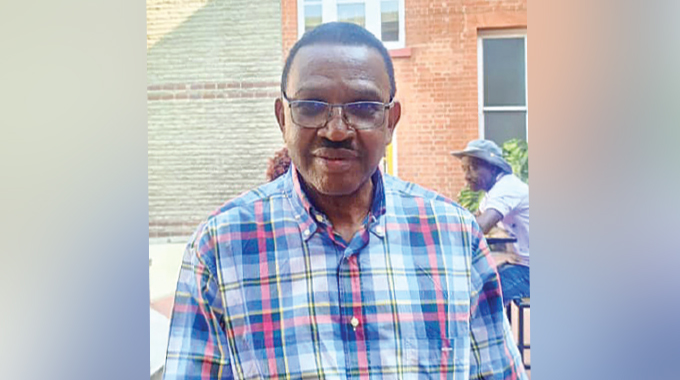
Rutendo Nyeve, Sunday News Reporter
THE National Heroes Acre in Harare is a revered shrine. It is a symbol of the bravery, selfless sacrifice and patriotic dedication of those interred there and one of them is Cde Misheck Velaphi who dedicated his life to fighting colonial oppression.
He was buried at the Heroes Acre on May 9, 2019 having been born on July 25, 1937 in Matobo District, Matabeleland South Province.
His grave at the national shrine, like all others, has remained a standing beacon of the liberation memory to the country’s citizens. But for his younger brother, 73-year-old Mr Qunye Velaphi, the Heroes Acre and Cde Misheck’s grave is more than that.
It has remained the string that ties him to the country’s history, his own history and that of his complicated multi-racial family, which now shares traces of African, Asian and Caucasian blood.
He decided to put the complexities of his family and his history in a book that he titled: Qunye Mfihlo Velaphi An Endless Transition – An autobiography, which documents his transition from the village under the white settler regime to his life in Australia and the circumstances leading to the presence of his British grandchildren.

“Misheck is my brother and I am the youngest in a family of five. I was born in Seula Village, Matobo District in Matabeleland South and went to Seula Primary School, Tshelanyemba Mission and Mazowe Secondary for one term,” he told Sunday News in an interview recently.
He was flanked by his Japanese wife and an Australian family friend whom they had brought to attend the Heroes Day commemoration, but most importantly, to see Cde Misheck Velaphi’s grave.
He recounted how he left Zimbabwe, just as his brother prepared to confront the brutality of the colonial regime.
“We were expelled from school in 1962 and went back to Seula where I read on my own till I passed my Advanced Level. I went to work in Botswana for one year and got a Commonwealth scholarship to study in Australia.
“Misheck was arrested in the same year in 1962 and he left two kids in the village that I helped taking care of with our mother. I would visit him and witness the brutality of the white colonial regime. Misheck was then released in 1968 and re-arrested in September of the same year after only three months of freedom,” said Mr Velaphi.
He said although he did not spend much time with him in those three months, they were almost always in touch as he has always been sympathetic to the cause of the liberation struggle.
Mr Velaphi said he had watched his brother’s life unfold from afar, even as he started building the foundations of what is now a multi-racial family.
“I then went to study Agricultural Economics in Australia with the hope of coming back to work with small-scale farmers in Zimbabwe. However, I then applied to stay there after Misheck was arrested in 1982. I followed his trial in the newspapers. I had married my Japanese wife with whom we were students together at university in 1980.
“We had two kids and we formed our own company and began working in Australia. However, when all this has been said, the interesting part is that while my son and daughter are half Zimbabwean, half Japanese, they both married English people, which brought different racial complications to my life,” said Mr Velaphi.
He said considering the colonial history in Zimbabwe which saw his brothers being oppressed and incarcerated by the colonisers, having grandchildren who are half-British is putting him in a very complex situation.
“I am living this record to highlight how my grandchildren ended where they are today and how it all happened. It is not about going back into history but also going forward because the history of my grandchildren is complicated.
“I sometimes look at it and say I was not supposed to get married to a Japanese woman, my children were not supposed to marry the British who were colonisers here and who oppressed my brother whose grave has remained a constant reminder of the people who have become part of the family. So I had to leave a record of that. That is why I have gone further to travel with my wife and Australian friend so that they witness the grave of my late brother and understand our history as a country and my history as an individual,” said Mr Velaphi. @nyeve14


 Online Reporter