Chronicle Editor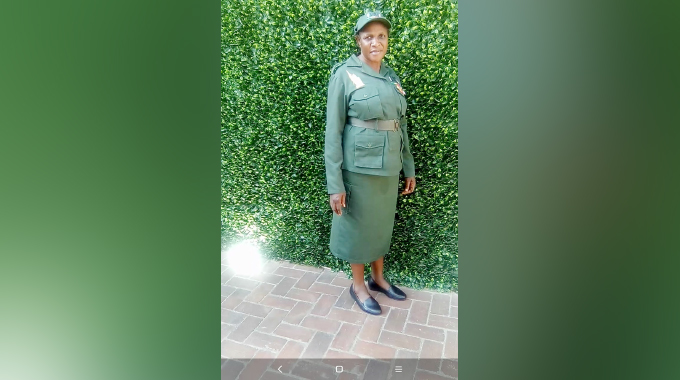
THE liberation struggle was an emotional journey for all who participated. Many youthful cadres took it upon themselves to take part in the liberation of their country and forego the opportunities to further their education and other personal economic prospects. A number of them left home after feeling the need to fight for their country and some were inspired by those who had joined the struggle before them. Those who lived to tell the story say it was not a stroll in the park that others think it was. The war was a real struggle for liberation and survival where apart from being exposed to the vagaries of harsh weather, insect bites and hunger, they were also expected to dodge enemy bullets and avoid landmines and other harmful machinations of the enemy. The 1978 Mkushi Girls Camp bombings in Zambia, have remained a painful memory permanently etched in the hearts of all those who survived the fateful day. This week Sunday News Senior Reporter Robin Muchetu (RM) spoke to Major (Rtd) Sehlule Jele, one of the survivors of the bombing who shared her liberation struggle journey and how she survived the many plots of the enemy that saw some cadres losing their lives while some were maimed. Below are excerpts of the interview. Read on . . .
RM: Let’s start by the interview by you telling us a bit about yourself.
Maj (Rtd) Jele: My name is Sehlule Jele nee Ngwenya and I was given the pseudo name of Cde Irine Motelentso. I was born on 4 January 1960 at Plumtree District Hospital being the fourth born in a family of 10. I come from Embakwe area in Mapholisa Village under Chief Wasi Ndiweni in Mangwe District, Matabeleland South Province.
I did my primary education at Embakwe Primary School from Sub A to Grade 7 between 1968 to 1974. After completing my primary education I worked at the Embakwe Mission as a general hand from 1976 to May 1977.
RM: What motivated you to join the armed struggle?
Maj (Rtd) Jele: My uncle was an active political activist under Zapu. He was always in and out of prison for participating in politics and this affected us because those white policemen used to hit him in front of us. I used to listen to Radio Zambia and there was an announcement made by a female combatant, Cde Jane Ngwenya calling on all sons and daughters of Zimbabwe to come and take arms and fight for our country Zimbabwe.
It inspired me so much that I decided to go and join the armed struggle.

RM: When did it dawn on you that you needed to join the struggle with others?
Maj (Rtd) Jele: On the 5th of May 1977 I left the country to join the struggle leaving my general hand job. I went with my friend Jane Nyathi from the same area and crossed the border to Botswana and was taken to Francistown refugee camp where l stayed only for one week and thereafter was flown to Zambia. I was taken to Victory Camp. The living conditions at this camp were unbearable, water was scarce and we could hardly bath. All our clothes and blankets were infested with lice. Food was scarce and we only had one meal a day but one good thing that I experienced between comrades was love and care for each other. We could share one guava between the 10 of us. I stayed at Victory Camp until December 1977, I was then sent to Mkushi for military training until July 1978. The training was very hard and I was an asthmatic patient.
After the military training I was stationed at Mkushi 2 Camp preparing for further training.
RM: Please share the events of the Mkushi bombing.
Maj (Rtd) Jele: It was on the 19th of October 1978 that a black cloud fell on us. The camp was attacked by the Rhodesian forces under the command of Green Leader. The first air attack was done by the jet fighters, followed by the assault by helicopters. Then the ground force was dropped by parachutes to carry out ground attacks on some of our comrades who had survived the air raids. The whole camp was up in smoke. I survived by hiding in the thicket of the Mkushi River. I spent the entire day in the water until 10pm when we came out of the water and made our way to our Battalion gathering point at Lunsefa. I was with two of my comrades.

Along the way, we were tired and took a rest on an anthill. Two lions came and we woke up and prayed looking at them and they turned away and left.
RM: What happened next?
Maj (Rtd) Jele: I was then taken to Kafue at Mr Milner’s farm where we briefly stayed for three months. I was then taken to Solwezi Camp for further training in communication and I stayed there until the ceasefire.
I returned home in December 1979 after the Lancaster House Agreement and stayed at Sierra Assembly Point in Lower Gweru. After Independence I was attested into the Zimbabwe National Army on 1 May 1981 at the then Brady Barracks now Khumalo Barracks. I served for 37 years retiring in 2018 as a Major.


 Online Reporter